

18.01.2021
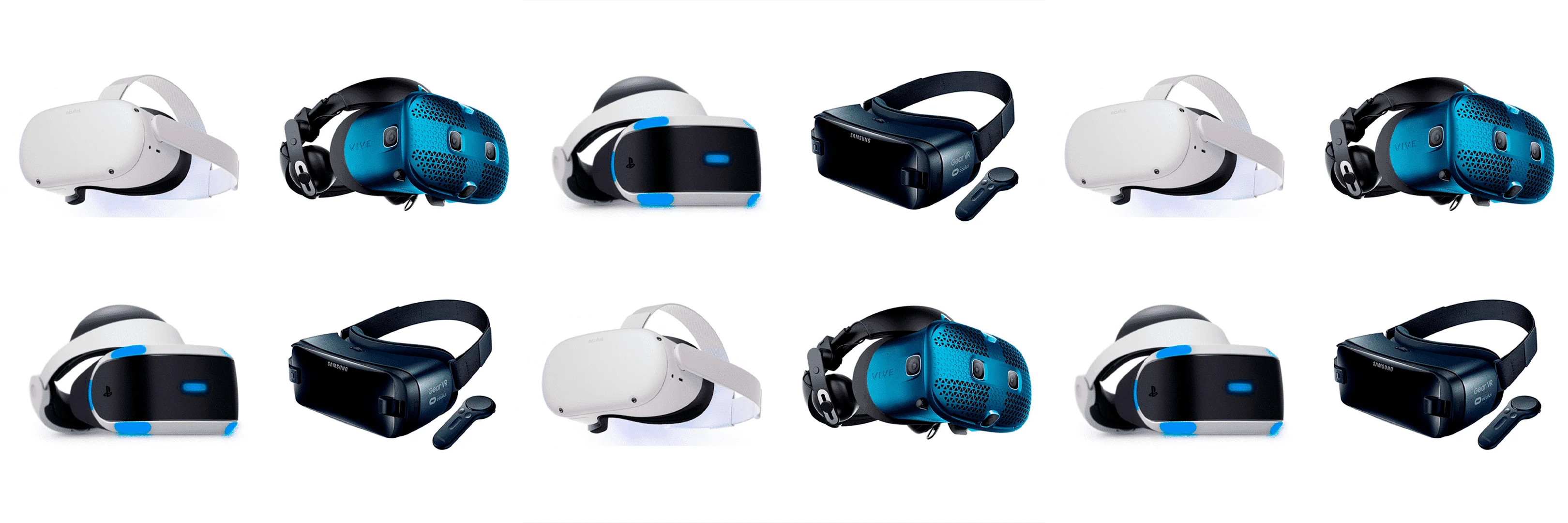
TYPES OF VR DEVICES | What are the types of Virtual Reality glasses that exist?

HIPEREXPERIENCIA
LOADED


 RETURN
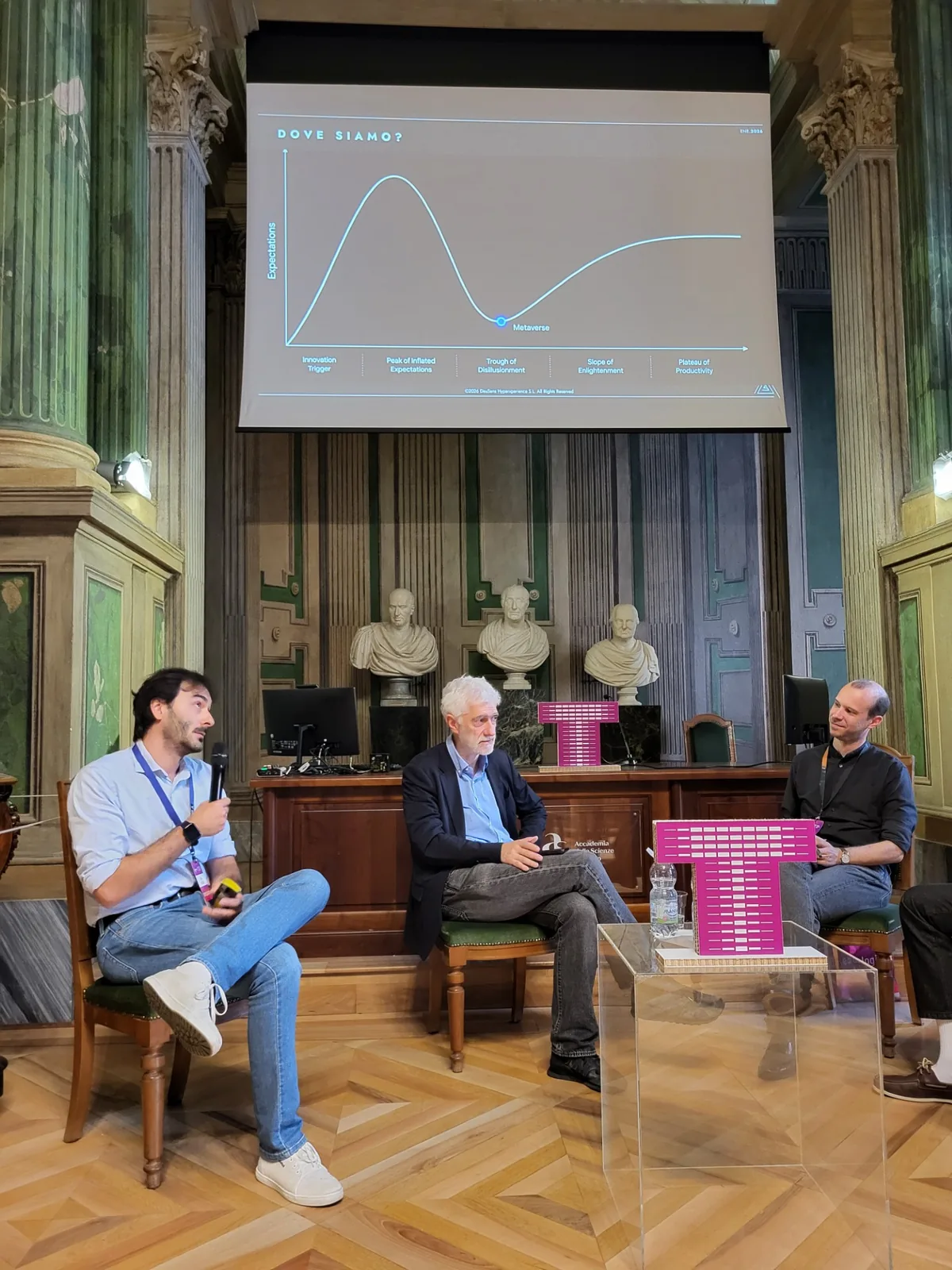
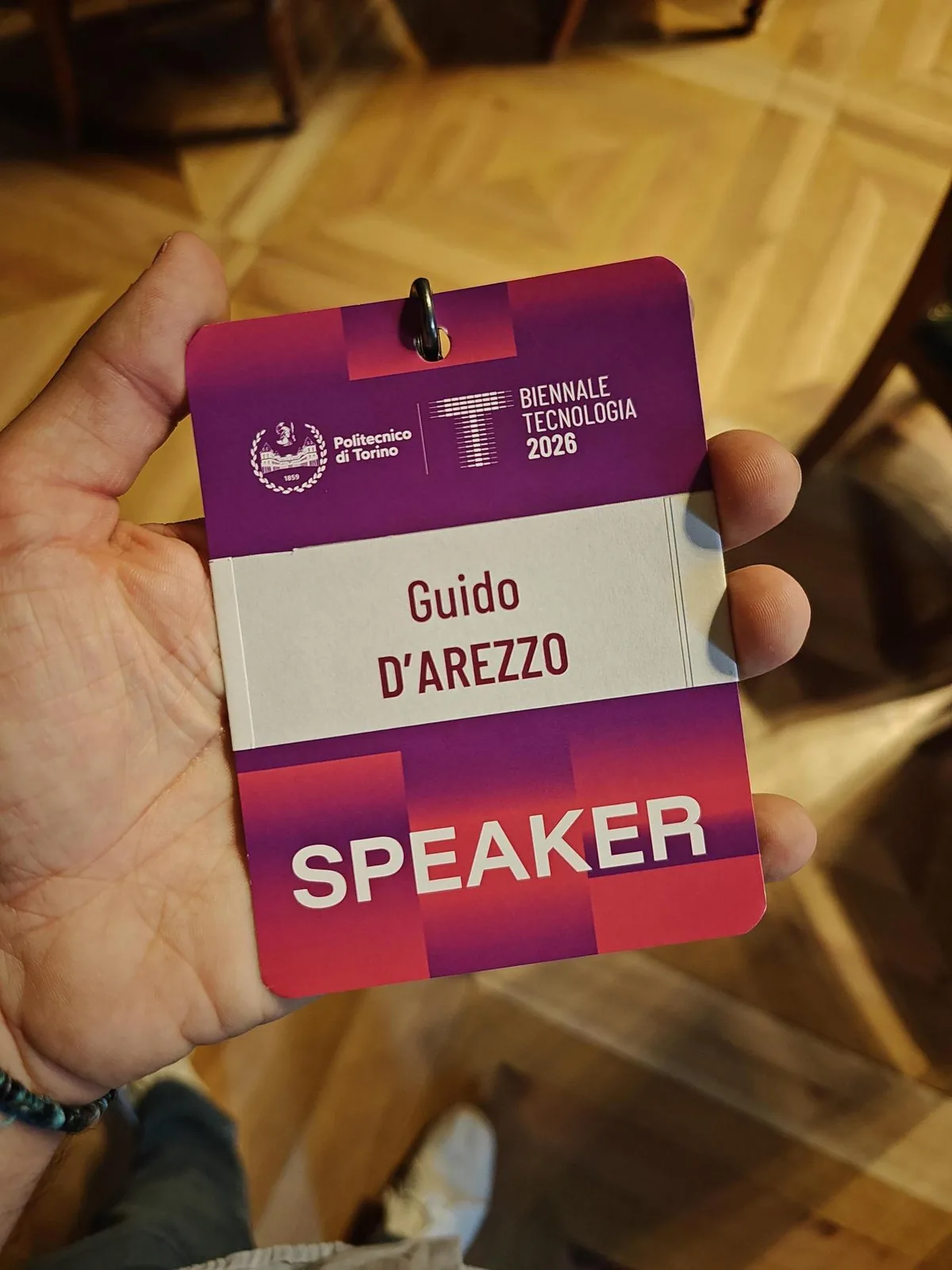
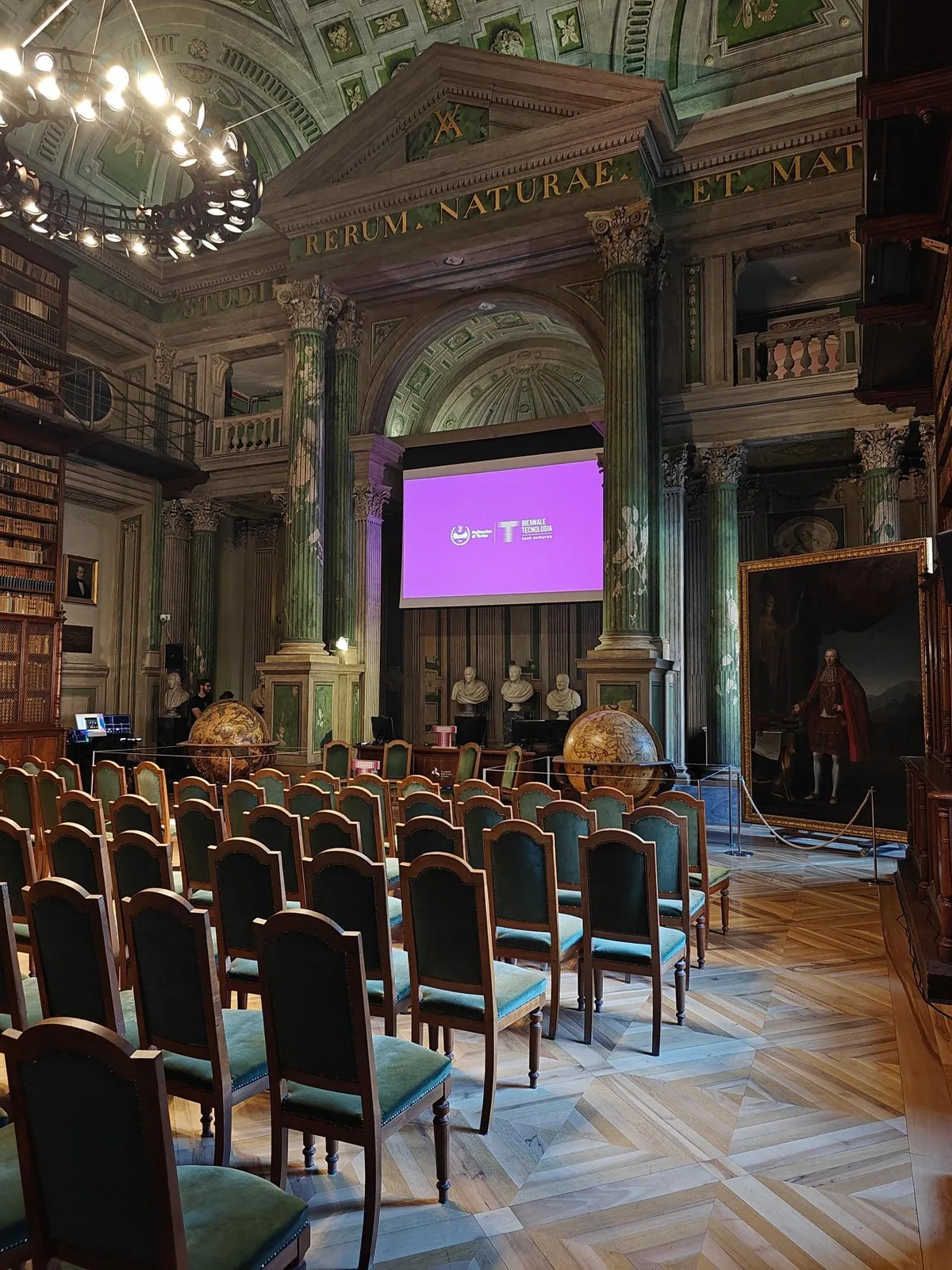
On April 19, 2026, Guido D'Arezzo, Business Developer Italy at DeuSens Hyperexperience, took part as a speaker at Biennale Tecnologia in Turin, in the session "Il metaverso: mobilità o immobilità?" organised by Politecnico di Torino within the official programme of the event. A roundtable that, far from celebrating the metaverse, dared to ask a more uncomfortable question: why has it not delivered on its promises, and where does the real value of XR actually begin once the noise is pushed aside?
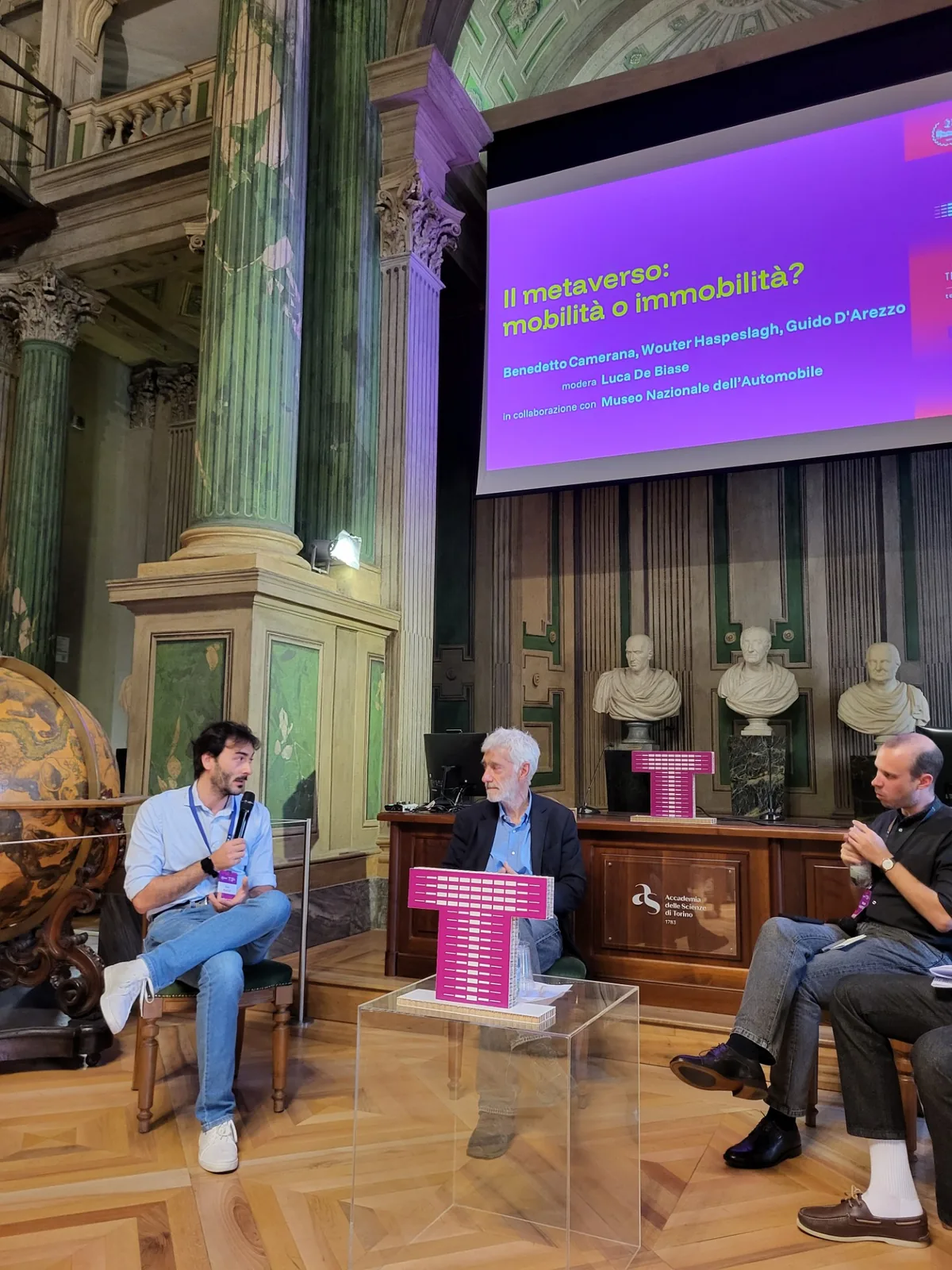
Biennale Tecnologia is Italy's main event devoted to the dialogue between technology, culture and society. Organised by Politecnico di Torino, each edition brings together researchers, companies, journalists and public decision-makers to discuss the impact of innovation free from any commercial agenda. It is not a trade show: it is a space for critical debate, one of the few in Europe where the word "metaverse" can appear without automatically being followed by a booth or an investment pitch.
That DeuSens was invited to take part in a central session —alongside leading voices from the automotive world, spatial computing and technology journalism— is a clear signal of the positioning the company is building in Italy: not as a vendor, but as a technical interlocutor with substance.
Joining DeuSens were Benedetto Camerana, president of MAUTO — Museo Nazionale dell'Automobile in Turin and a leading architect, and Wouter Haspeslagh, an international expert in spatial computing and advanced interfaces. The session was moderated by Luca De Biase, journalist and one of the most authoritative voices on innovation in the Italian landscape.
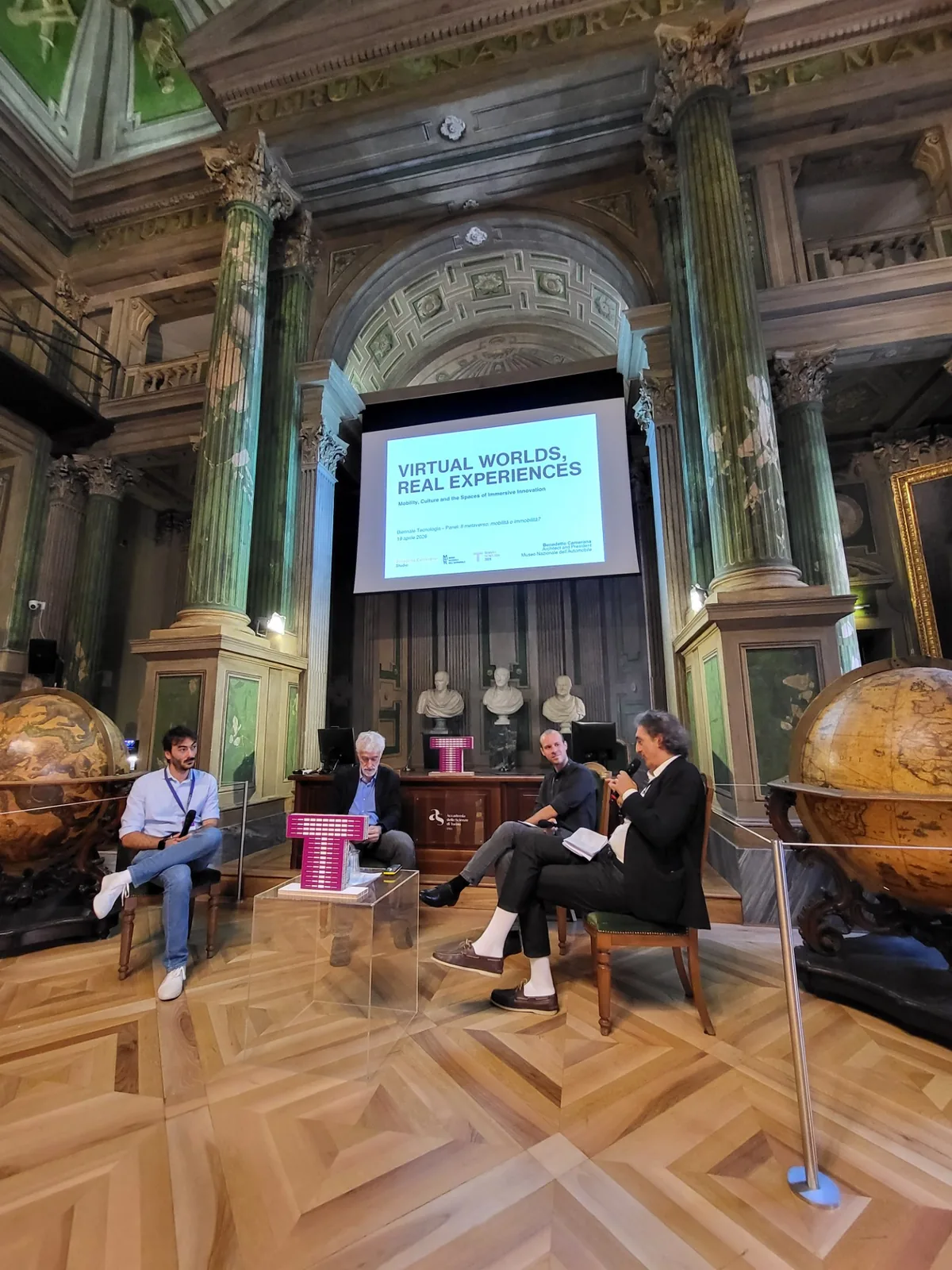
Three very different profiles —cultural heritage, frontier technology, critical media analysis— converging on the same question: has the metaverse failed, or have we simply misunderstood it? DeuSens's starting point was deliberately sober: the metaverse did not fail because it was badly conceived. It arrived too early. And, above all, it was sold as an answer before anyone bothered to ask the right question.
This was the thread running through the entire intervention. The XR market has suffered over the past years not for lack of technology —today devices are mature, development tools are consolidated and GPU clouds enable experiences unthinkable five years ago— but from an excess of hype disconnected from real needs. The Gartner curve makes it clear: the metaverse is currently in the trough of disillusionment, the disenchantment phase that every transformative technology goes through before becoming invisible infrastructure.

That is not a sentence, it is a phase. And it is also the best filter there is. Whoever survives that phase does so because they have built real value, not because they chased the narrative. For an innovation director, a training manager or an operations lead, the question should never be "do we want to do something with the metaverse?". The question is "what problem do we currently have that we cannot solve with today's tools?". Only from there does XR start to make sense —and to show ROI.
DeuSens brought concrete examples to Turin that illustrate exactly this shift. The VR training programme for AENA, the Spanish airport operator, is today an operational tool fully integrated into staff training plans, not a demo experience. It enables training on critical scenarios —runway lighting failures, apron emergencies, evacuation protocols— with a frequency and a safety level impossible to achieve in a real environment.
The train cab simulator developed for Teltronic follows the same logic: a professional tool to validate critical communication systems under realistic conditions, with measurable KPIs, short iteration cycles and adoption by end customers with strict regulatory requirements. In both cases, value does not lie in the technology: it lies in the problem solved. These are projects organisations adopt because they work better than the previous alternative, not because they are "the future".
The most forward-looking part of the debate focused on the sectors where immersive technology and AI are converging with the greatest transformative potential. These are not science-fiction scenarios: they are active lines of work with real industrial adoption.
Immersive simulation is becoming the only realistic way to test autonomous vehicles in edge-case scenarios —extreme weather, unpredictable human behaviour, cascading failures— without risking lives. It is not an aid: it is an emerging regulatory requirement. All major manufacturers and software providers in autonomous driving are building their own simulation environments, and the technical standard is increasingly close to that of the XR industry.
Spatial computing tears down the barrier to accessing complex technical tools. A maintenance operator no longer needs to read a 400-page manual: they see the machine with real-time annotations overlaid on it. A trainer does not prepare slides: they design a three-dimensional space that the learner walks through. The interface stops being a screen and becomes the environment itself.
Digital twins stop being static replicas and become predictive environments capable of anticipating failures, optimising processes and simulating decisions before making them. Combined with generative AI, they are today the most powerful lever for industry, logistics and urban management —three sectors in which DeuSens is accumulating experience with real clients.
The message emerged transversally from all three speakers: innovation that lasts is the one that responds to a real need, not the one that chases a technological aesthetic. Complexity must disappear from the interface, not from the engineering.
After the presentation, the discussion with the audience confirmed a perception that DeuSens is also observing in its day-to-day commercial activity in Italy: demand is shifting. Questions are no longer "what is VR?", but "how does it integrate with our processes?", "how do we measure the return?" and "what about medium-term maintenance?". These are the questions of a market approaching maturity, where the buyer no longer wants to be evangelised but accompanied.
This change in conversation is probably the most important news for anyone operating in XR in Italy. It means budgets no longer come from R&D or experimental marketing, but from operational lines: training, safety, maintenance, customer support. And that completely changes the kind of conversation you need to have with decision-makers.
Biennale Tecnologia is one of the few contexts in Italy where the debate on innovation unfolds with rigour and without any commercial agenda. For DeuSens, being present with a direct contribution —not as sponsors, but as technical interlocutors— is consistent with the positioning we are building in the Italian market: we are not a technology vendor, we are a project partner for those with a real problem to solve.
And you? Are you looking for a technology to try out, or a specific problem to solve? That difference —apparently small— is exactly what separates a pilot that dies in a drawer from a tool that transforms an operation.
SIMILAR CONTENT

PRIVACY POLICY
By chatting you accept our Privacy Policy.
By chatting you accept our Privacy Policy.
Conversation sent. We will be in touch shortly. New conversation


