HIPEREXPERIENCIA
LOADED


 RETURN
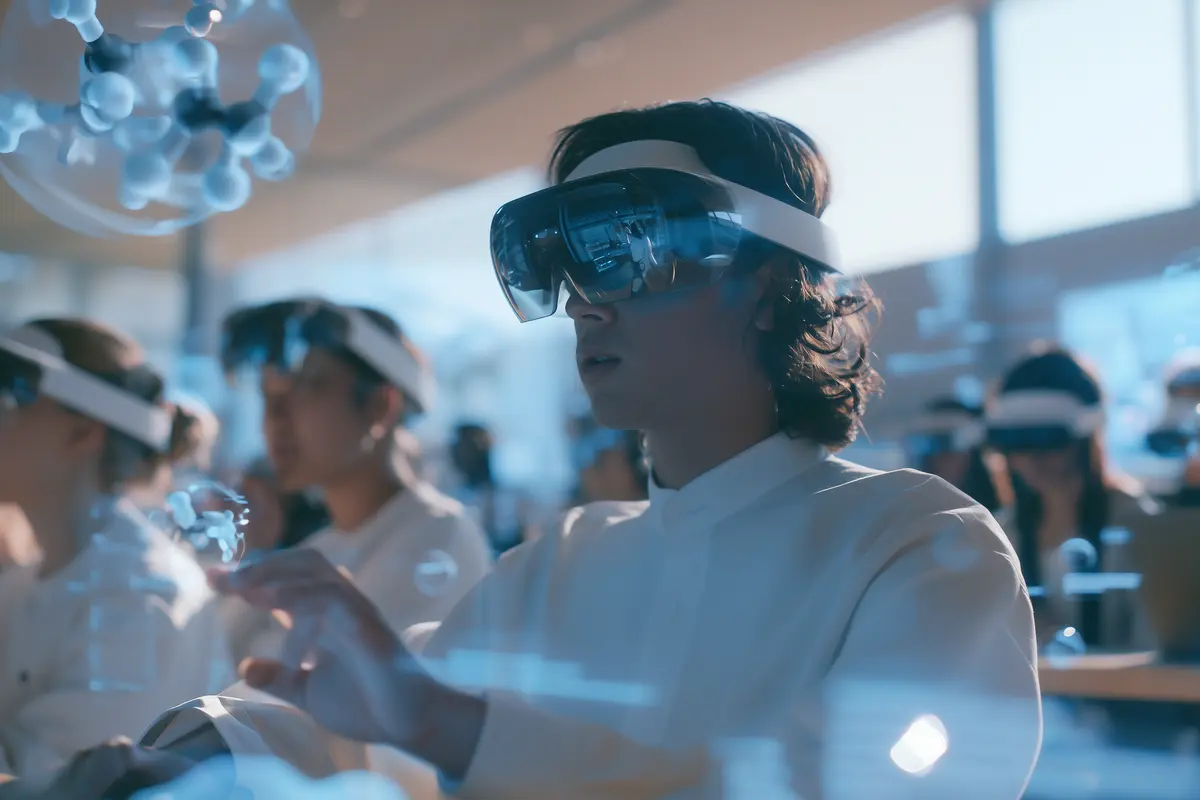
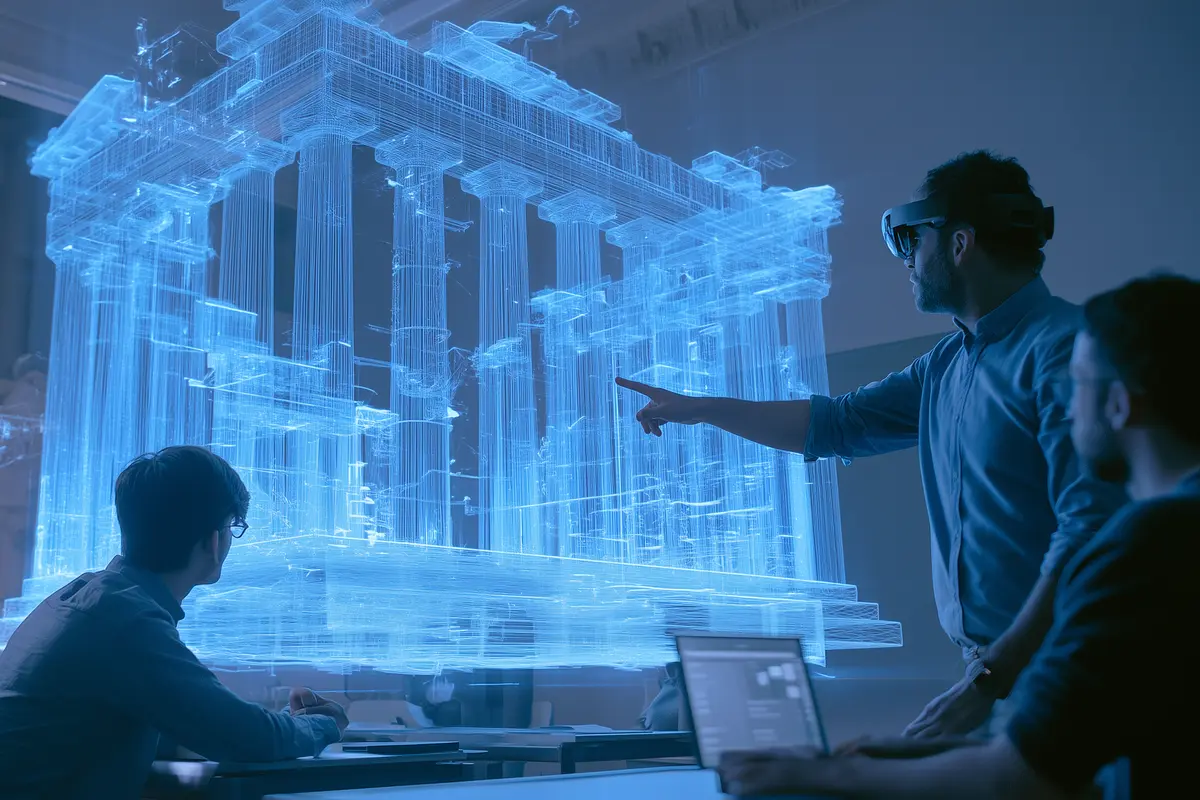
Spatial Computing is opening a new era in the education sector by making the abstract tangible. Students interacting with 3D models of molecules, organs, or historical structures; teachers annotating physical space in real time; classrooms where content exists in space, not on a flat screen.
At DeuSens we develop Spatial Computing educational experiences that combine pedagogical rigor with the immersive power of spatial computing. The result: higher retention, greater motivation, and access to learning experiences impossible in the traditional classroom.
WANT TO INNOVATE IN YOUR CLASSROOM? Tell us which subject or skill you want to transform and we'll design a custom Spatial Computing educational experience.
Design an educational experienceBenefits of Spatial Computing in education
- Experiential learning: students physically interact with content instead of just observing it
- Higher knowledge retention compared to conventional instruction methods
- Access to experiences impossible in the physical classroom: virtual dissections, historical exploration, molecular chemistry
- Spatial collaboration: multiple students interact with the same 3D content simultaneously
- Technical training in risky procedures with zero real consequences
- Motivation and engagement significantly higher than traditional teaching
Spatial Computing applications in education
- Spatial virtual labs: chemistry, physics or biology experiments in the physical classroom space
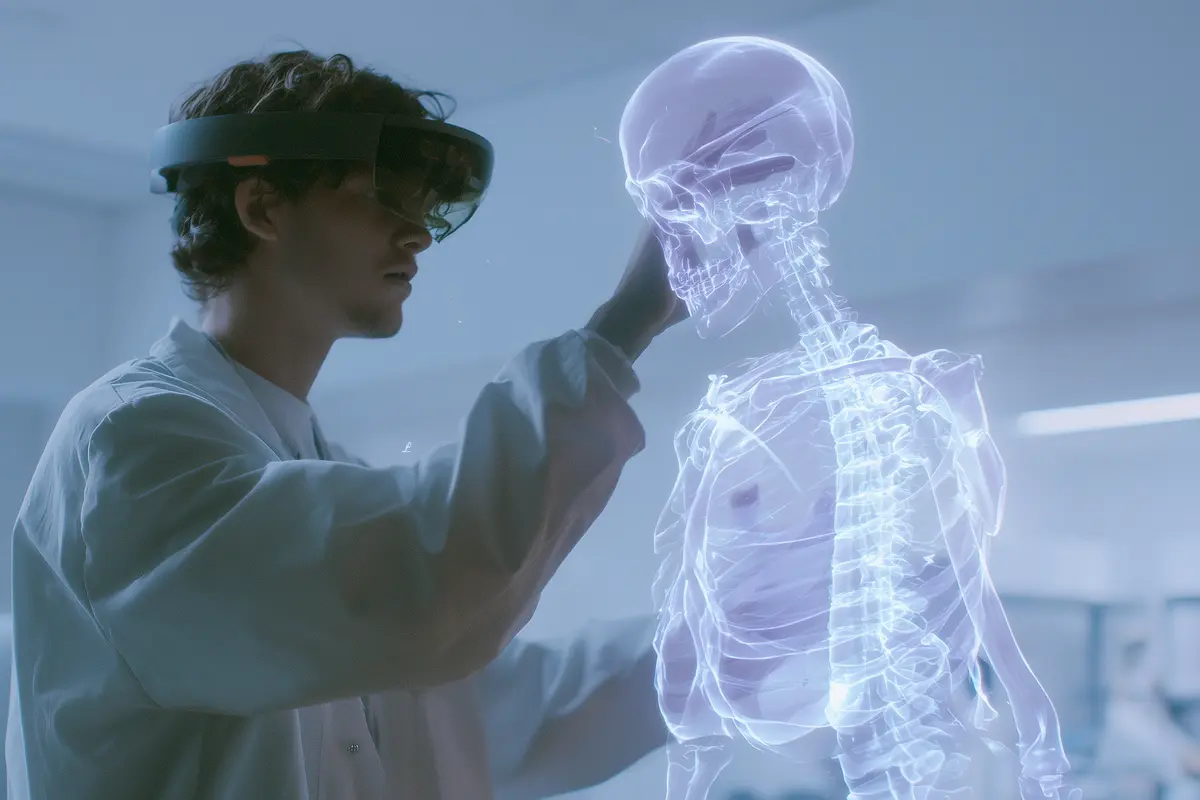
- Virtual dissections and 3D anatomical models for health sciences
- Immersive historical exploration: journeys through civilizations, battles or monuments in space
- Collaborative classes in shared space: multiple students in the same 3D environment
- Technical training in risky industrial or clinical procedures with no real risk
Technologies and tools for educational Spatial Computing
- Apple Vision Pro + ARKit + visionOS: reference platform for high-quality educational spatial computing with ease of use for students at any level.
- Unity/Unreal Engine for education: 3D interactive content creation engines for building custom educational experiences by subject and level.
- Spatial collaboration platforms (Spatial.io, Horizon Workrooms): solutions for classes and seminars in shared 3D environments with remote presence.
ALREADY USING VR IN YOUR INSTITUTION? Our Spatial Computing is the natural next step. We help you migrate or complement your current solution.
Talk about migrationThe future of Spatial Computing in education
Educational Spatial Computing will evolve toward personalized learning environments where AI adapts content and pace to each student in real time, while the physical world acts as a learning canvas. The classroom of the future will have no digital walls: content will exist in space.
Educational institutions that start exploring Spatial Computing today will train the professionals who will define the educational standards of the next generation. DeuSens accompanies them in that process.
LEAD EDUCATIONAL INNOVATION: Spatial Computing is not a trend: it is the next standard of quality education. Design your strategy with DeuSens.
Contact us now
Frequently asked questions:
How much does hardware cost for a Spatial Computing classroom?
Cost depends on the number of devices and chosen solution. Apple Vision Pro and HoloLens 2 are premium options; more affordable alternatives exist for early phases. We design the solution to fit the available budget.
How is a device fleet managed in an educational institution?
Through MDM (Mobile Device Management) solutions like Apple School Manager or Microsoft Intune. This allows managing updates, apps and permissions for the entire fleet from a centralized panel.
Is it accessible for students with special educational needs?
Yes. Spatial Computing offers unique benefits for students with ADHD, visual learning difficulties or ASD, providing more controlled and stimulating learning environments. We design with accessibility built in from the start.
Can it integrate with the institution's LMS (Canvas, Moodle, etc.)?
Yes. We develop integrations with the leading LMS platforms so that Spatial Computing content appears in the teacher's and student's usual pedagogical workflows.
Which educational levels benefit most from Spatial Computing?
All levels, but the greatest impact comes in higher education (university and vocational training), technical professional training, and postgraduate programmes, where content complexity and the need for safe practice are highest.
Latest news: spatial computing in education
Last updated: September 14, 2026
- Georgia Tech brings Apple Vision Pro into its engineering classrooms
Faculty use spatial computing to visualize magnetic fields and semiconductors in 3D, while the Institute for Matter and Systems builds digital twins of cleanroom equipment to train future technicians without risking real machinery (January 2026). - Apple raises Vision Pro's price to $3,699, confirming its pivot toward professional use
The company shelves a consumer successor until at least 2028 while adoption grows in CAE pilot training, cataract surgery and Porsche product design, where the device's cost is marginal next to the training hours it saves (June 2026). - The spatial computing market will reach $662.99 billion by 2035
Healthcare already accounts for 30.5% of the 2025 market thanks to immersive medical training and procedure planning, with Asia-Pacific set to grow faster than any other region (August 2026). - Samsung launches Galaxy XR, its Android XR answer to Vision Pro
With 29 million pixels, Gemini integration and full Play Store compatibility from day one, the $1,799 device widens the range of spatial computing platforms available to schools and universities.
Conclusion:
Educational Spatial Computing is not an experiment: it is a pedagogical tool with demonstrated impact on retention, motivation and learning outcomes. At DeuSens we combine pedagogical design and immersive technology to develop educational experiences that genuinely transform how people learn.
ACT NOW:
Contact us for a free consultation