HIPEREXPERIENCIA
LOADED


 RETURN
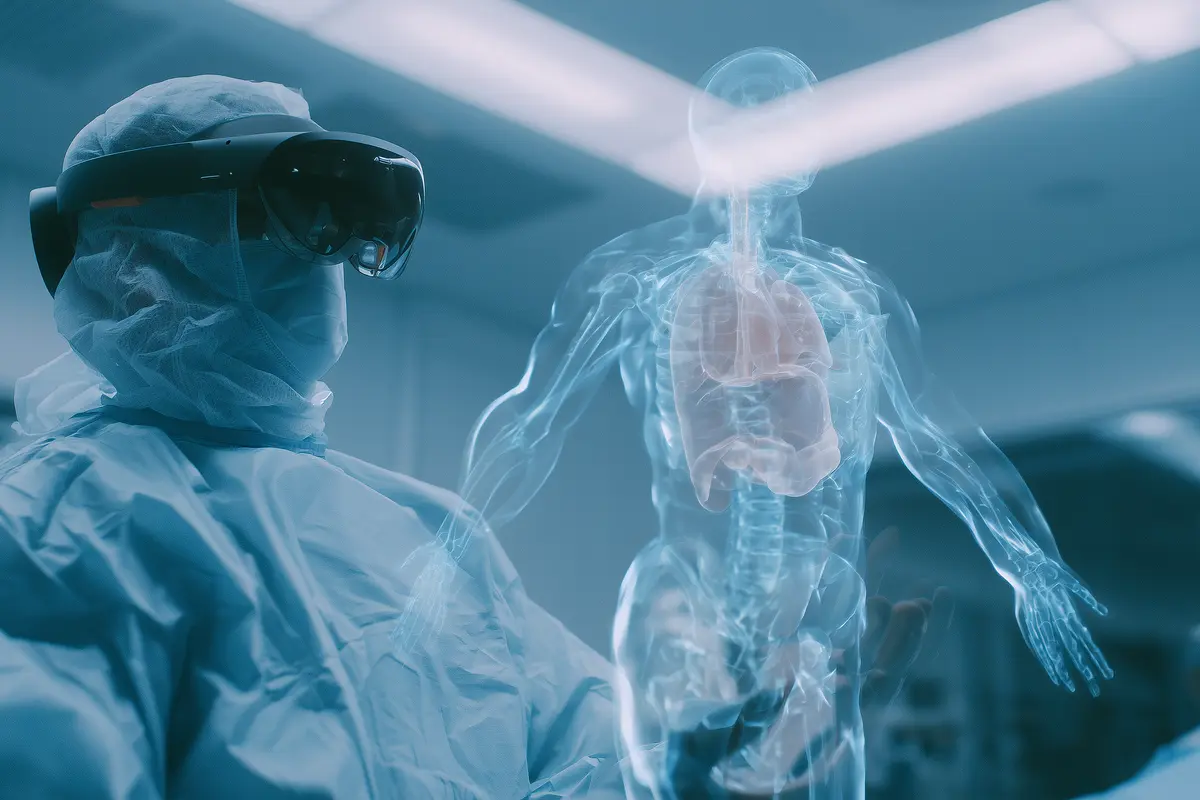
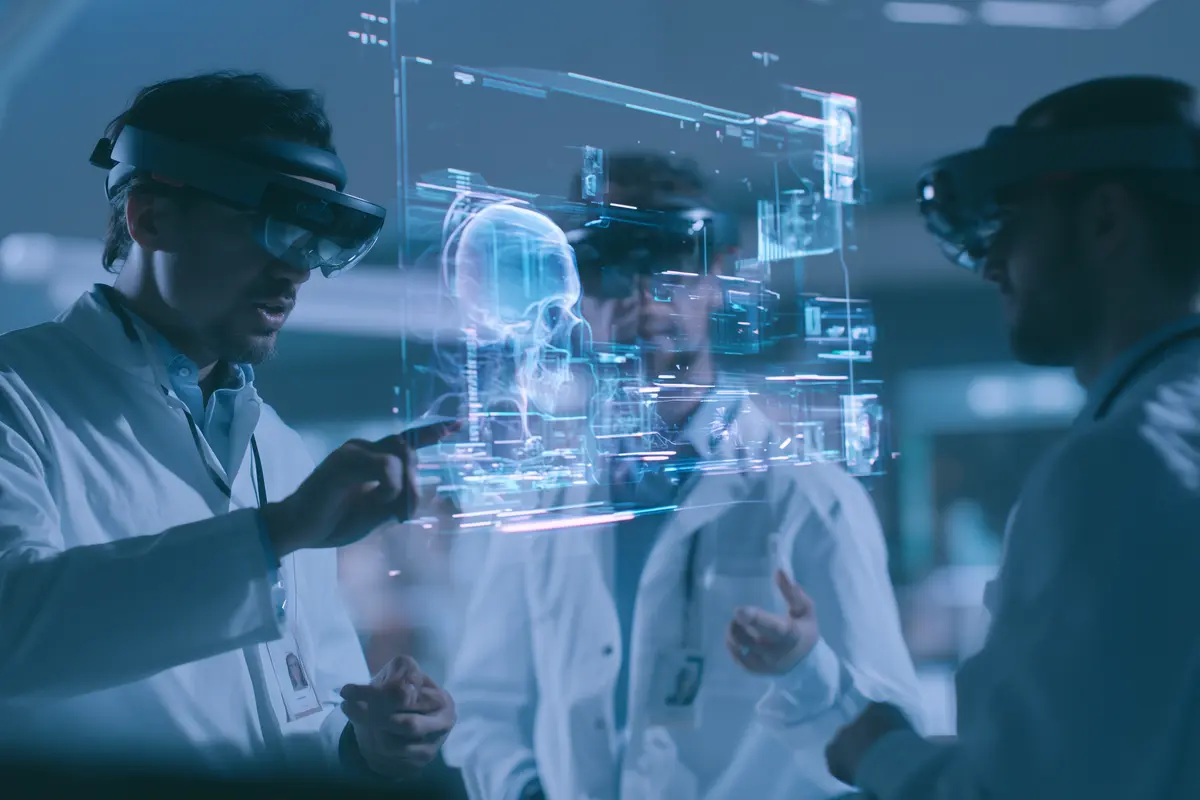
Spatial Computing is changing how healthcare professionals in the medical sector perceive, analyze and act on clinical information. Surgeons visualizing the patient's anatomy in 3D before the procedure, doctors accessing clinical records without touching surfaces, students practicing procedures in hyper-realistic simulation environments.
At DeuSens we develop Spatial Computing solutions for the medical field that improve clinical precision, reduce risk in complex procedures, and raise the standard of healthcare training without putting any patient at risk.
WANT TO EXPLORE USE CASES? Tell us your specialty and we'll show you how Spatial Computing can be applied in your clinical environment.
Talk to a specialistBenefits of Spatial Computing in medicine
- More precise surgical planning through patient-specific 3D anatomical visualization
- Reduced clinical errors with real-time procedural guides overlaid in space
- Training of residents and specialists with zero risk to real patients
- Improved visual diagnosis: the doctor sees diagnostic images overlaid in space
- Remote collaboration between specialists with shared visualization of the clinical case
- Contact-free access to clinical information: reduces risk of nosocomial infections
Spatial Computing applications in medicine
- Patient-specific 3D anatomical visualization for personalized pre-surgical planning
- Guided surgical assistance: instructions overlaid on the operative field
- Immersive clinical training: students practice procedures on hyper-realistic models
- Spatial telemedicine: the remote specialist sees exactly what the field doctor sees
- Contact-free access to records and diagnostic imaging systems (PACS)

Technologies and tools for medical Spatial Computing
- Apple Vision Pro + ARKit Healthcare: reference platform for immersive medical visualization with the highest privacy and security standards.
- Microsoft HoloLens 2 + Dynamics 365 Guides: certified solution for hospital environments with integration with HIS and PACS systems.
- 3D medical imaging software: integration with tools like 3D Slicer, Medivis SurgicalAR and DICOM platforms for holographic visualization of imaging data.
HAVE A PILOT PROJECT IN MIND? We work with hospitals, clinics and medical universities to design pilot projects with real, measurable impact.
Design the pilotThe future of Spatial Computing in medicine
Medical Spatial Computing will converge with artificial intelligence to create systems that not only visualize data but interpret it in real time during the procedure. AI-guided surgery with spatial overlay, adaptive training, and spatially-assisted diagnostics will be standard in leading hospitals of the next decade.
Medical centers that start exploring Spatial Computing today will be better positioned to lead this transformation and attract high-caliber clinical talent that already knows and values these tools.
GET AHEAD OF THE CHANGE: The digitization of the clinical environment is inevitable. Design your Spatial Computing strategy before the competition does.
Consult us now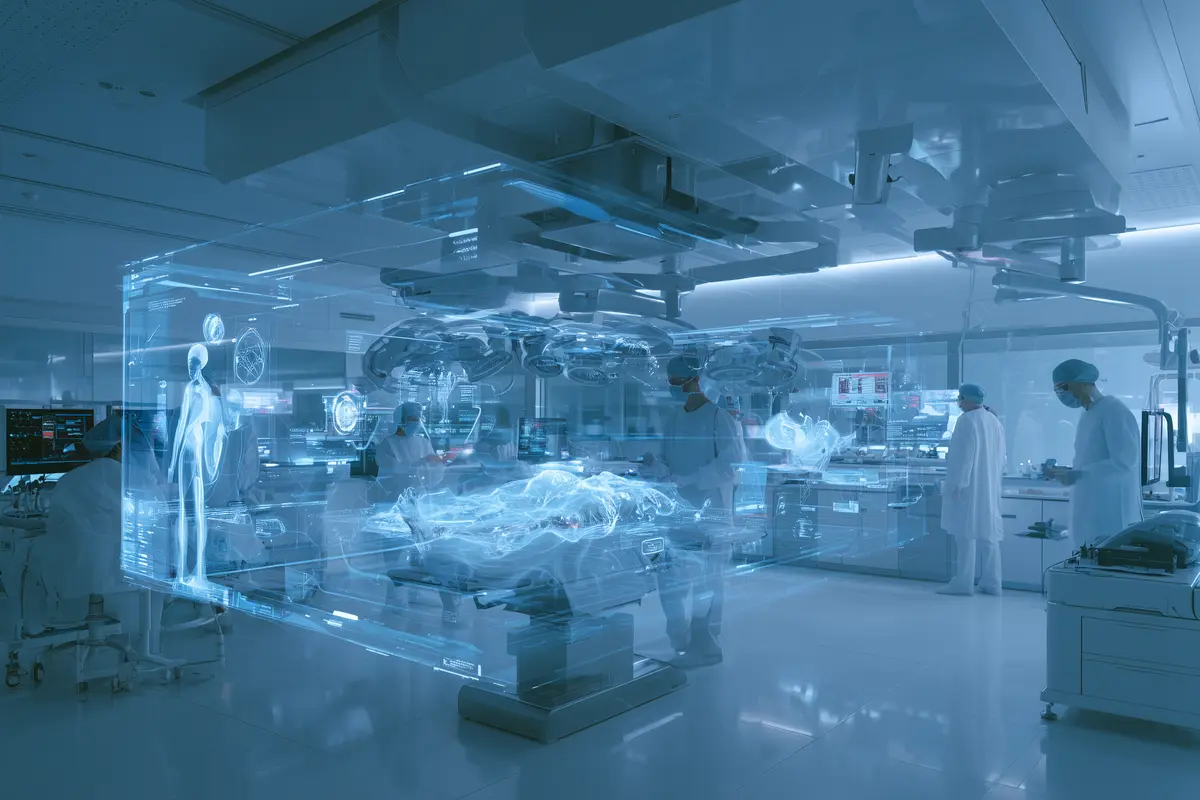
Frequently asked questions:
Does Spatial Computing comply with medical data protection regulations (GDPR, HIPAA)?
Yes. We design all solutions with privacy by design. Apple Vision Pro and HoloLens 2 have certifications for healthcare environments and the software platforms comply with GDPR and HIPAA depending on the deployment market.
Is it compatible with our existing PACS and HIS systems?
In most cases, yes. We develop integration layers with the leading diagnostic imaging (PACS) and clinical records (HIS/EHR) systems on the market, without requiring replacement.
How much training time does clinical staff need?
The learning curve for Apple Vision Pro and HoloLens is significantly shorter than previous VR technologies. Generally, 2 to 4 hours of training are sufficient for the most common use cases.
Which medical specialties benefit most from this technology?
Surgery (especially neurosurgery, orthopedic and cardiovascular surgery), radiology, pathological anatomy, emergency medicine, and all specialties with high hands-on training requirements.
Can it be used in operating rooms under real conditions?
Yes. There is hardware certified for use in operating theaters that meets sterility standards and compatibility with medical radio-frequency environments. We advise on selecting the most appropriate hardware for each setting.
Latest news: spatial computing in medicine
Last updated: August 31, 2026
- Sharp HealthCare bets big on spatial computing
The California hospital system rolls out spatial computing technology across several of its facilities as part of its clinical innovation strategy. - Sharp HealthCare and Epic partner to bring Apple Vision Pro into clinical practice
The collaboration connects Epic's electronic health records with Apple Vision Pro's spatial visualization to improve clinical decision-making. - Epic dives into healthcare spatial computing
The largest US electronic health record provider develops new spatial integrations designed for operating rooms and patient visits. - Sharp HealthCare taps Apple Vision Pro for surgical innovation
The hospital adopts immersive spatial visualization in its operating rooms to improve surgical planning and precision.
Conclusion:
Medical Spatial Computing is moving from the laboratory to the operating room. At DeuSens we accompany hospitals, clinics and medical training centers in this process, with solutions that combine clinical rigor, regulatory compliance, and real experience in deploying immersive technologies.
ACT NOW:
Contact us for a free consultation