

 RETURN
18.01.2021
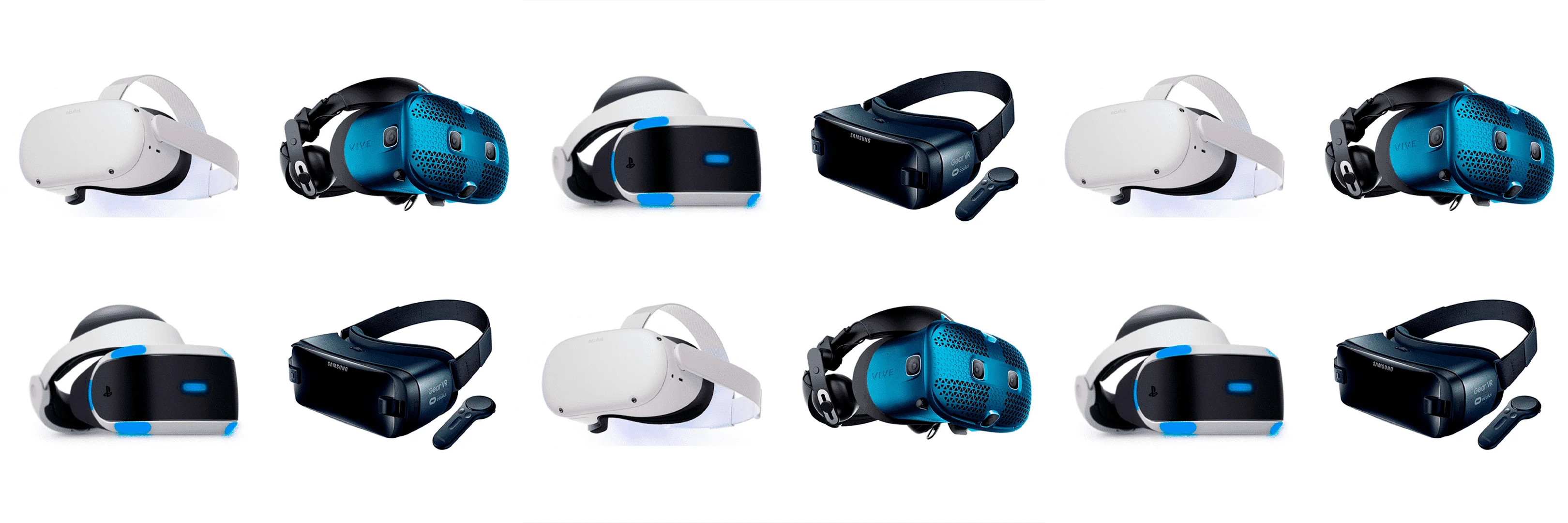
TYPES OF VR DEVICES | What are the types of Virtual Reality glasses that exist?

HIPEREXPERIENCIA
LOADED


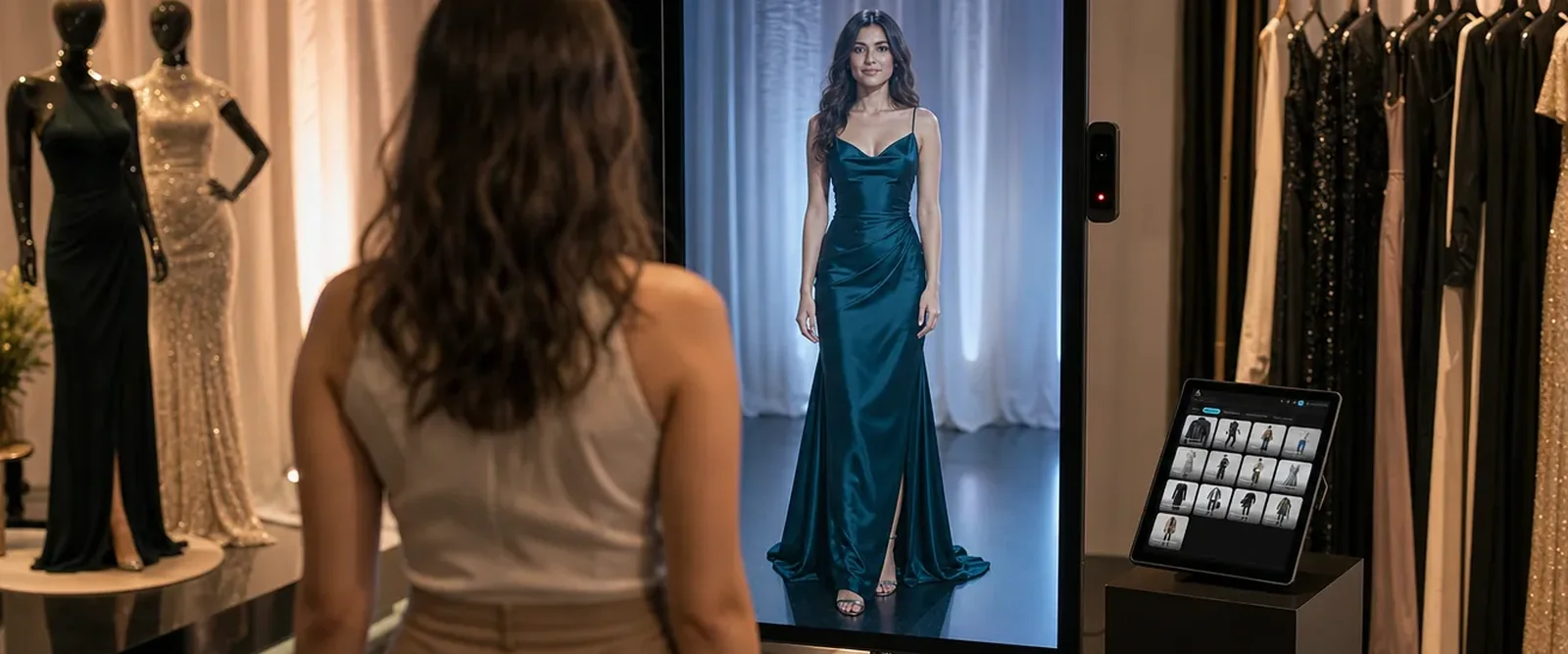
Spanish retail has crossed a threshold. In January 2026, Inditex rolled out its AI virtual try-on inside the Zara app in Spain, and from that moment the question stopped being "what is this" and became "what do I do with this in my brand". While the head of the market moves towards hyperrealistic avatars and remote garment fitting, a parallel field is gaining comparable weight: AI try-on in physical environments —stores, trade shows, events and brand activations— where the difference between catching attention and losing it is measured in seconds.
At DeuSens we have integrated this scenario into our best-known hyperexperience solution. FunMirror AI is the new mode of FunMirror that uses generative AI to overlay real garments onto the user's body in real time. We are not talking about decorative filters: we are talking about a solution specifically designed for physical retail, professional trade shows and brand activations, with customisable catalogues, first-party lead capture and integrated metrics.
The global virtual try-on market is moving from $8.27bn in 2025 towards a projected $30.41bn by 2034, with a CAGR close to 17.7%. Behind that figure there is hard operational data: brands like Fytted report return rate reductions above 40% after integrating AI try-on, and cases published throughout 2026 place conversion uplifts between 25% and 40%. The curve is no longer exploratory, it is financial.
Zara's move in Spain is just the visible tip. El Corte Inglés activated virtual try-on shop windows with Disney in Madrid's Plaza Callao; H&M and Zalando work with 3D avatars and digital twins. The point for a retail decision-maker is that AI try-on has stopped being an innovation experiment: it is marketing infrastructure. Not having it on the roadmap is a conscious decision, not a default one.
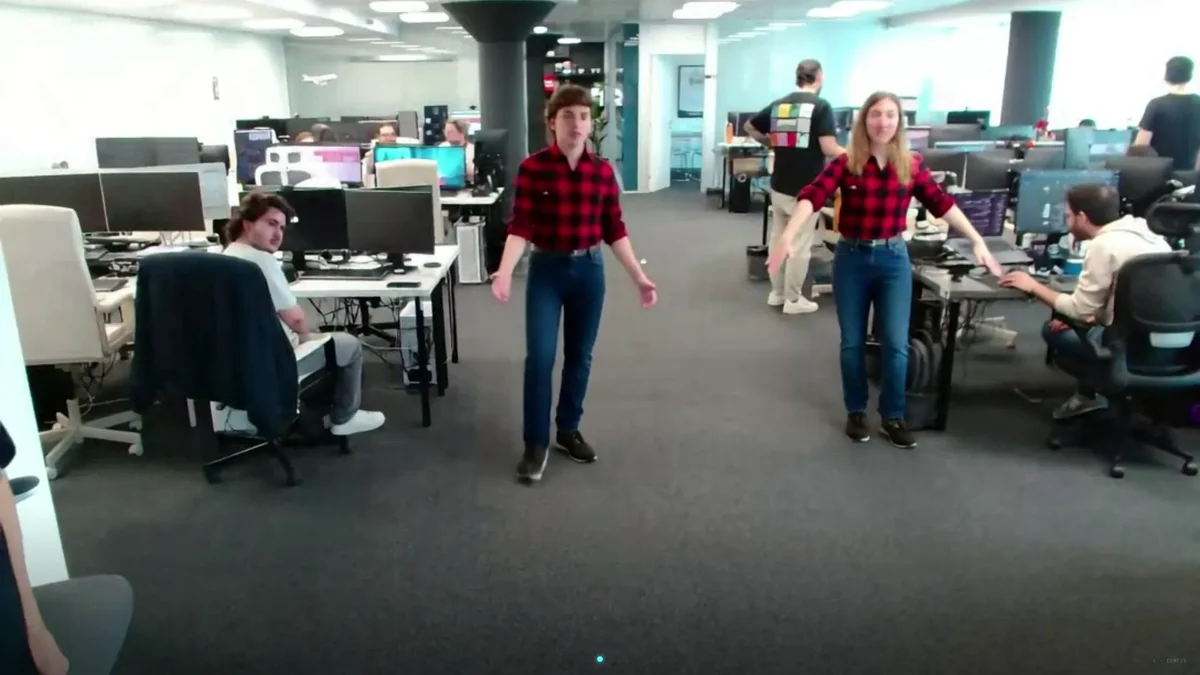
The AI virtual try-on category is today dominated by ecommerce widgets and Shopify-integrated plugins, designed to solve fit and conversion on the online product page. FunMirror AI addresses the opposite scenario: the in-person experience. The camera detects people in front of the mirror, generative AI replaces their garments with those from the active catalogue and the result renders over the live reflection, with realistic fabric drape and movement response. Several people can try on different garments in the same shot —no queues, no fitting room, no need to undress.
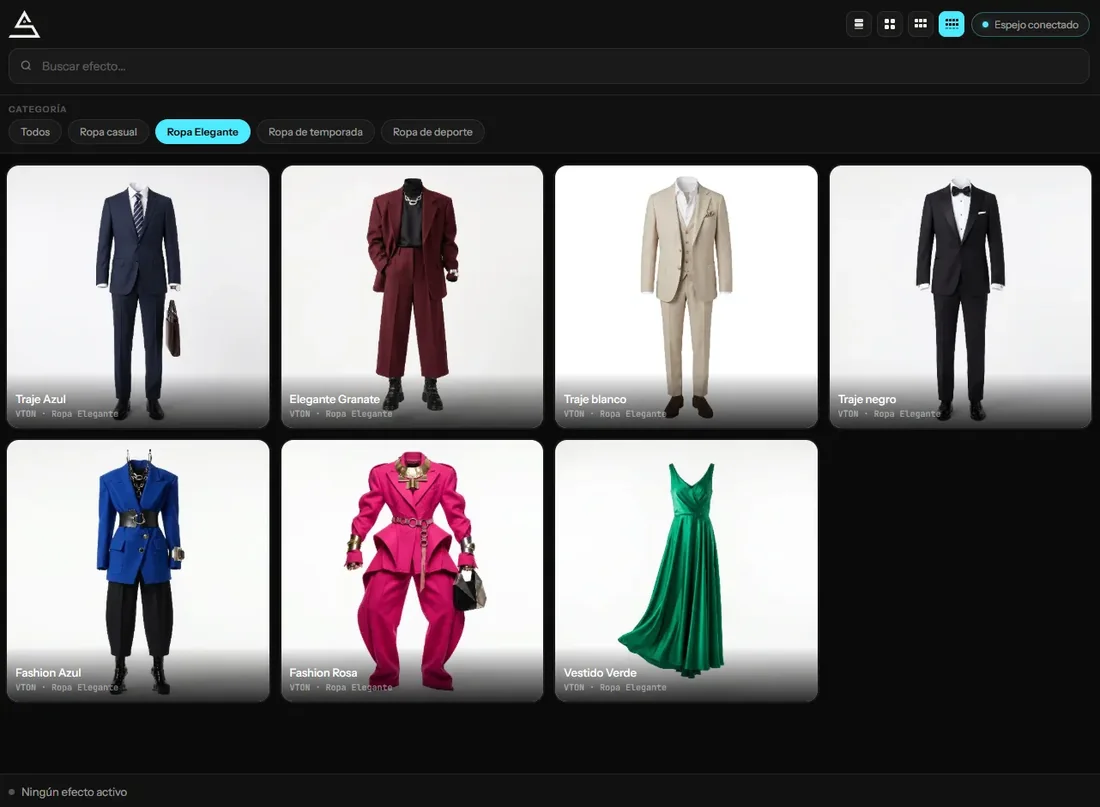
The catalogue is fully customisable per brand: casual wear, formal wear, seasonal collections, sports lines or themed costumes. Operation runs from a tablet connected to the mirror, allowing a sales associate or hostess to switch categories live based on the customer profile. The whole session is tied to a GDPR-compliant opt-in lead capture flow, ready to plug into the brand's CRM.
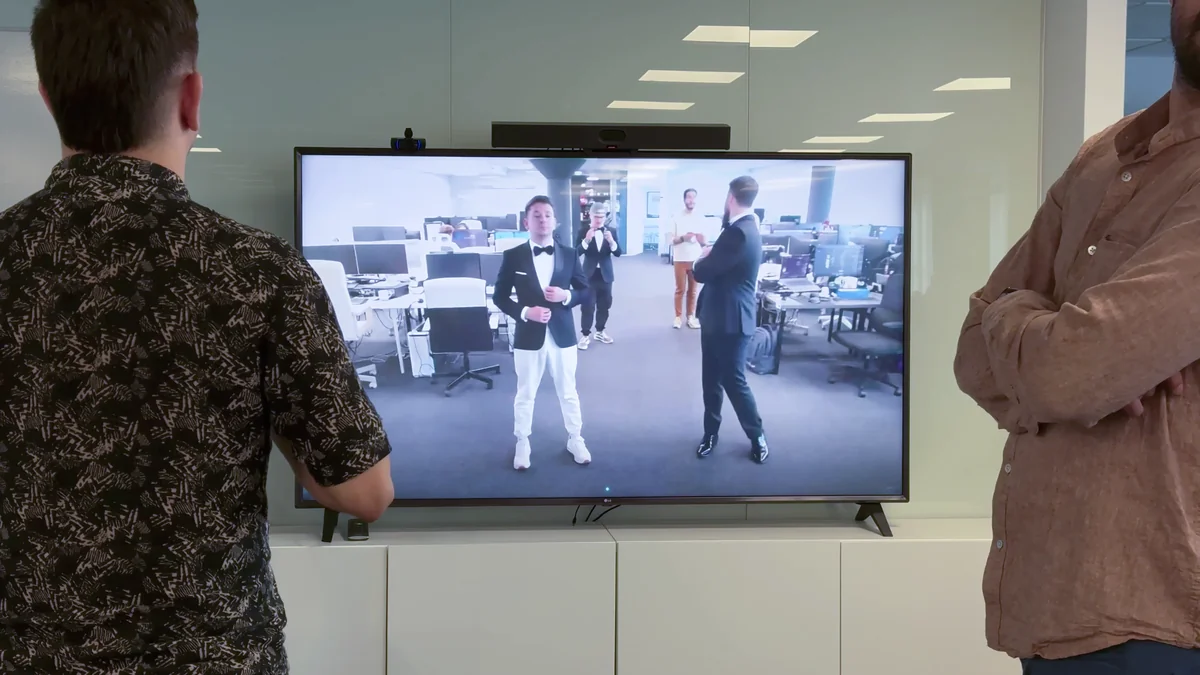
In physical retail, AI try-on works as a hot spot: it extends time spent in store, frees square metres from physical fitting rooms and produces qualified data on which garments are tried most. There is direct precedent in our Base & HMY case, where FunMirror was placed at the back of the point of sale to force the full store walkthrough. The new generative AI mode brings that same principle to real catalogue garments, not themed costumes.
At trade shows and professional events, FunMirror AI acts as a stand magnet and a qualified lead capture engine. Visitors try on garments, take the image with them and the brand extends its impact on social media through audience-generated content. The LeciTrailer case already validated this pattern, with stand traffic and business volume uplift. The AI mode adds a layer: showing next-season collection, unmanufactured items or campaign variants without needing physical stock.
In brand activations, AI try-on is reusable content. A single multi-hour session generates demographically diverse assets —sizes, ages, genders— that the brand can deploy on social, ecommerce and retargeting. The relevant metric stops being "how many people walked through" and becomes "how many qualified assets did I produce and where will I deploy them".
The point that tends to get overlooked in the market conversation is the important one: AI try-on does not end when the customer leaves the store. The image capture, the garments tried and the opt-in feed into the CRM and fuel the digital cycle. The brand walks away from the event or point of sale with a data asset —and visual assets with consent— that would normally require dedicated campaign production.
That is the mental shift we ask retail decision-makers to make: stop evaluating AI try-on as an innovation peripheral and start evaluating it as marketing infrastructure. It bridges physical and digital, feeds the CRM, reduces returns, frees in-store space and produces organic content. If your brand has a point of sale, a trade show or an activation on the horizon for the next twelve months, that decision is best made before —not after— Inditex's next move.
SIMILAR CONTENT

PRIVACY POLICY
By chatting you accept our Privacy Policy.
By chatting you accept our Privacy Policy.
Conversation sent. We will be in touch shortly. New conversation


