

 RETURN
18.01.2021
TYPES OF VR DEVICES | What are the types of Virtual Reality glasses that exist?

HIPEREXPERIENCIA
LOADED


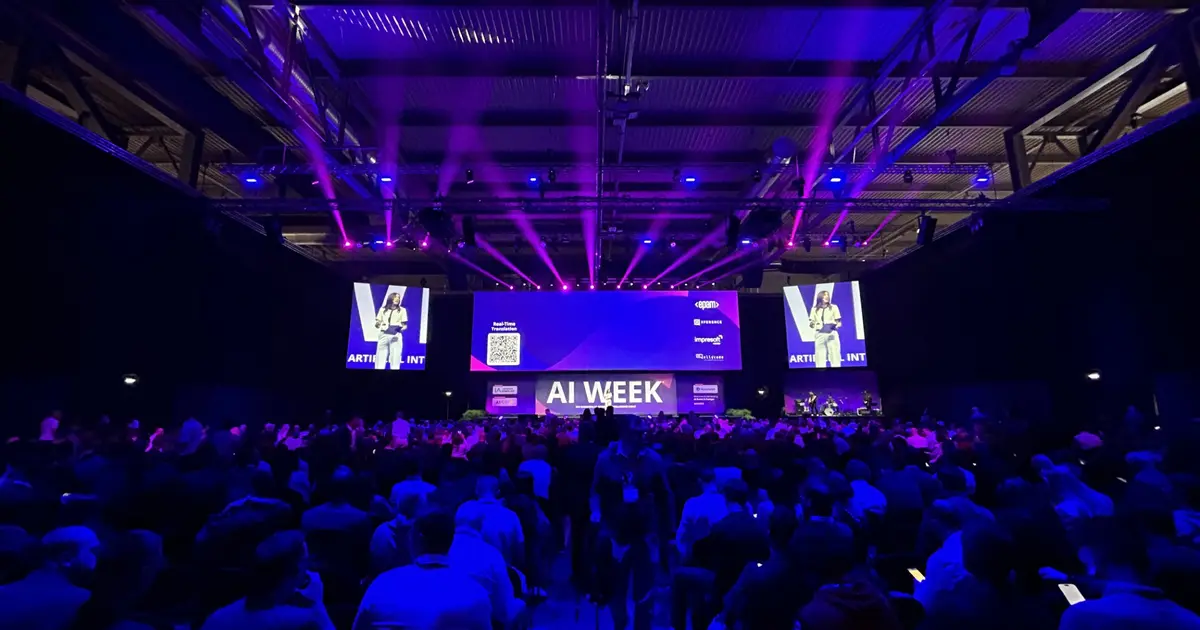
Two days at Fiera Milano Rho, the Polo di Innovazione ICT collective booth packed from the moment it opened, and one idea coming out of it: AI has stopped being a promise and has become the layer that makes immersive experiences more human, more reactive, and more useful for whoever lives them. We were at AI Week 2026, Europe's largest event dedicated to artificial intelligence, showing how we apply AI to conversational avatars, real-time visual generation, and intelligent gamification. This is the recap of what happened and the three strategic takeaways we're bringing home.
On May 19 and 20, 2026, Fiera Milano Rho hosted the seventh edition of AI Week with over 25,000 attendees, 700 international speakers, and 250 exhibitors spread across 17 themed stages. This isn't your typical trade fair: it's the thermometer of how Europe is absorbing, regulating, and producing applied artificial intelligence. Lucilla Sioli, director of the European AI Office, was there. So were Maria Cristina Russo from the European Commission, key industry voices like Llion Jones (co-author of "Attention Is All You Need"), and a huge network of startups, institutions, and studios working with generative AI, autonomous agents, and multimodal models.
For us, being there wasn't just commercial presence. It was listening. Confirming that the debate has moved from "what is AI" to "how do we integrate it into products that move business." And bringing that pulse back to the proposals we're preparing for the next six months with clients in events, retail, museums, and corporate training.
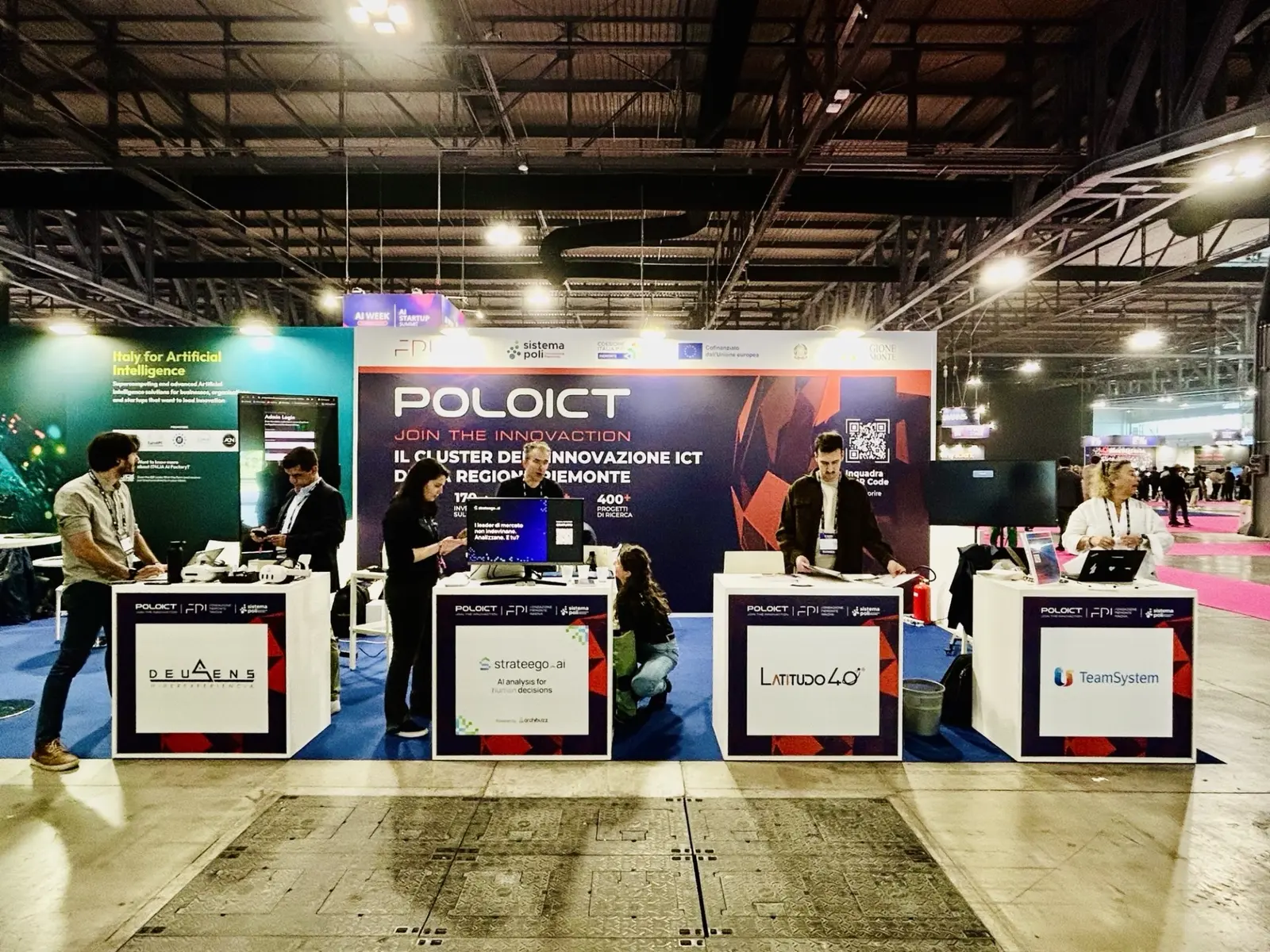
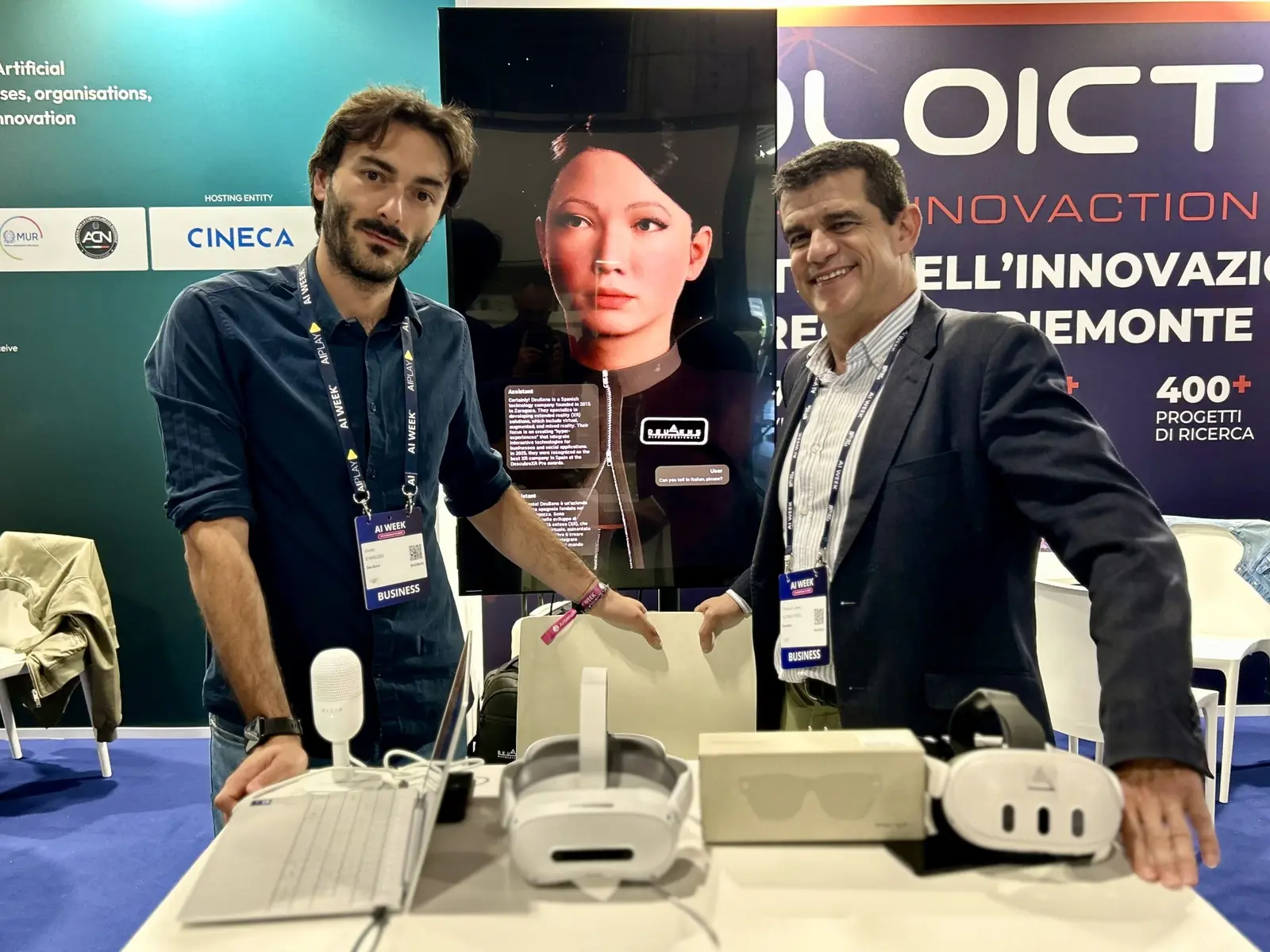
We shared space at the Polo di Innovazione ICT collective booth, coordinated by Piemonte Innova, alongside Archibuzz, Latitudo 40, and TeamSystem. Our on-site team — Álvaro Antoñanzas, co-founder and COO of DeuSens; Francisco Javier Alonso Peña, Sales Director; and Guido D'Arezzo, Country Manager for Italy — showcased three lines of work to clients, partners, and press that summarize where AI applied to experience stands today:
Conversational avatars like Alice Assistant, which stop being cold interfaces and become interlocutors capable of guiding museum visits, attending booths, or managing corporate training with contextual memory. Real-time visual generation, where content reacts to the user and environment with no intermediate steps. And intelligent gamification, which adapts difficulty, narrative, and reward to each participant's profile.
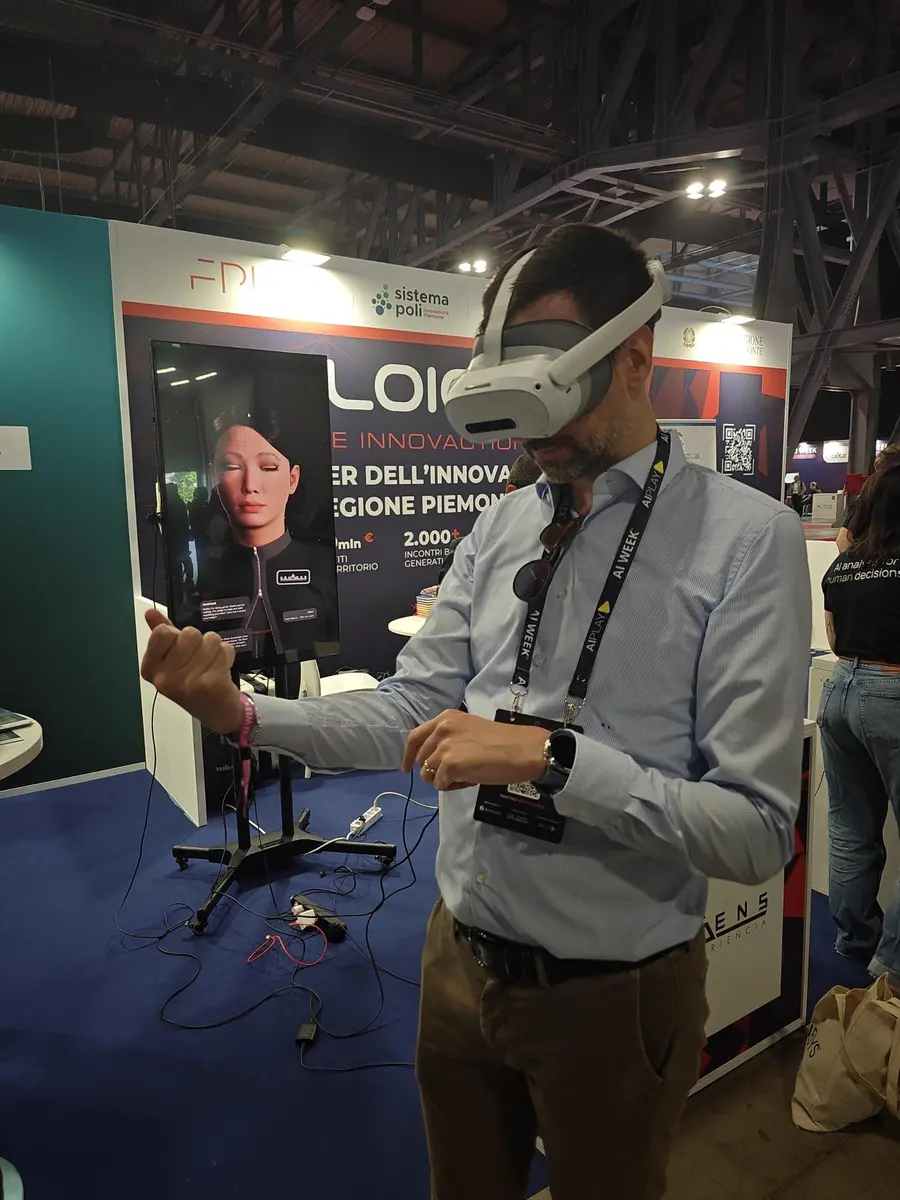
These are not isolated demos. They're three pieces of the same movement: AI as the layer that connects immersive hardware, dynamic content, and behavioral data so that every experience is different from the last. At the booth, visitors could test firsthand how these technologies feel when they work together.
First. Clients no longer ask whether AI works — they ask how to measure it. The leap of the last twelve months isn't in the technology, it's in the maturity of the buyer. Brands, museums, and event organizers arrive with clear KPIs: dwell time, retention, quality of leads generated by a conversational avatar, post-visit conversion. The conversation has grown up.
Second. Real-time generative AI is changing production timelines. What used to require weeks of modeling and rendering is now solved with hybrid pipelines where base content is prepared in advance and variations are generated live based on context, language, or user profile. The AI Marketing Summit sessions and the new Prompt Battle made it clear: this is no longer experimentation, it's real production with assigned calendars and budgets.
Third. Europe wants its own standard. Among institutional speakers, agencies, and regulators, we noticed a shared intent to build applied AI with European criteria: traceability, consent, model sustainability. This isn't a brake; it's a competitive advantage for those of us building immersive product from here.
We leave Milan with contacts, use cases, and a reinforced idea: the most interesting immersive experiences of the coming months aren't the ones with the most spectacular hardware — they're the ones that best integrate AI into the heart of the narrative. That's what we're building for our clients and what we'll keep sharing on this blog.
Thanks to the whole Polo ICT team, to Piemonte Innova, and to everyone who came by to say hi those two days. If you want to see how we apply AI to real immersive experiences, take a look at our portfolio.
SIMILAR CONTENT

PRIVACY POLICY
By chatting you accept our Privacy Policy.
By chatting you accept our Privacy Policy.
Conversation sent. We will be in touch shortly. New conversation


