

 RETURN
FunMirror at Madrid Horse Week 2021 | Hyperexperience at the fair

HIPEREXPERIENCIA
LOADED


ENGLISH


ESPAÑOL

ITALIANO
CONTACT

TECHNOLOGY
IMMERSIVE TECH
USE CASE
TOOL
CLIENT
The Government of Aragon promotes the digitalisation of the region's cultural heritage through Turismo de Aragón, investing in innovative experiences that connect visitors with the historical and natural richness of the Aragonese territory.
GOAL ACHIEVED
Transform the visitor experience at the Monastery of San Juan de la Peña through a comprehensive immersive technology HUB integrating VR, AR, conversational AI avatars and an interactive photocall in four languages, connecting the monastery's millennial history with cutting-edge technology.

A thousand years of history beneath the rock: a monastery that needed a new way to be told
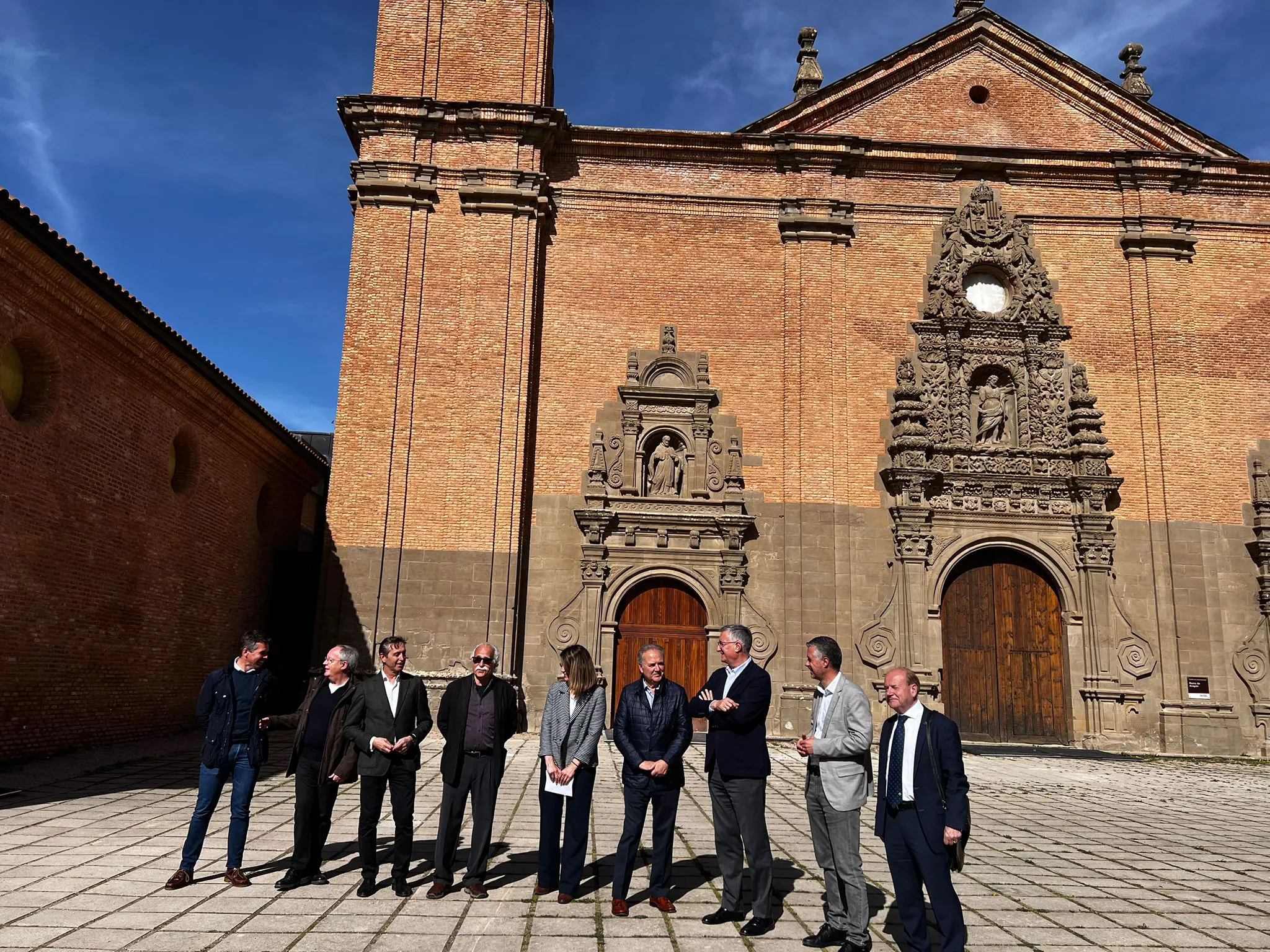
The Royal Monastery of San Juan de la Peña was born in the 10th century beneath a colossal rock in the Aragonese Pyrenees. The first royal pantheon of the Kings of Aragon, a stop on the Camino de Santiago and — according to tradition — guardian of the Holy Grail for over three centuries. When the fire of 1675 consumed its walls, the Benedictine monks built a new Baroque monastery on the meadow of San Indalecio, designed by the Zaragozan architect Miguel Ximénez. Today the New Monastery serves as an interpretation centre, a hotel and a destination for thousands of visitors every year. But the most powerful stories of this place — the monk scribes, the royal ceremonies, the pilgrims — don’t fit in a display case or read well on an information panel. They needed to come alive.
DeuSens designed a complete technology ecosystem that turns every corner of the monastery into an interactive stage. An AI-powered virtual monk welcomes each visitor. An augmented reality app transforms centuries-old stone into windows to the past. PICO 4 Ultra headsets transport visitors to 17th-century monastic life. And an interactive photocall closes the experience by turning visitors into protagonists of the monastery’s story. All in four languages — Spanish, English, French and German — so the monastery speaks the language of everyone who walks through it.
A monk who’s been waiting centuries for your visit: avatars powered by artificial intelligence
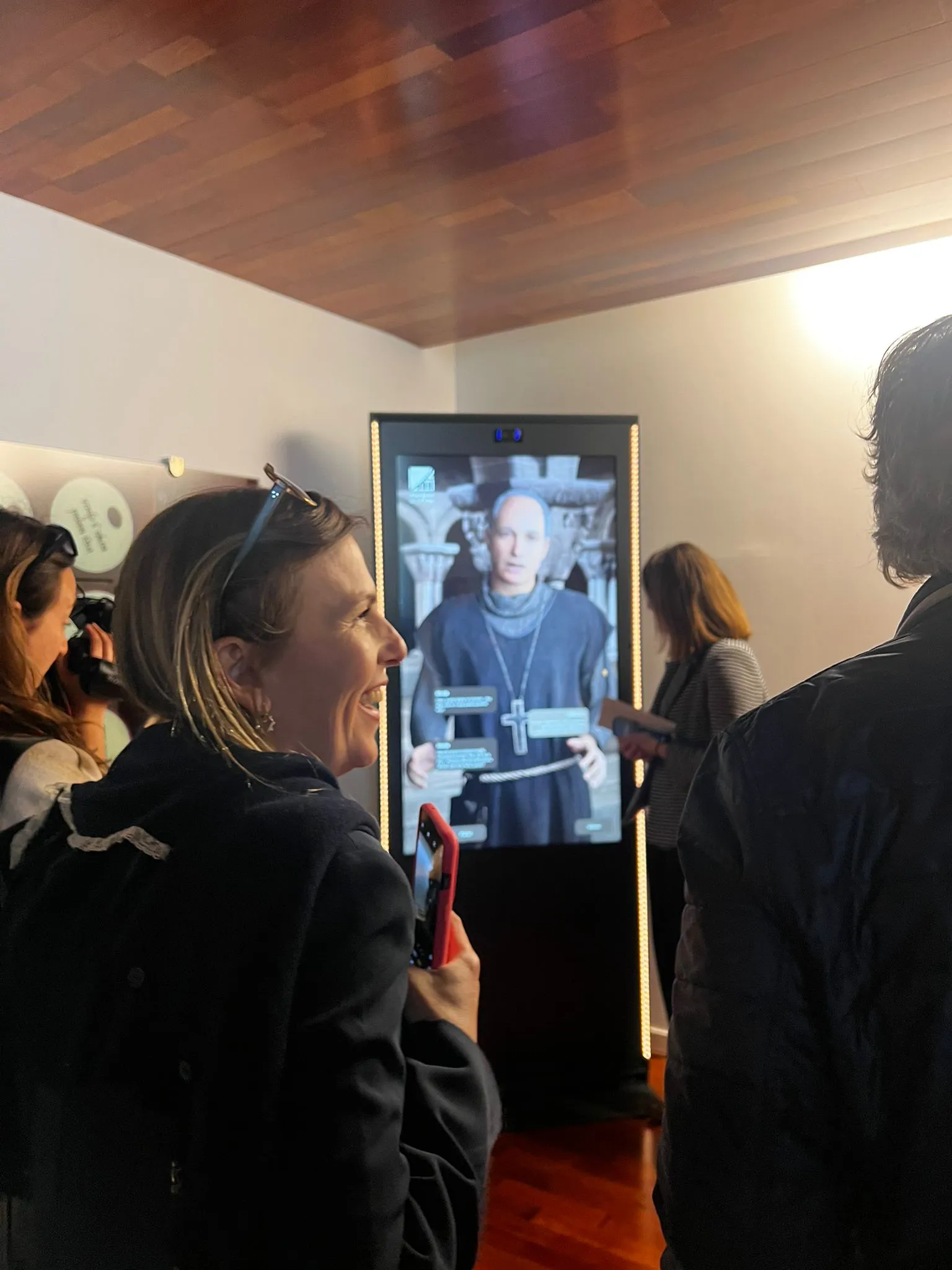
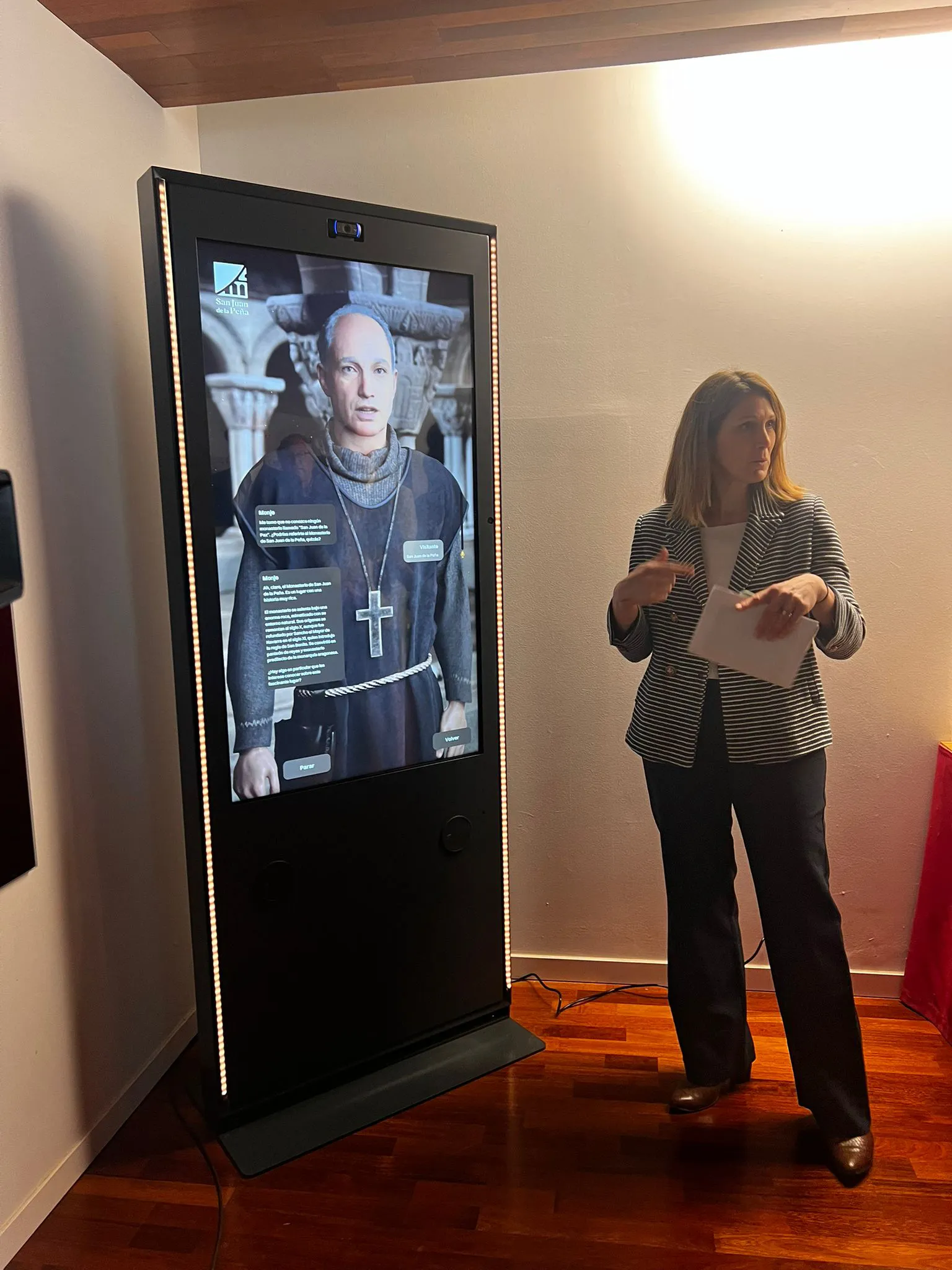
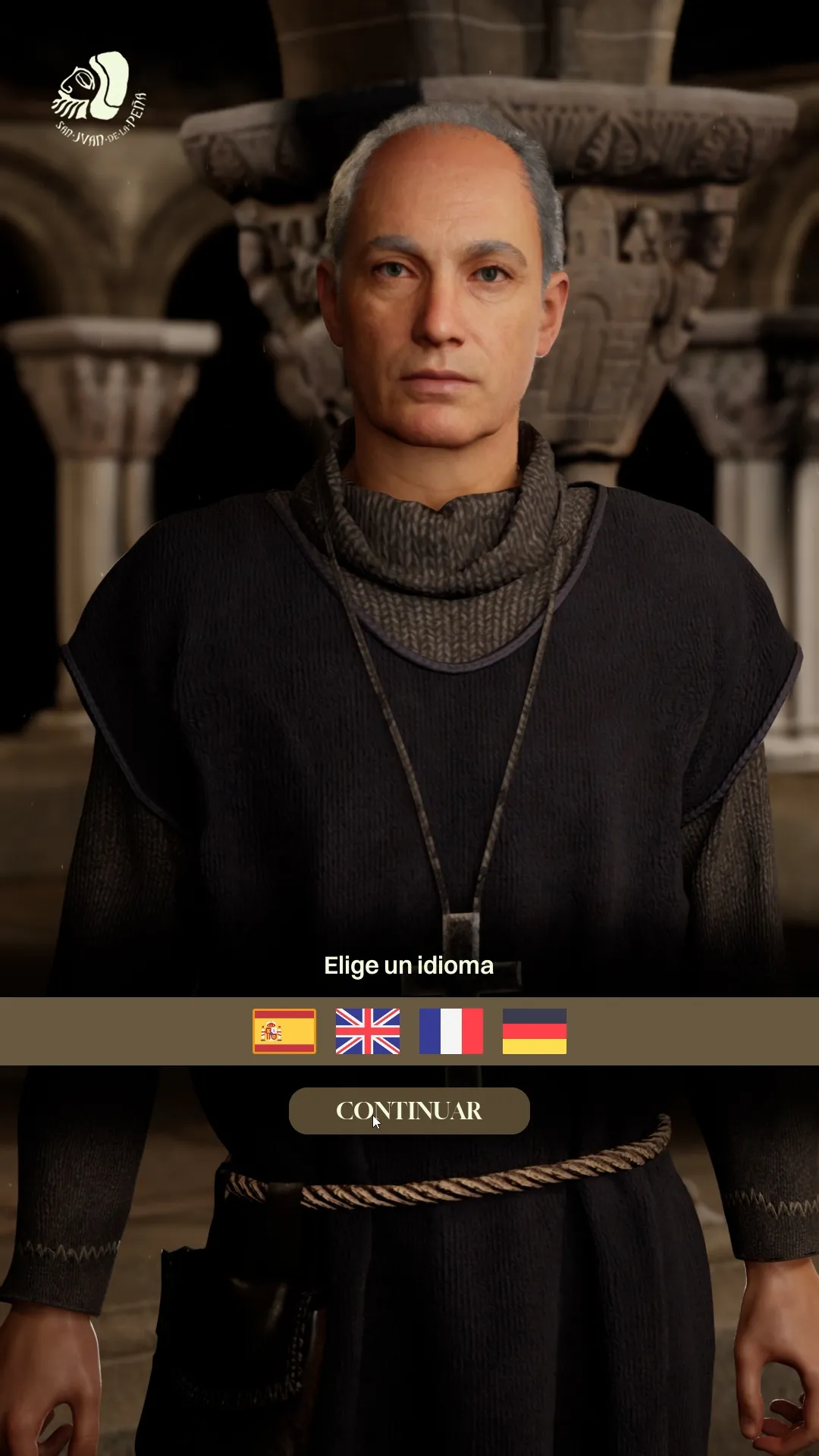
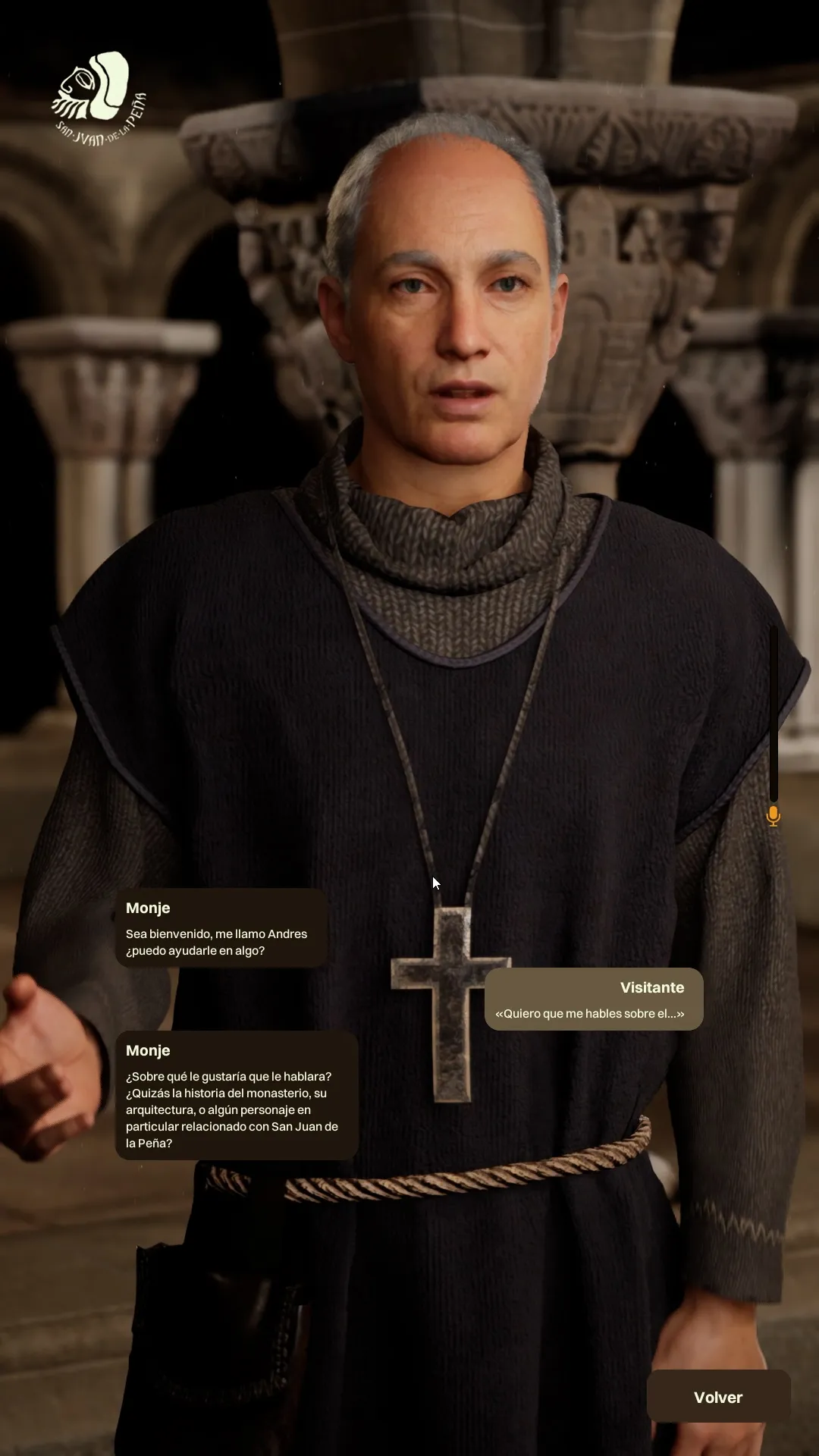
The visit begins with an impossible conversation. In the monastery vestibule, our Alice Assistant comes to life as a hyperrealistic Benedictine monk on a life-sized touchscreen. This is not a video: the monk listens, thinks and responds. Ask about the legend of the Holy Grail and he’ll tell it with the composure of someone who lived it. Press the children’s button and his tone shifts: warmer, more playful, full of curiosities designed to spark young imaginations. Four languages, two personalities, zero pre-recorded scripts.
That same monk then travels in the visitor’s pocket. Integrated as a web avatar within the route app, it responds by text and voice in under two seconds from any smartphone or tablet. Standing in front of the stables and want to know how they worked? Just ask. Your child wants to know what monks ate? The avatar adapts to their age and curiosity. It’s a guide that never tires, never repeats itself and always has something new to share — because behind it lies an AI trained on the monastery’s real history.
Stones that speak: augmented reality to see what time has hidden
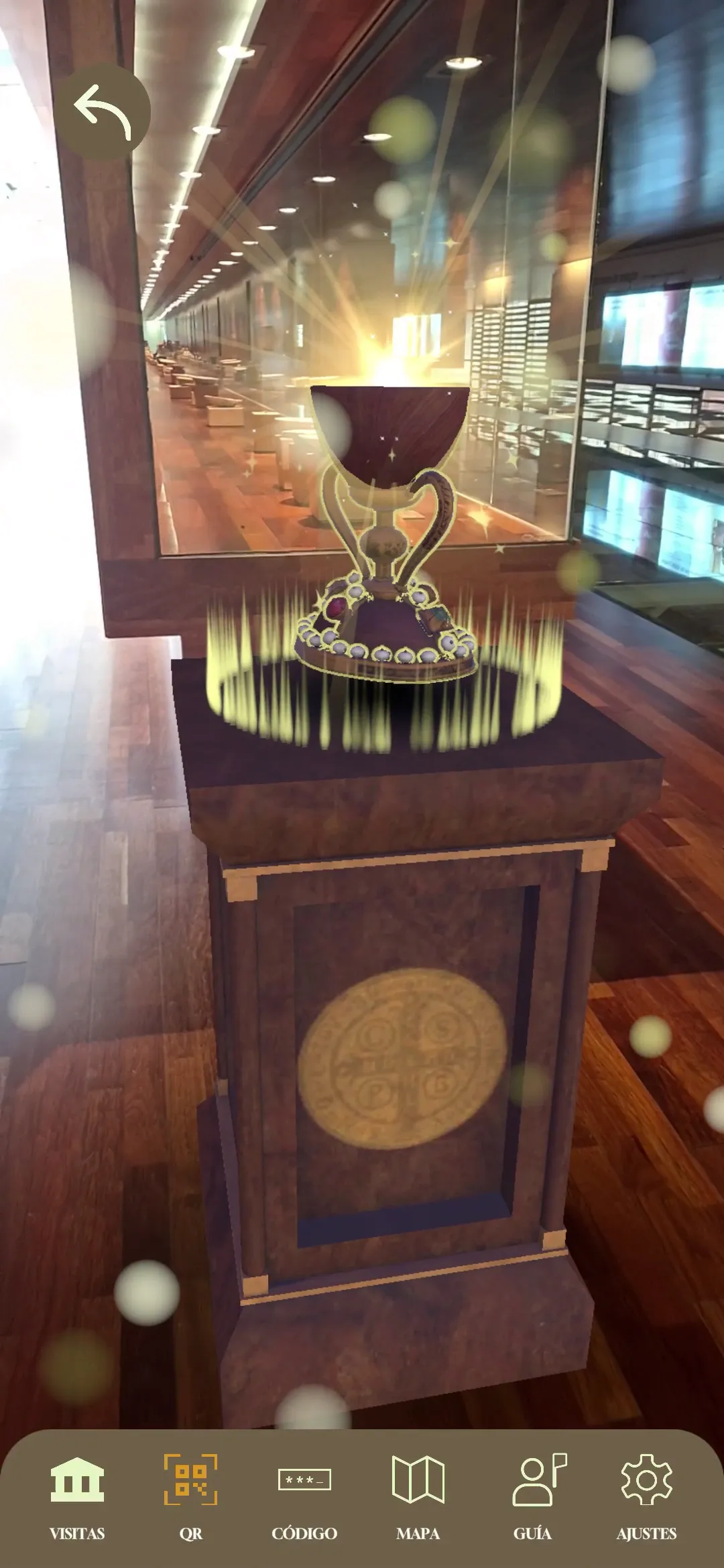
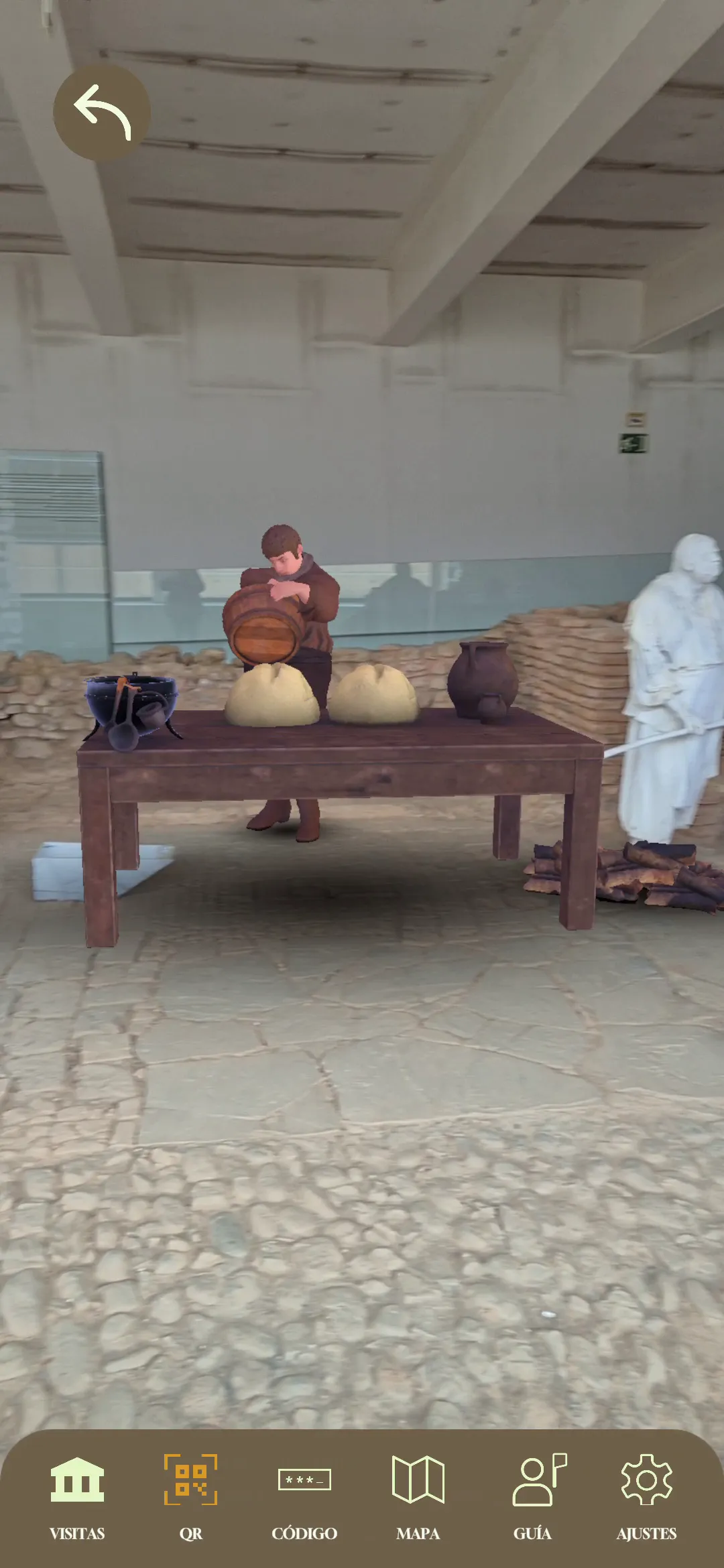
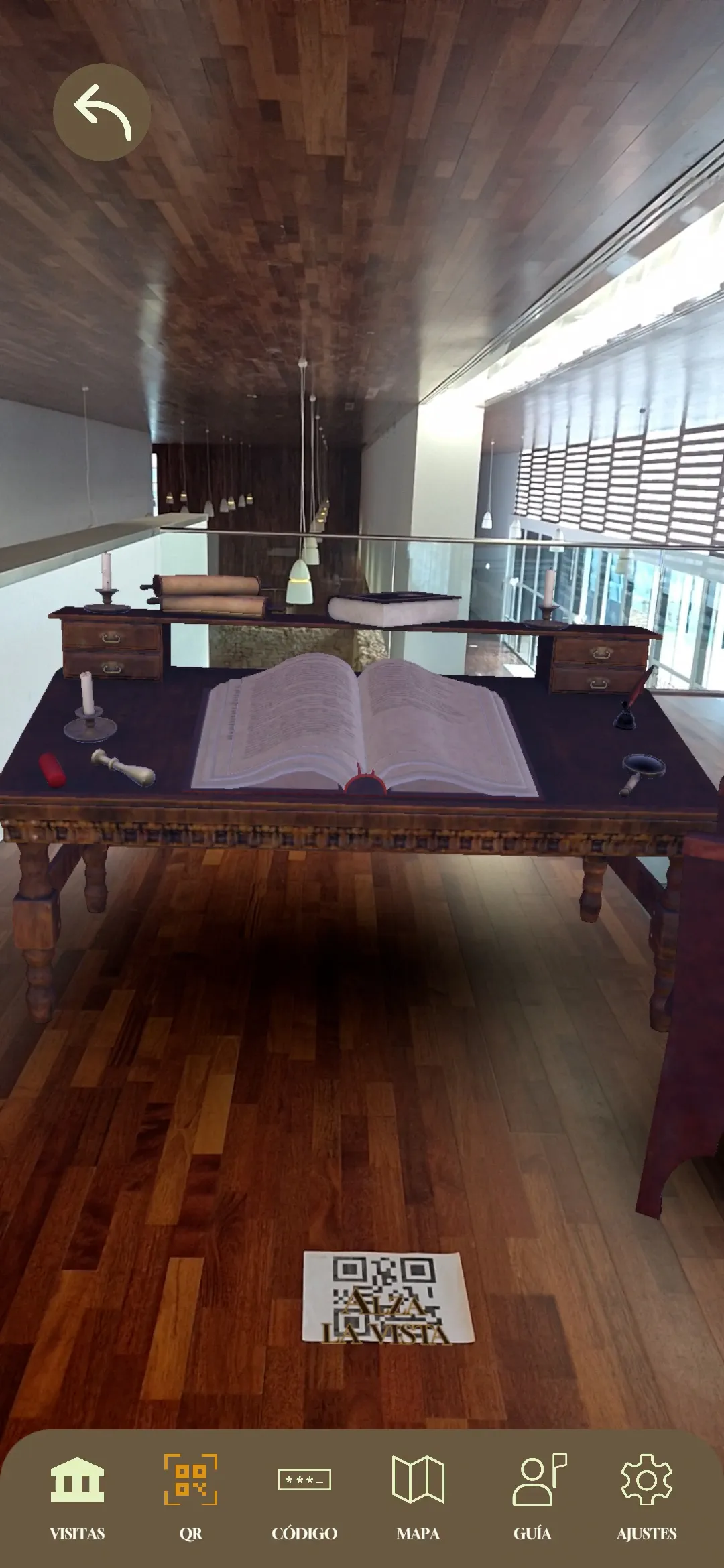
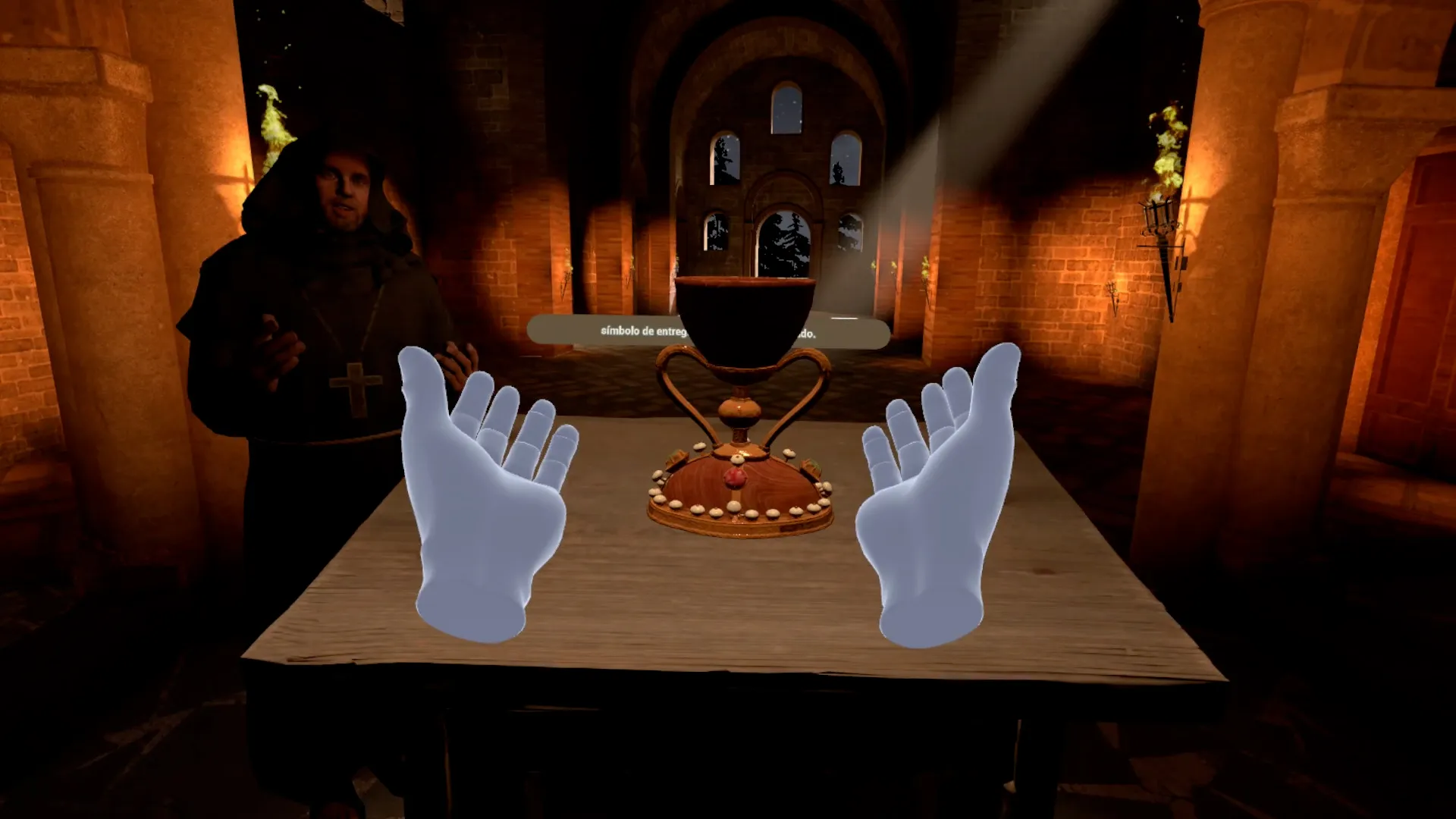
Point your phone at the refectory and see it as it was in the 17th century: monks eating in silence while one reads aloud from a lectern. Walk to the stables and horses come alive between the stone walls. Beside the oven, a baker works the dough as he has every morning for four centuries. Ten augmented reality scenes scattered along the route turn the monastery visit into a journey through time where every stone has something to teach — from the Holy Grail floating above a virtual pedestal to a herbalist physician tending to Camino de Santiago pilgrims.
But the app doesn’t just show — it guides. An interactive map with audio guides accompanies visitors across the entire site, activating as they approach each key point. Four distinct routes adapt the experience to the visitor’s profile: an academic deep-dive for those seeking historical rigour, an essential version for the general visitor, and two children’s trails — one extended, one express — that turn the monastery into an exploration ground. All generated on-premise, in four languages, with the ability for the monastery to expand and edit content for years to come without depending on anyone.
Close your eyes and open them in the 10th century: virtual reality with PICO 4 Ultra
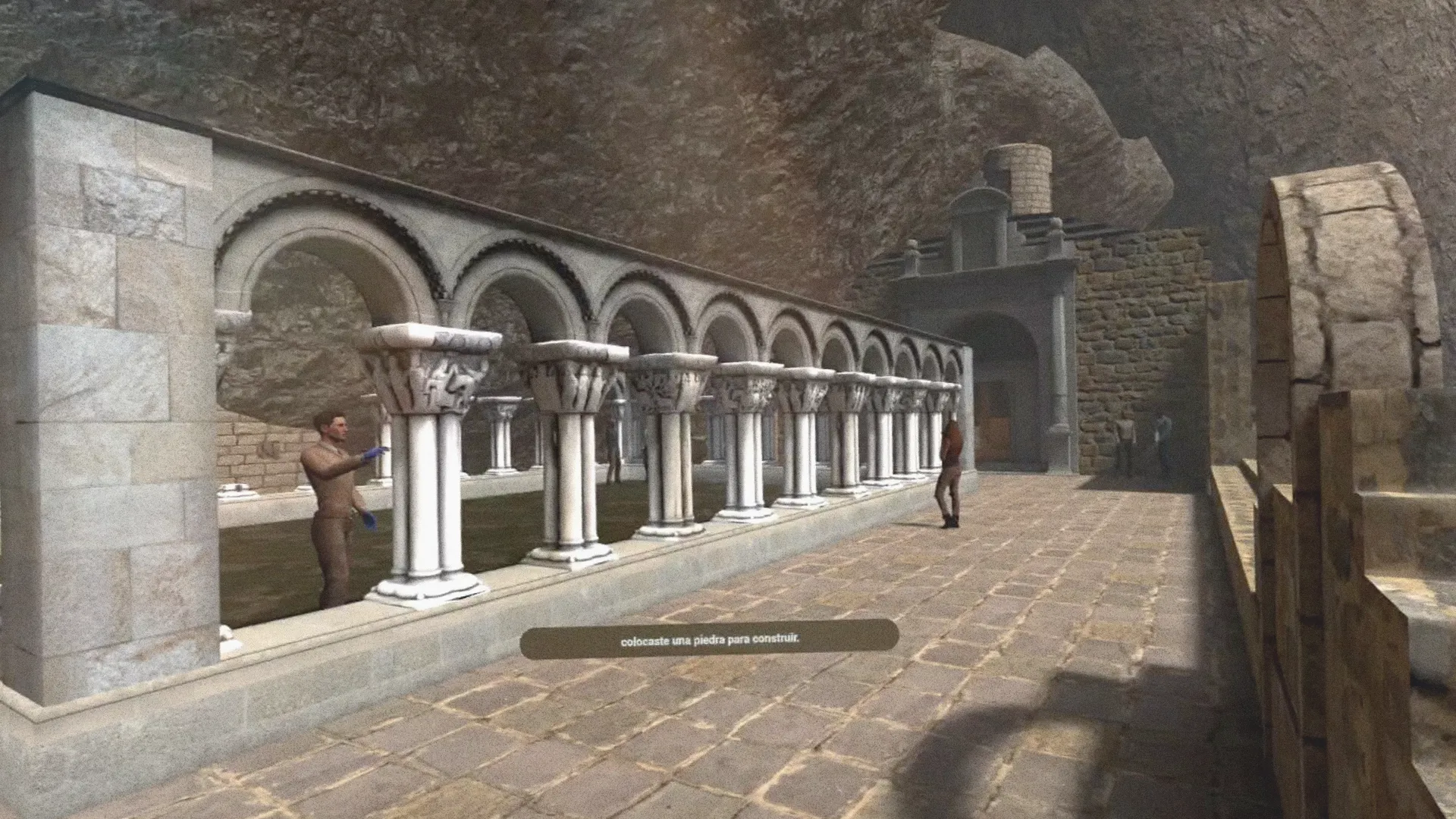
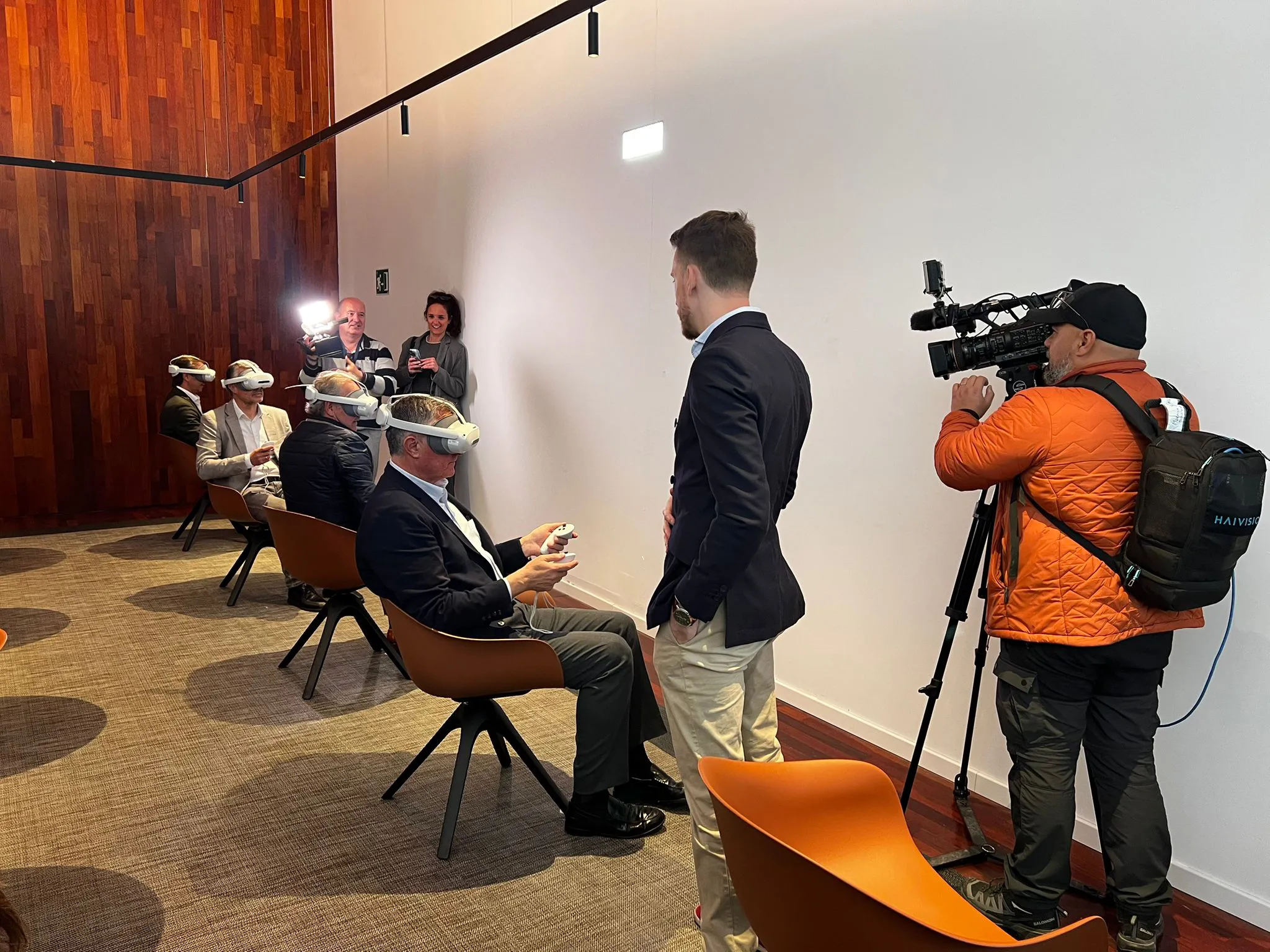
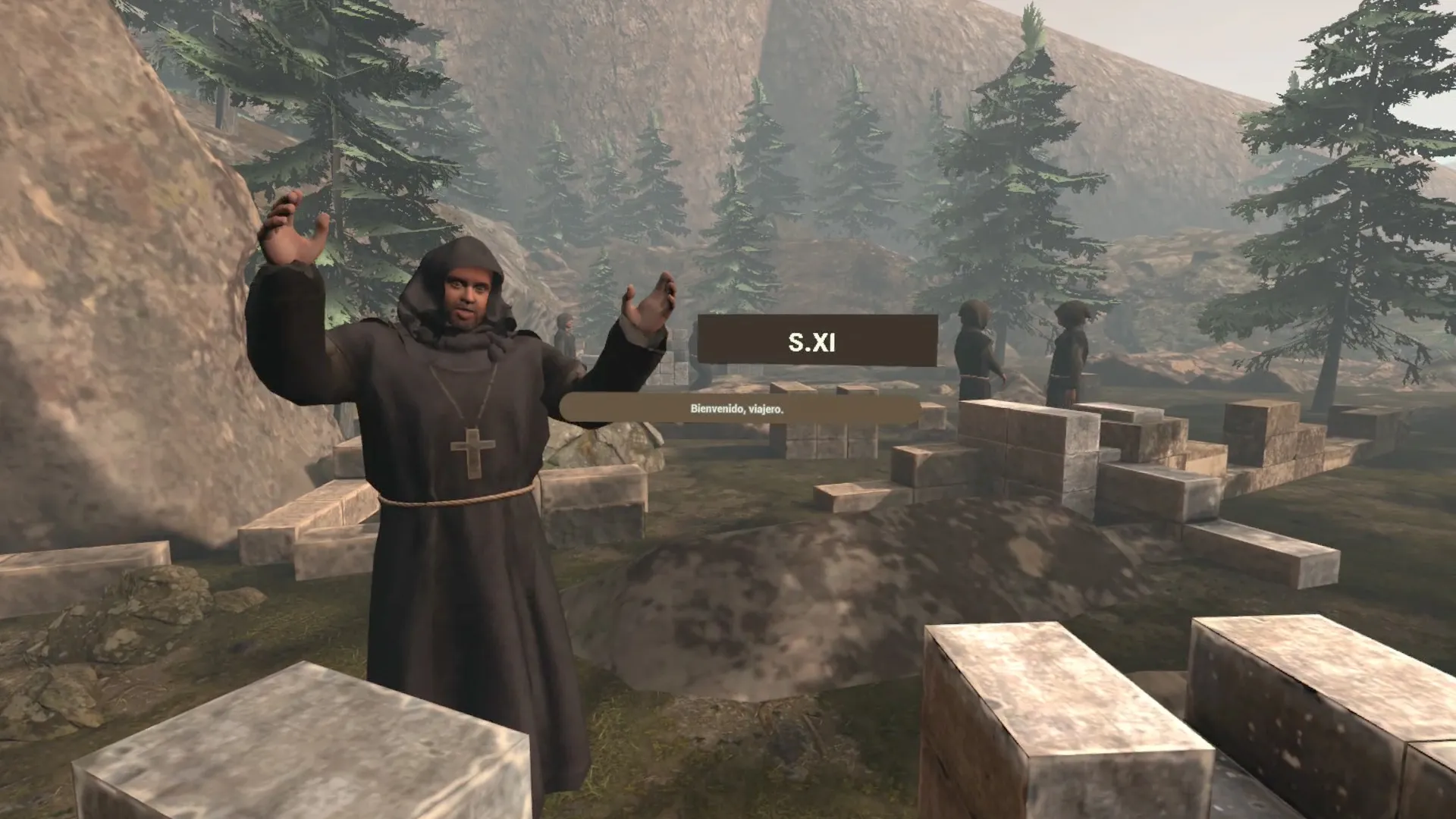
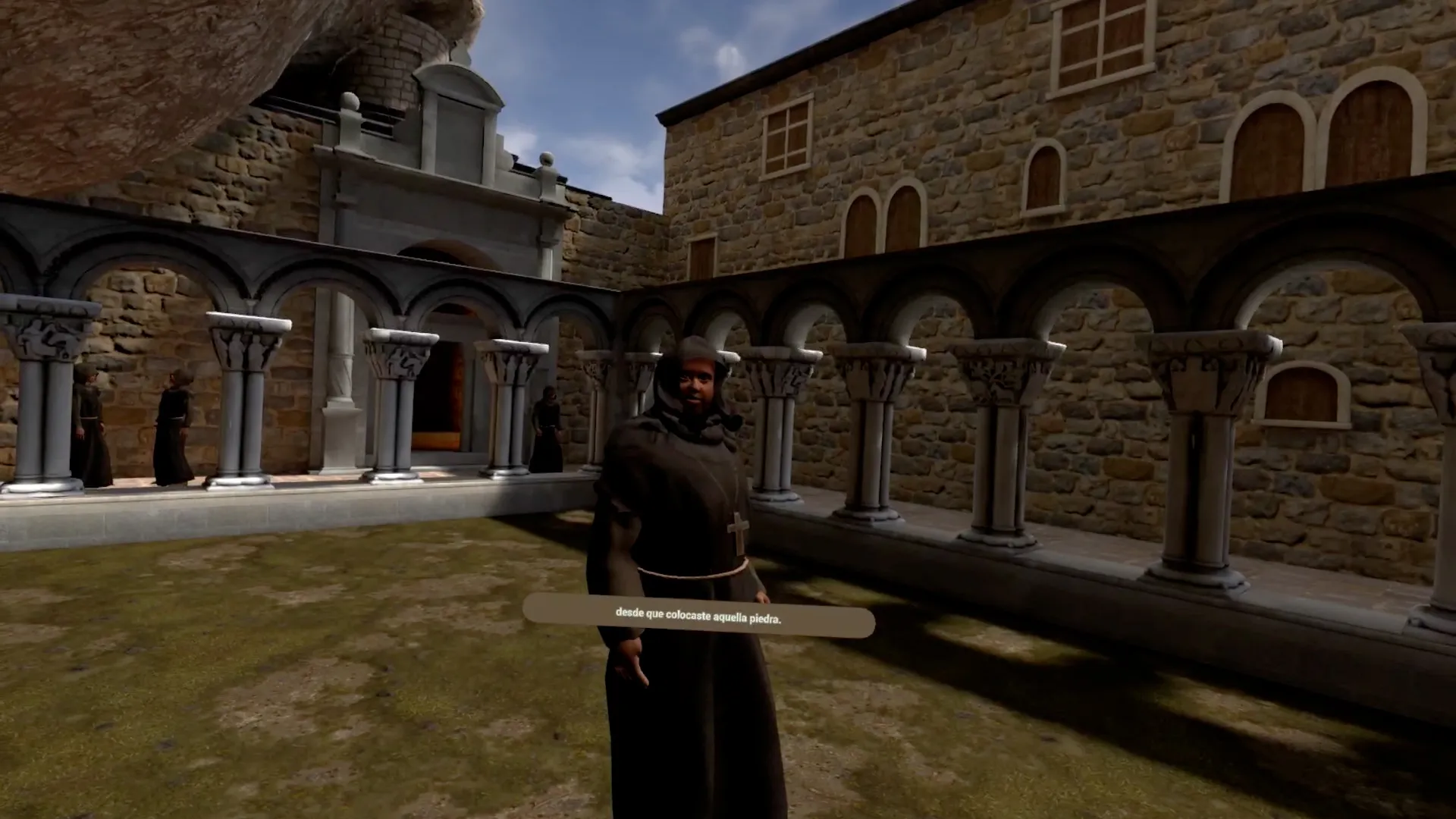
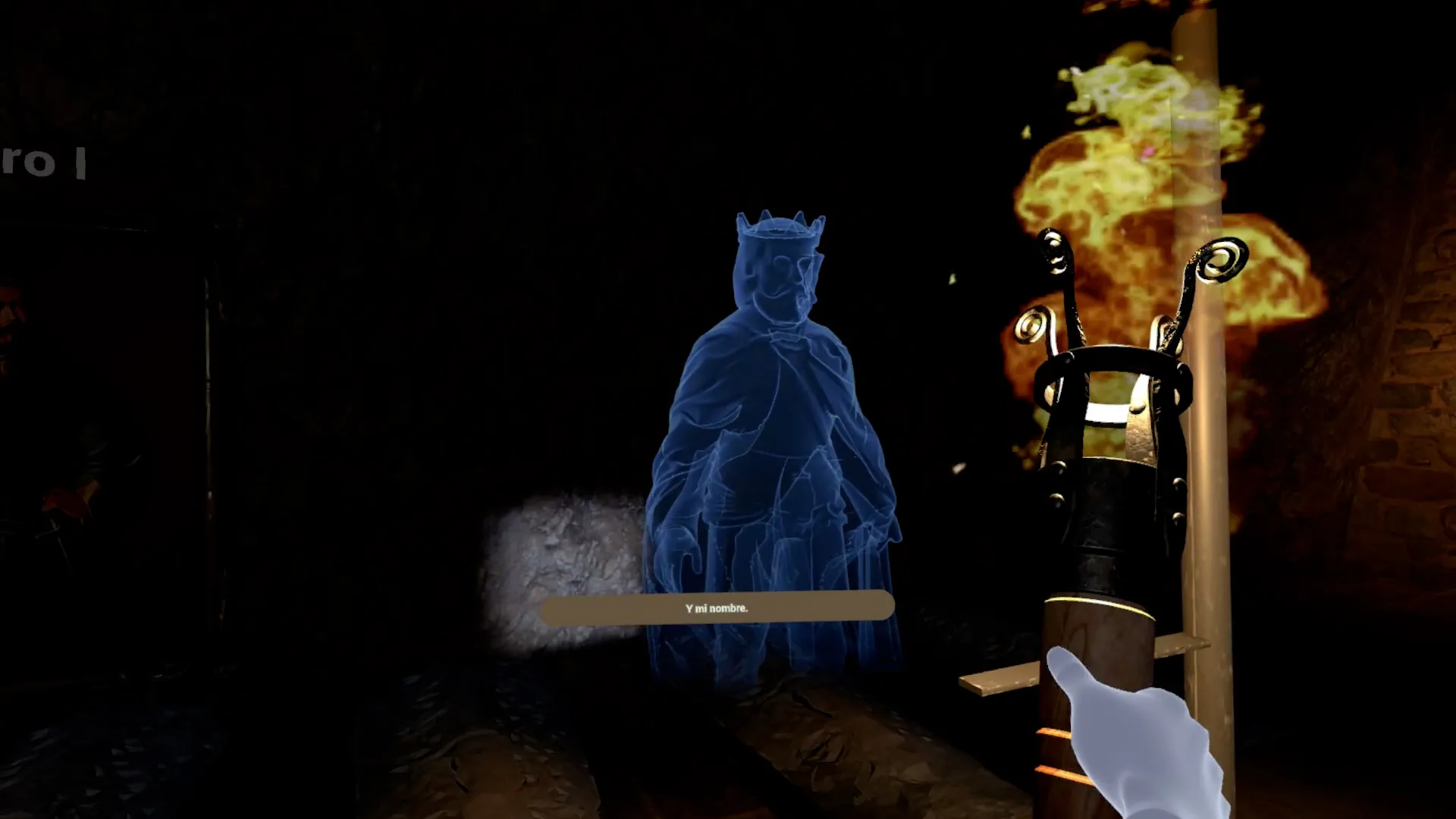
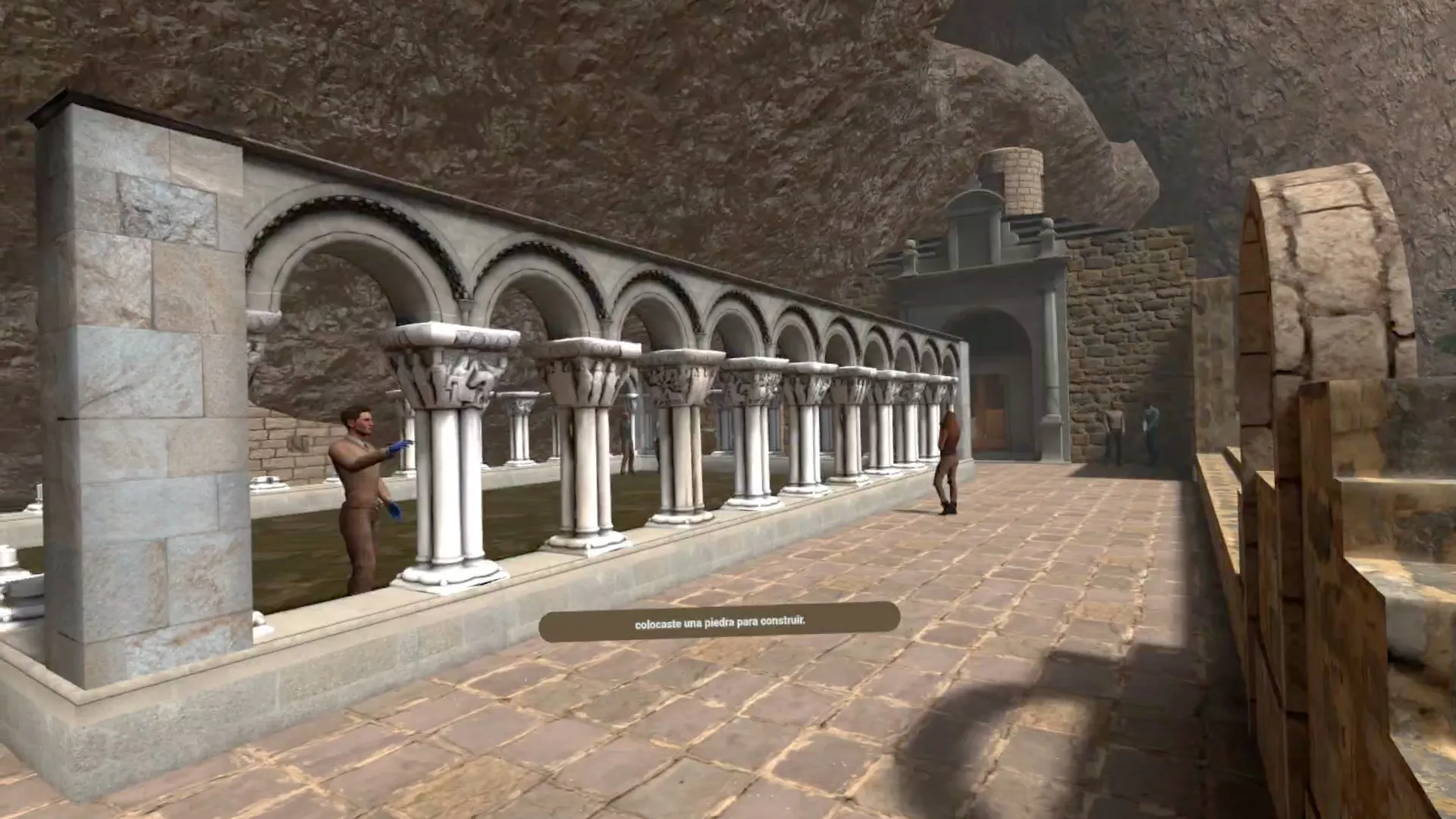
The virtual reality room is where the visit stops being a visit and becomes a journey. PICO 4 Ultra headsets transport visitors inside the old monastery — the one carved beneath the rock — at the height of its splendour. Benedictine ceremonies, daily life in the Romanesque cloister, the moments that turned this site into the royal pantheon of the Kingdom of Aragon: all rendered in interactive 3D where visitors don’t just watch — they point, choose and discover at their own pace.
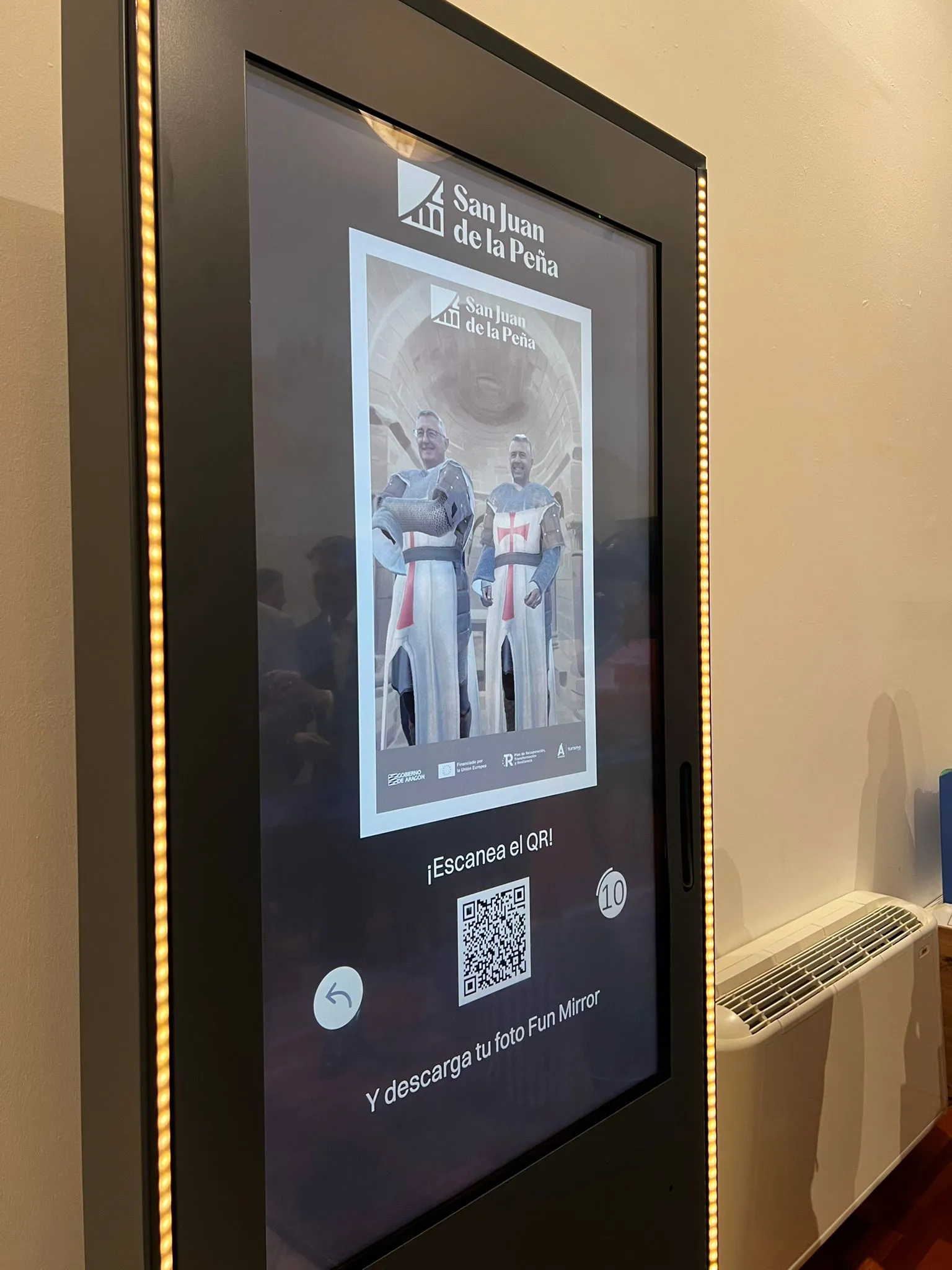
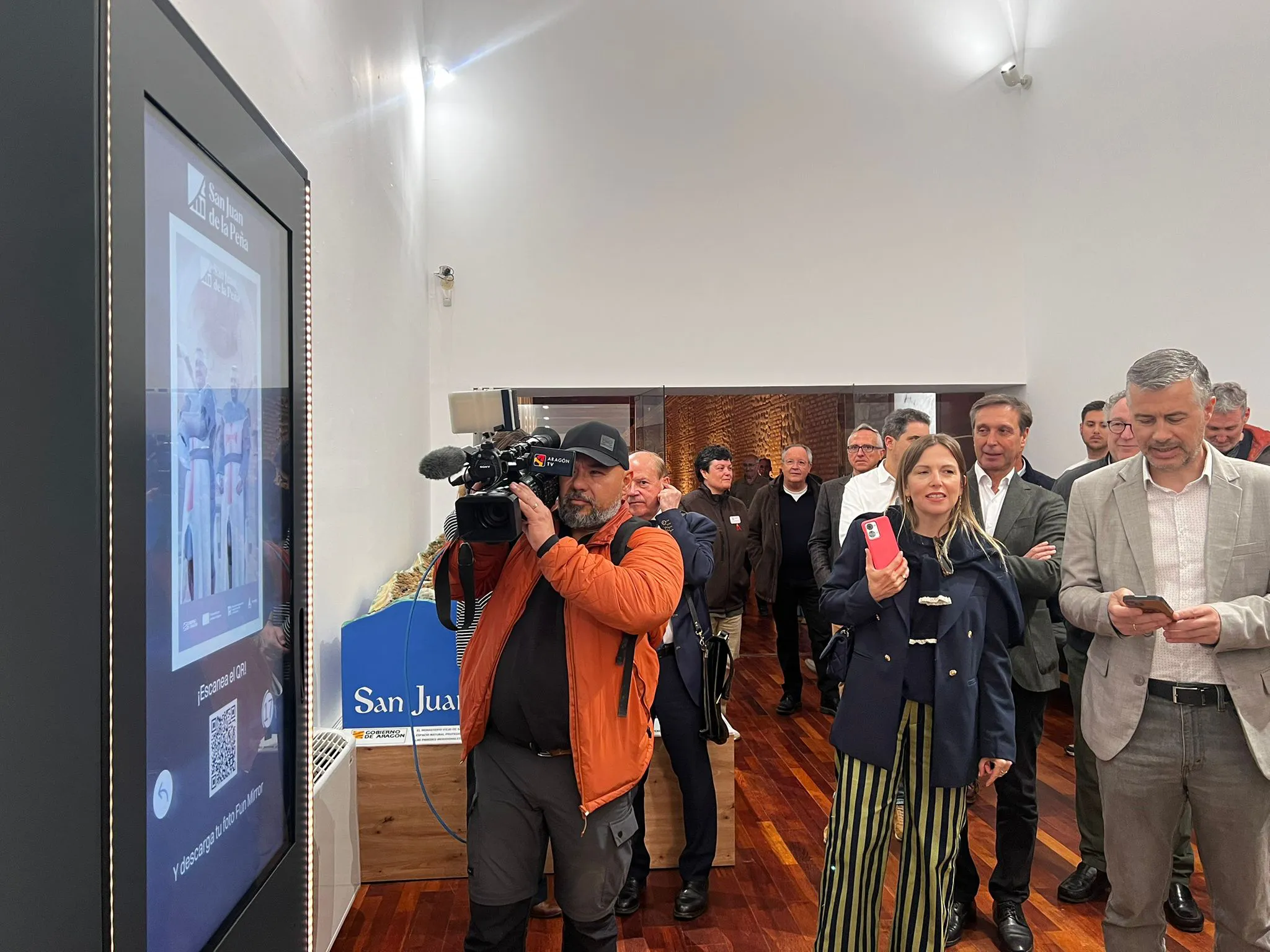
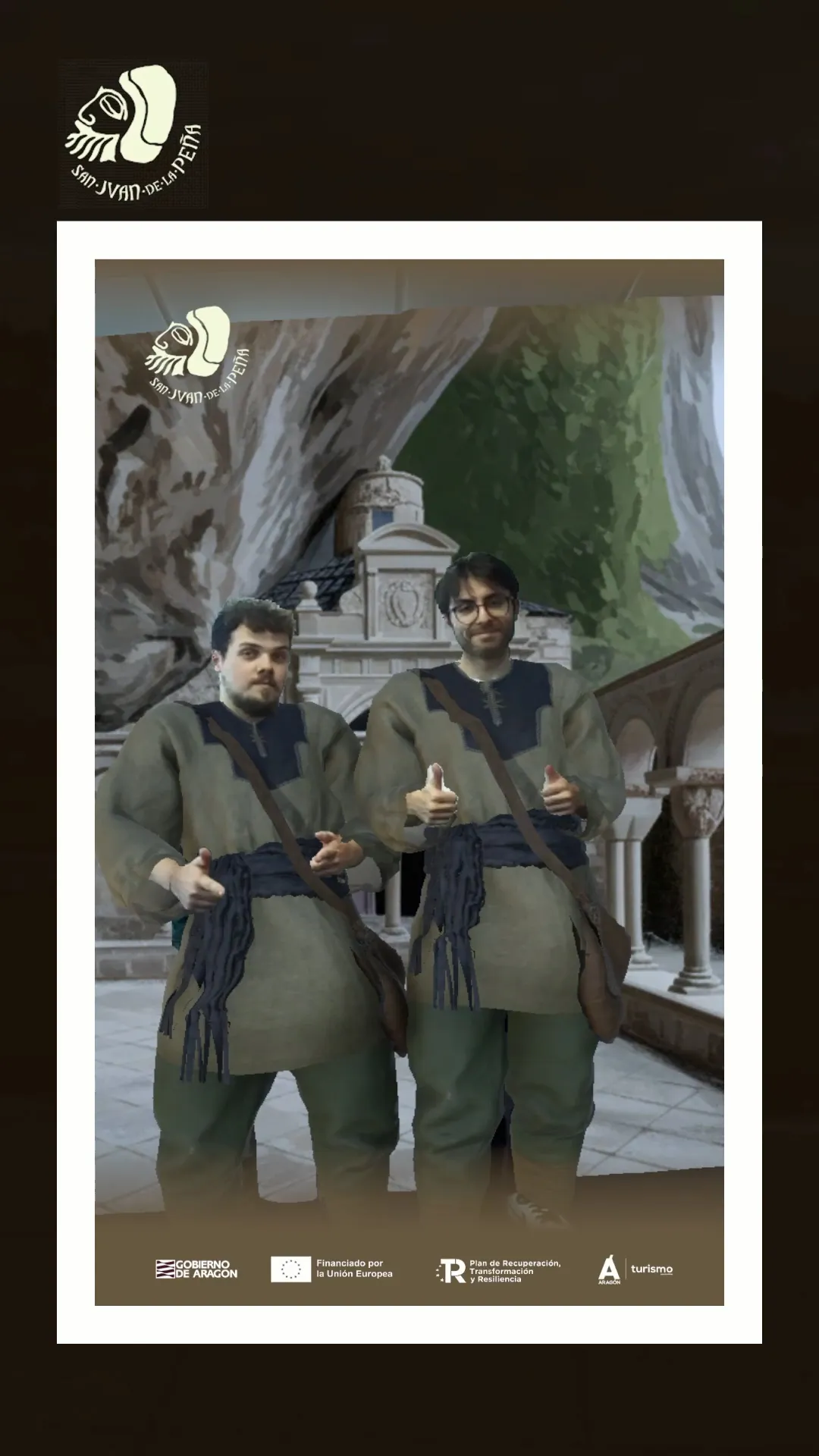
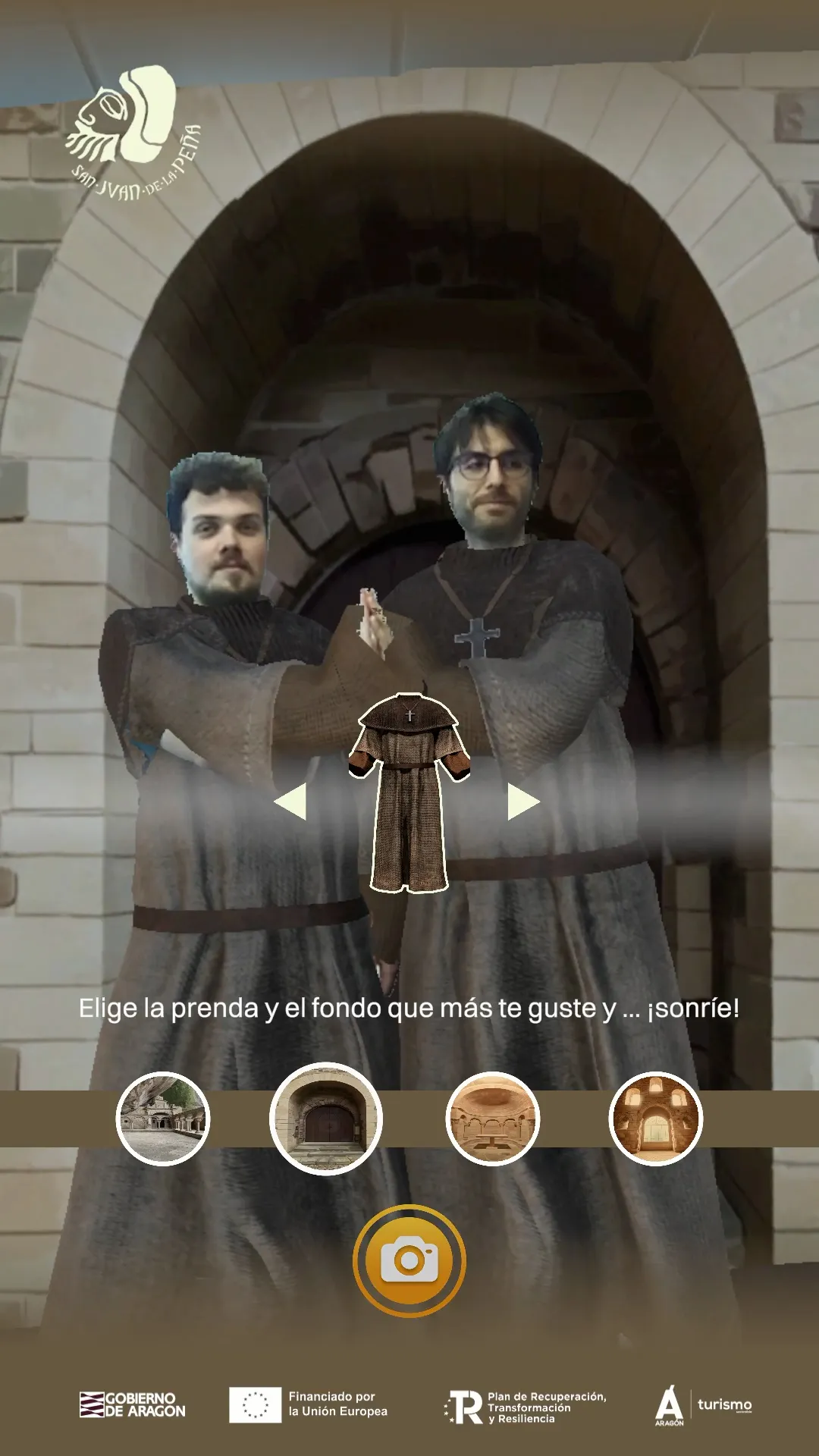
Three versions of the narrative adapt intensity and language to the audience: a children’s story with warm visuals, a general version balancing entertainment and education, and an academic cut for those who want to feel they’re inside a history documentary. And before leaving, our FunMirror lets visitors become a monk, a pilgrim or a King of Aragon — and take home a digital souvenir to share on social media.
Ready to take the leap to hyperexperience?
SIMILAR PROJECTS


L'Oréal París Trends Hyperexperience | Project at Madrid Fashion Week 2023

Virtual Reality for the Hospitality Industry | Hyperexperience in Aura Restaurant

Virtual Reality shopfitting | Creation of virtual spaces


SUPPORT CHAT
STATUS: TERMS ACCEPTANCE
v26.10.08
PRIVACY POLICY
Before we begin, please note that you are interacting with the artificial-intelligence virtual assistant of DEUSENS HYPERXPERIENCE, S.L.
Any personal data you provide during the conversation will be processed by DEUSENS HYPERXPERIENCE, S.L. to handle your queries about our products and services and, where appropriate, to put you in touch with our sales team. Conversations are recorded and kept for the period necessary so they can be reviewed in order to improve service quality and ensure correct operation.
You can find all the information about how your data is processed and how to exercise your rights in our Privacy Policy.
Any personal data you provide during the conversation will be processed by DEUSENS HYPERXPERIENCE, S.L. to handle your queries about our products and services and, where appropriate, to put you in touch with our sales team. Conversations are recorded and kept for the period necessary so they can be reviewed in order to improve service quality and ensure correct operation.
You can find all the information about how your data is processed and how to exercise your rights in our Privacy Policy.
By chatting you accept our Privacy Policy.
ALICE ASSISTANT
TYPING RESPONSE...
By chatting you accept our Privacy Policy.
Conversation sent. We will be in touch shortly. New conversation