

 RETURN

FunMirror at Madrid Horse Week 2021 | Hyperexperience at the fair

HIPEREXPERIENCIA
LOADED


ENGLISH


ESPAÑOL

ITALIANO
CONTACT

TECHNOLOGY
DIGITAL CONTENT
USE CASE
TOOL
CLIENT
The Ayuntamiento de La Sotonera is the local government managing the Aragonese municipality of La Sotonera, in the province of Huesca. Committed to the preservation and promotion of its cultural heritage, it commissioned the digital recovery of one of its most singular assets: the Holy Week Monument of the Collegiate Church of Santa María la Mayor de Bolea.
GOAL ACHIEVED
To permanently recover and make accessible the Bolea Holy Week Monument through a videomapping installation that allowed visitors to experience it as it was originally conceived.

A heritage that existed only three days a year
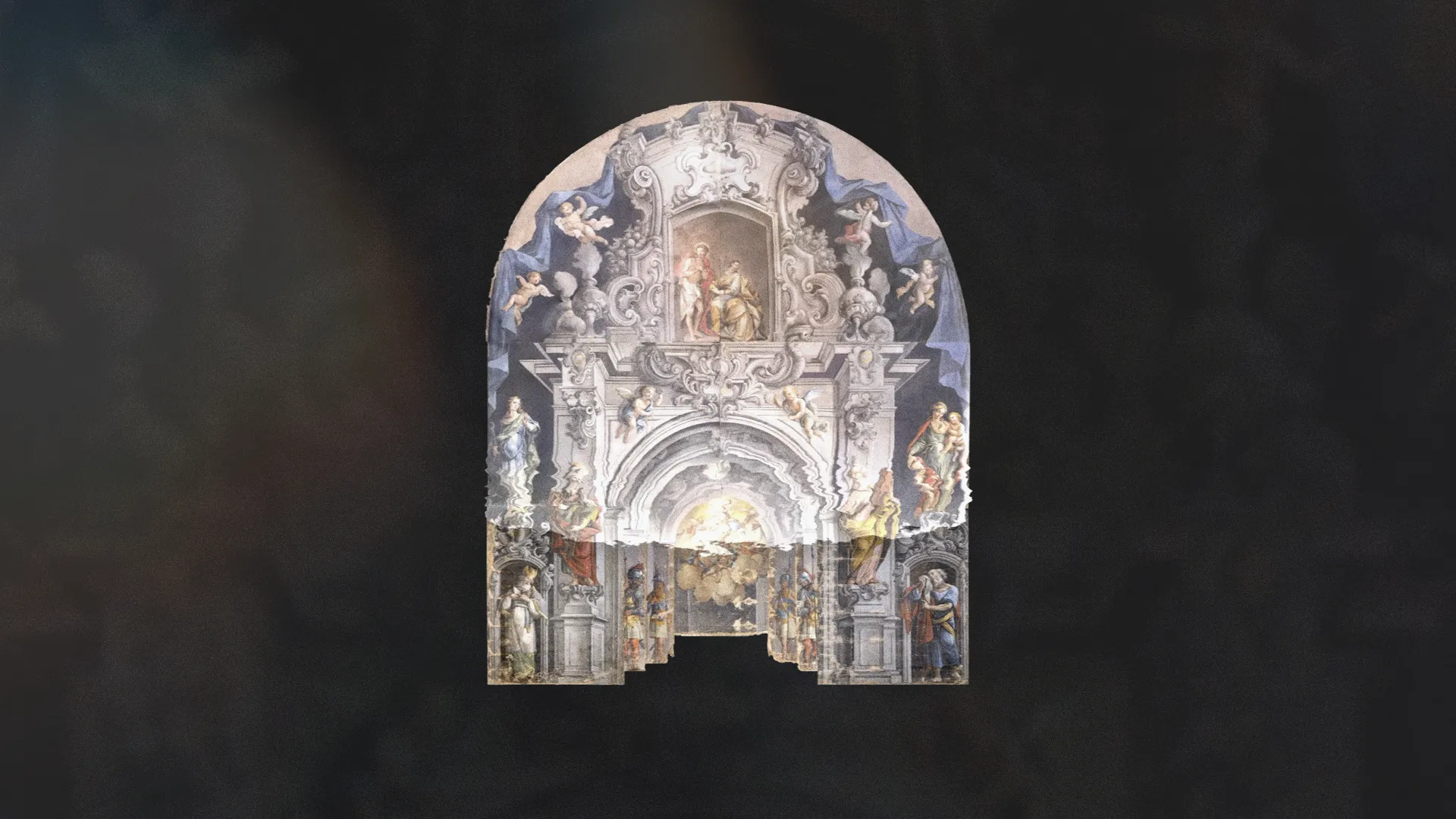
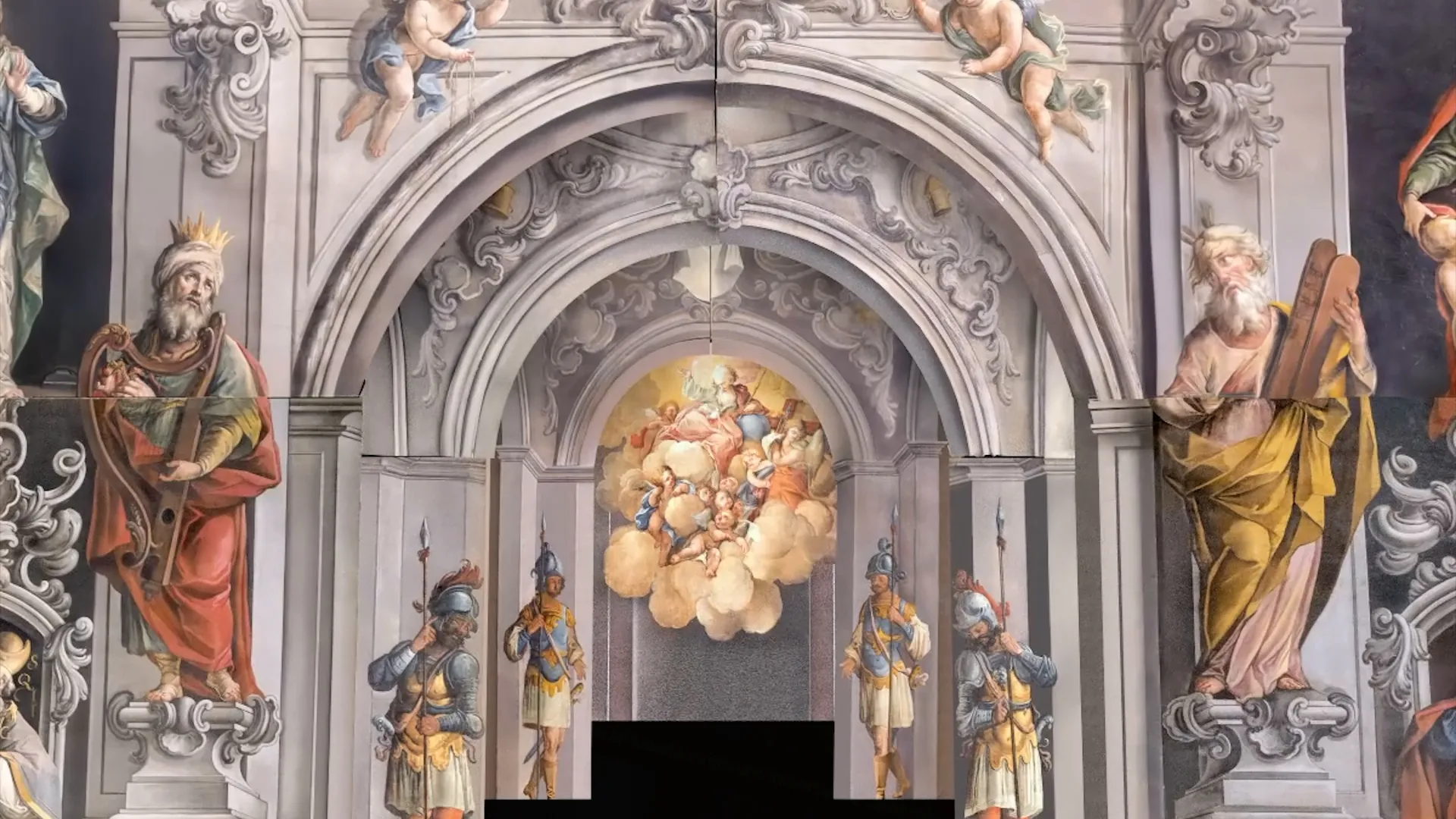
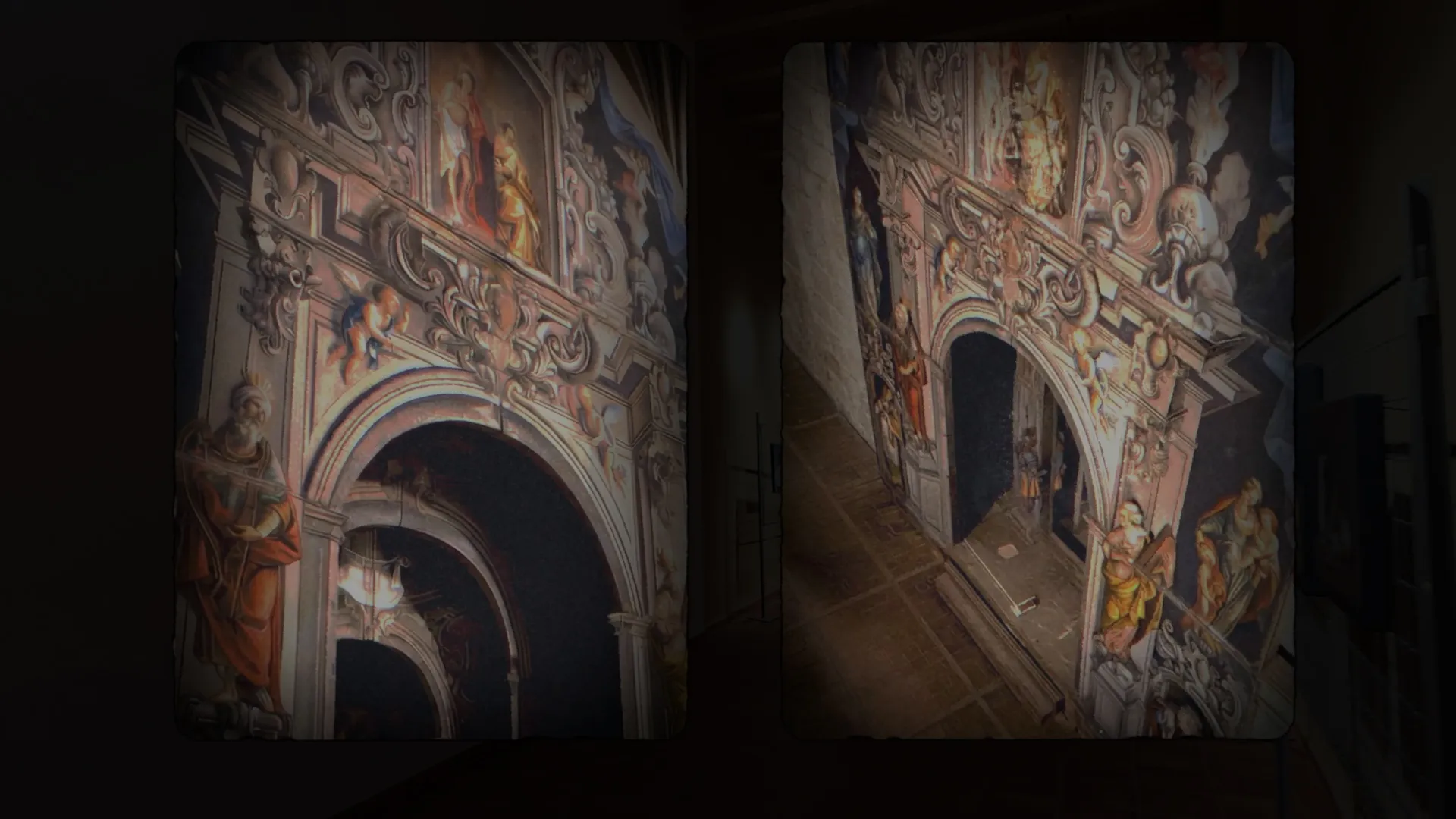
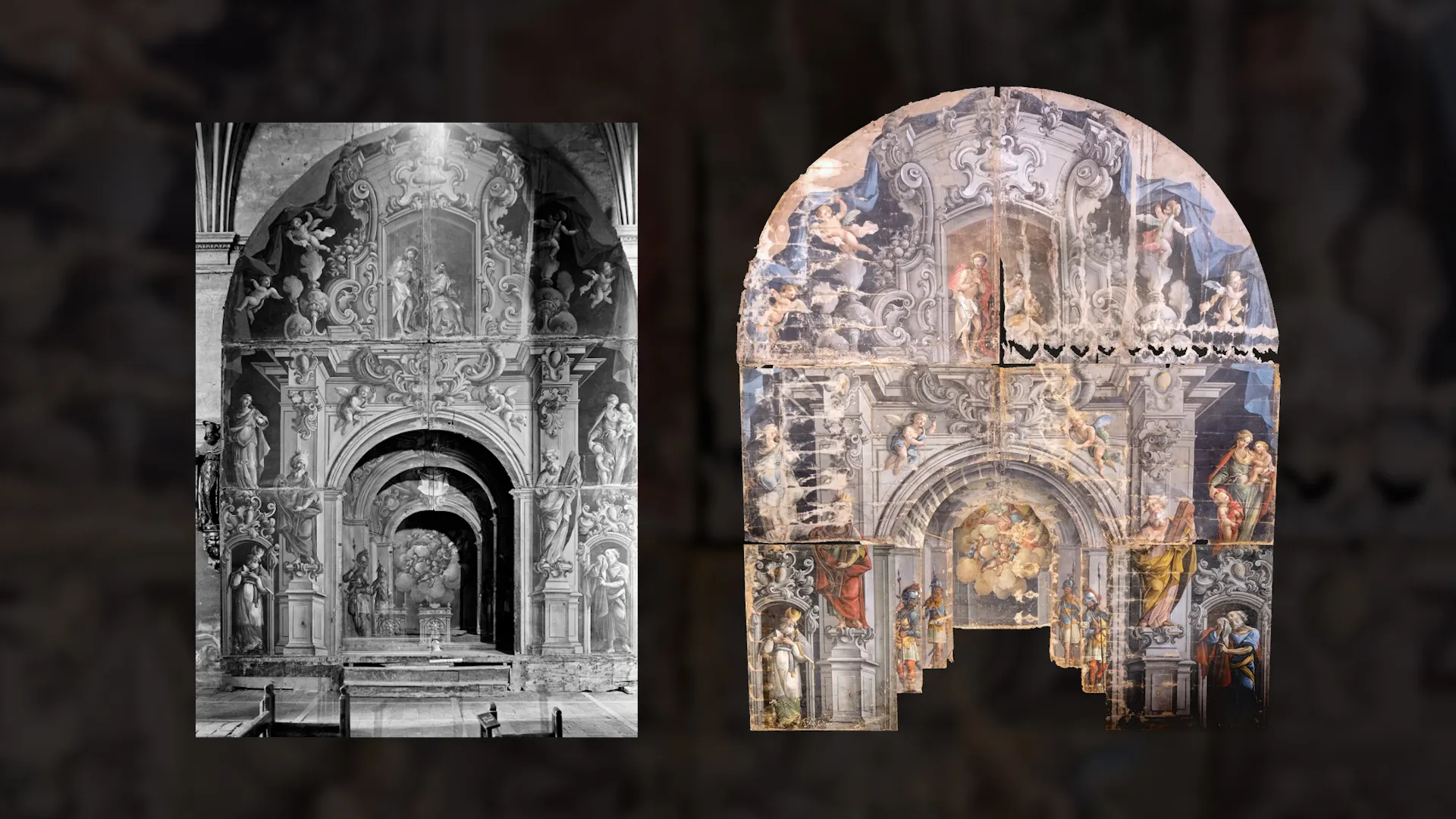
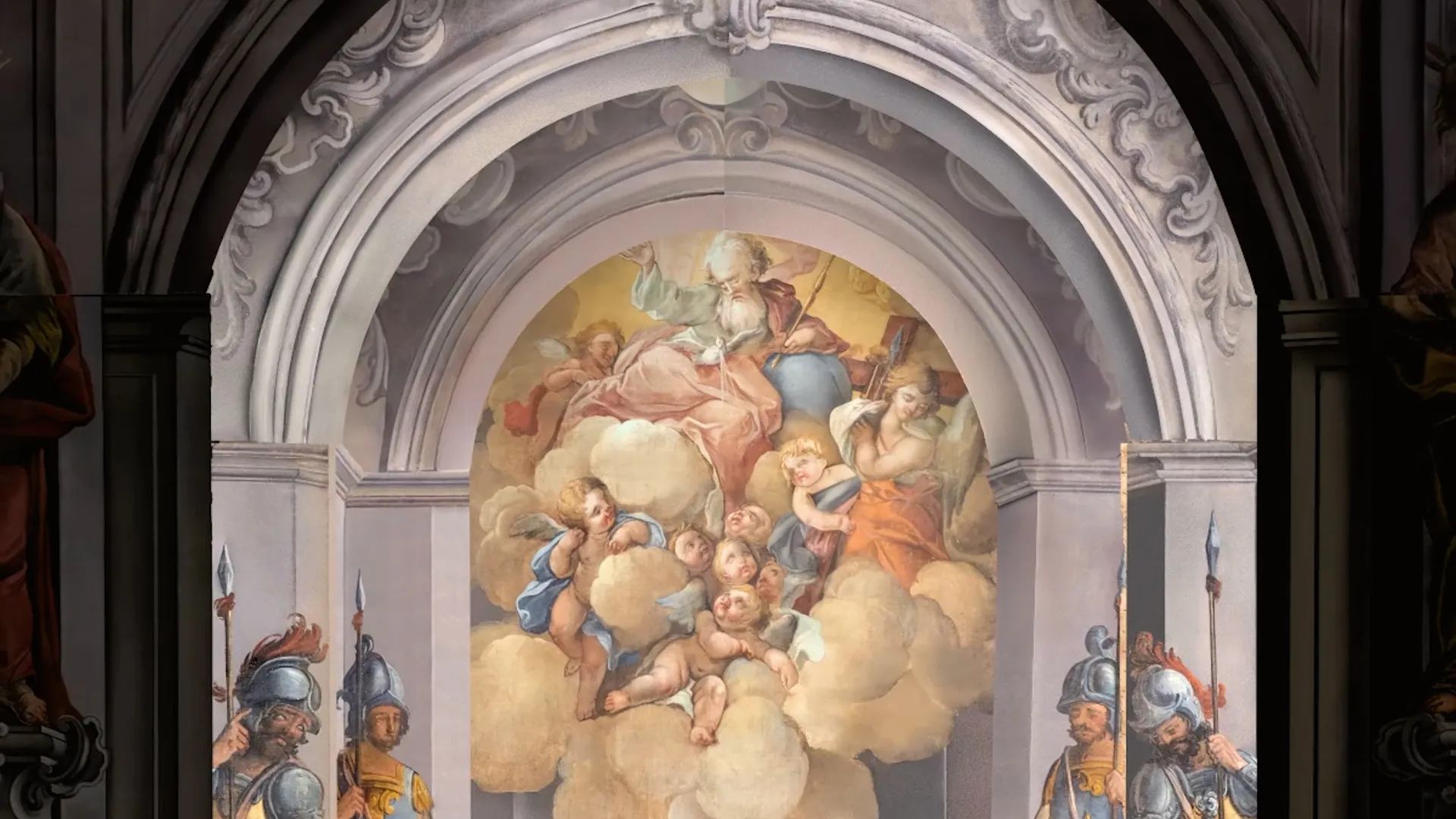
The Holy Week Monument of the Collegiate Church of Santa María la Mayor de Bolea is one of the most singular pieces of Aragonese heritage: an 18th-century ephemeral architecture made of fabric and paint that was erected inside the church during the Easter Triduum and last assembled in 1972. For centuries, its painted canvases constructed a trompe-l'œil perspective of extraordinary visual depth, transforming the liturgical space into a monumental stage that lasted barely three days. The Ayuntamiento de La Sotonera commissioned DeuSens to restore its permanent presence — recovering not only its image, but the experience of contemplating it in the space for which it was designed.
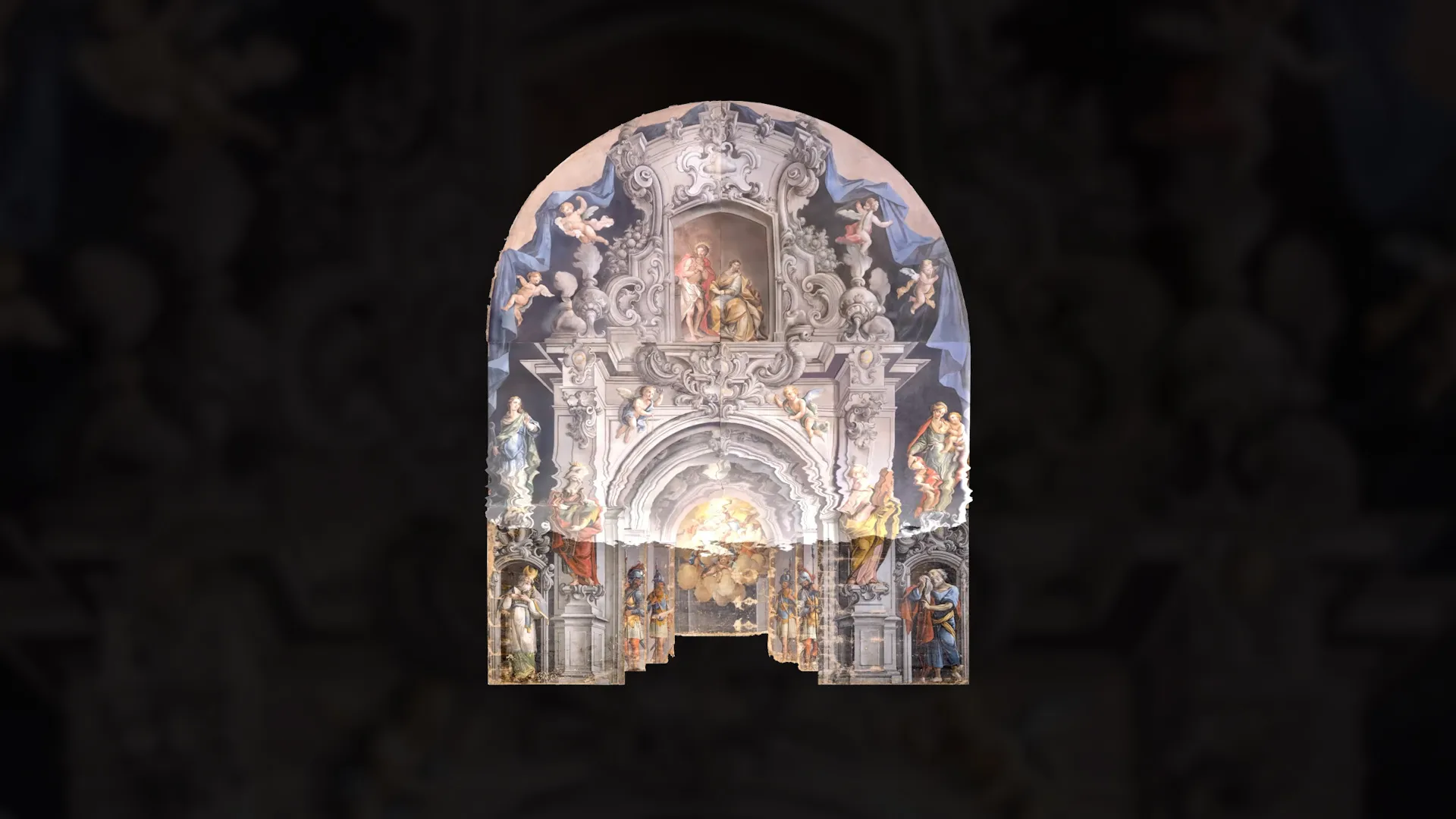
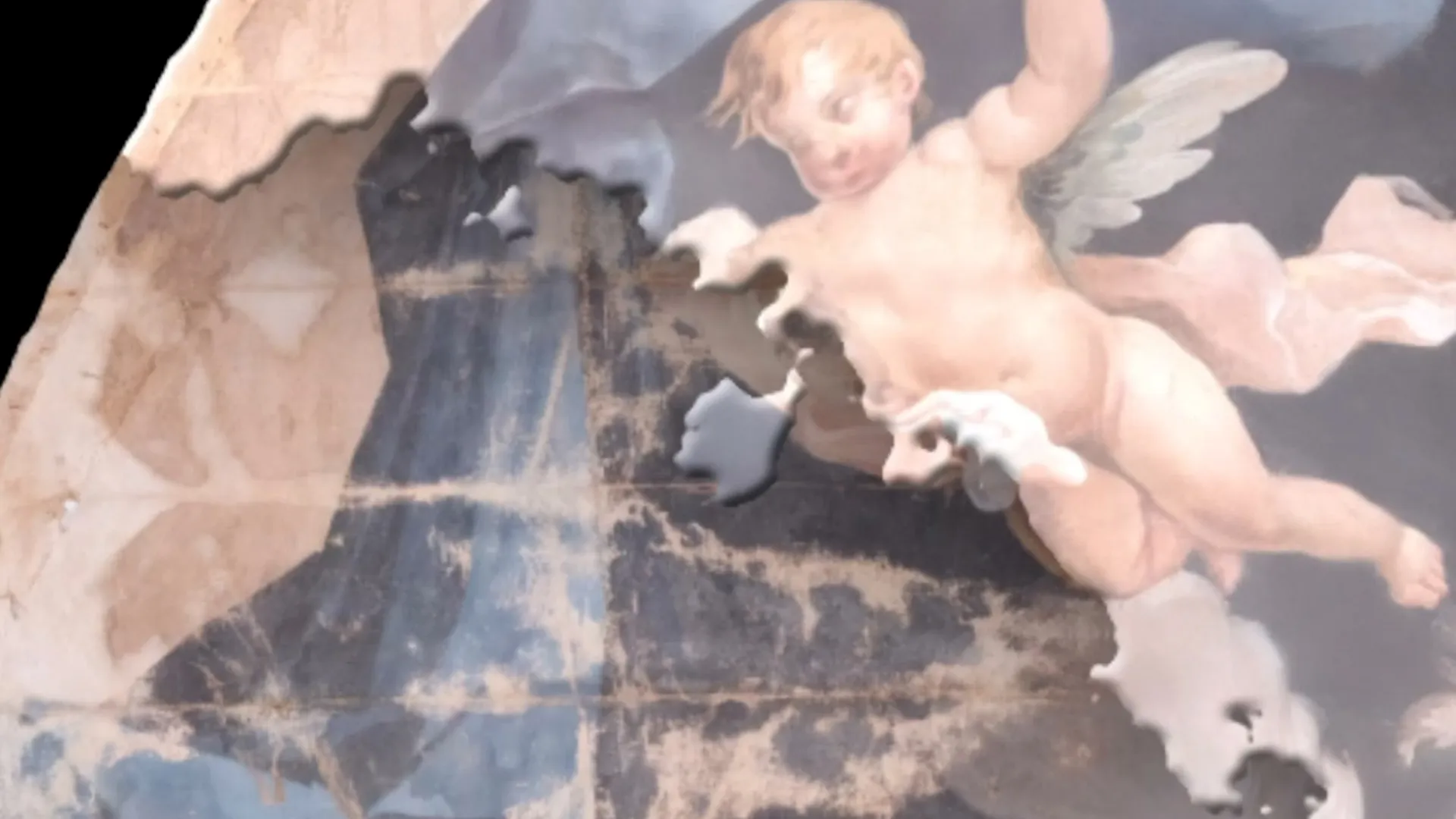
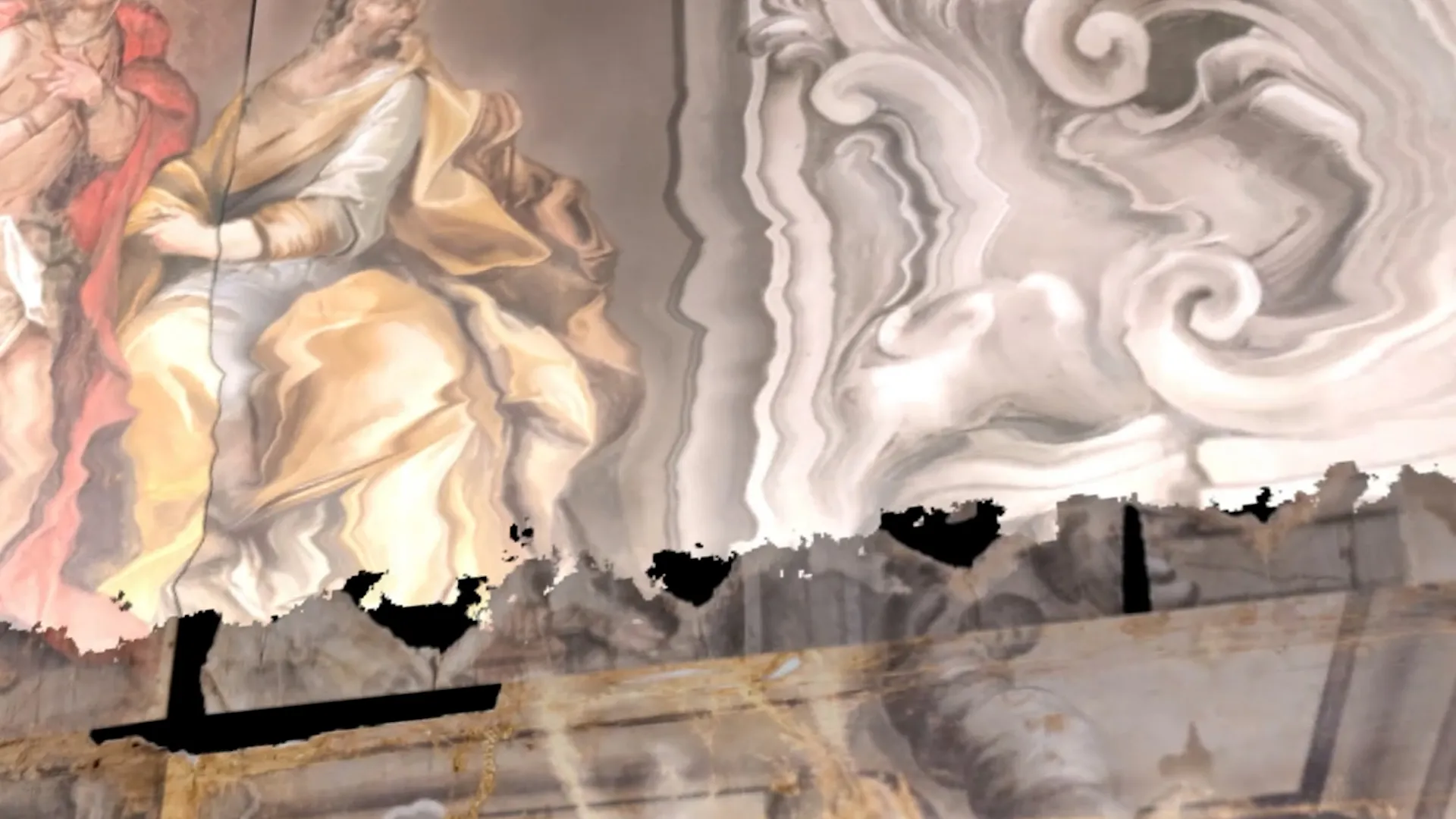
The project began with a phase of historical and documentary research that allowed the compositional and perspective logic of the ensemble to be reconstructed. The surviving canvases, deteriorated over time, became the starting point for a virtual restoration process combining digital reconstruction techniques with artificial intelligence.
Digital reconstruction, artificial intelligence and vertical laser projection
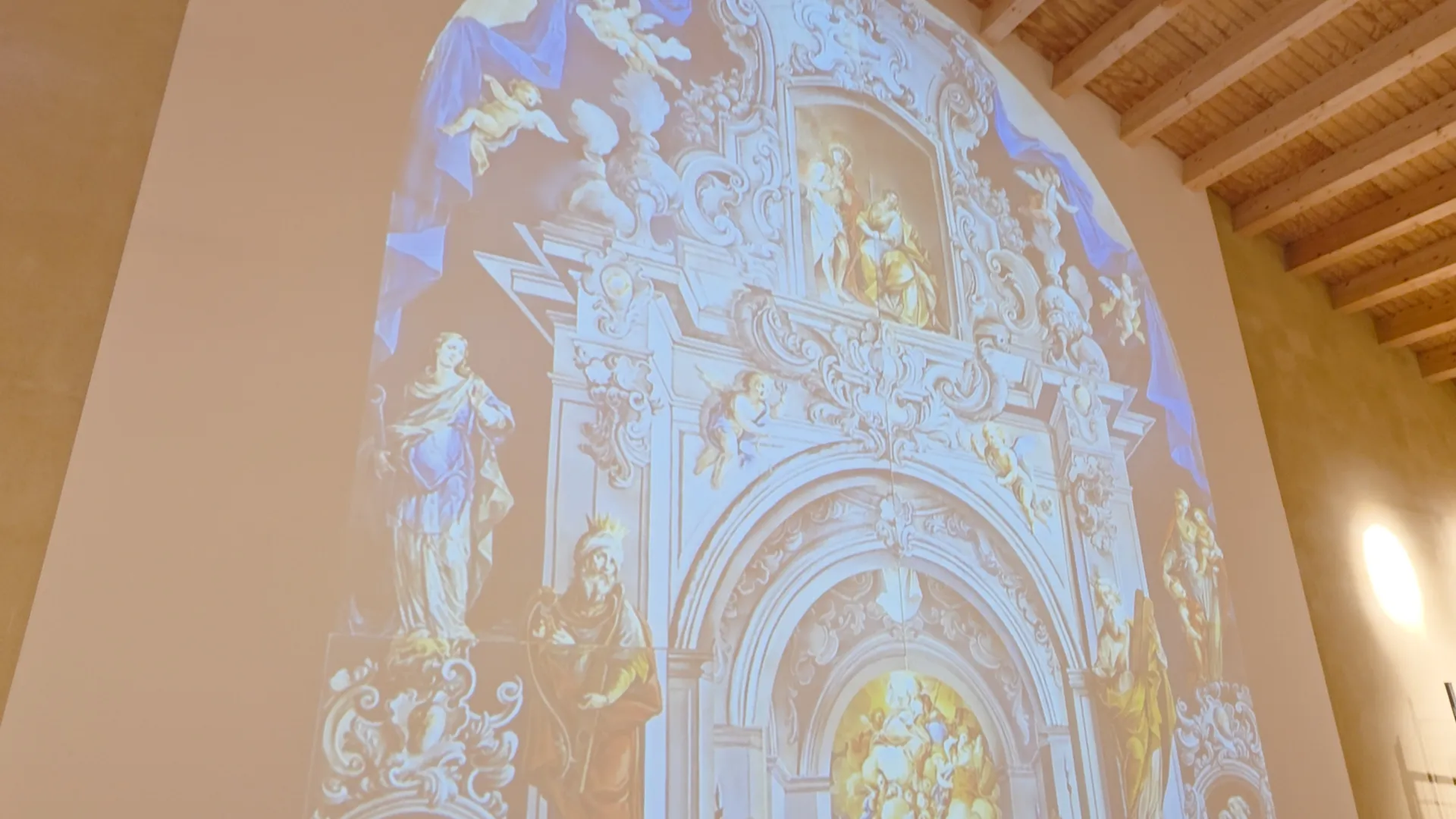
DeuSens developed a high-resolution architectural-scenographic videomapping calibrated for the Bolea museum space, with vertical-format projection that preserved the original proportions of the monument and recreated the trompe-l'œil perspective it generated in its liturgical setting. For the most deteriorated canvases, AI models trained in the restoration of historical textile and pictorial works were applied, recovering lost areas with criteria of stylistic and documentary coherence.
The installation was completed with an original soundtrack, bilingual narration in Spanish and French, and 5.1 surround sound design, composing an immersive audiovisual experience conceived for continuous loop playback and adapted to visitors with varying levels of prior knowledge of the piece.
An ephemeral object transformed into a permanent installation
The installation was integrated into the Bolea museum circuit as a continuously accessible piece for visitors and tourists, removing the dependence on the liturgical calendar that had conditioned its contemplation for centuries. What had only been visible for three days a year became available every day, at the same scale and with the same presence it was originally conceived with. The project demonstrated how videomapping, combined with AI-assisted restoration, can serve as a living heritage tool — not to replace the original object, but to restore its full experiential dimension.
Ready to take the leap to hyperexperience?
SIMILAR PROJECTS
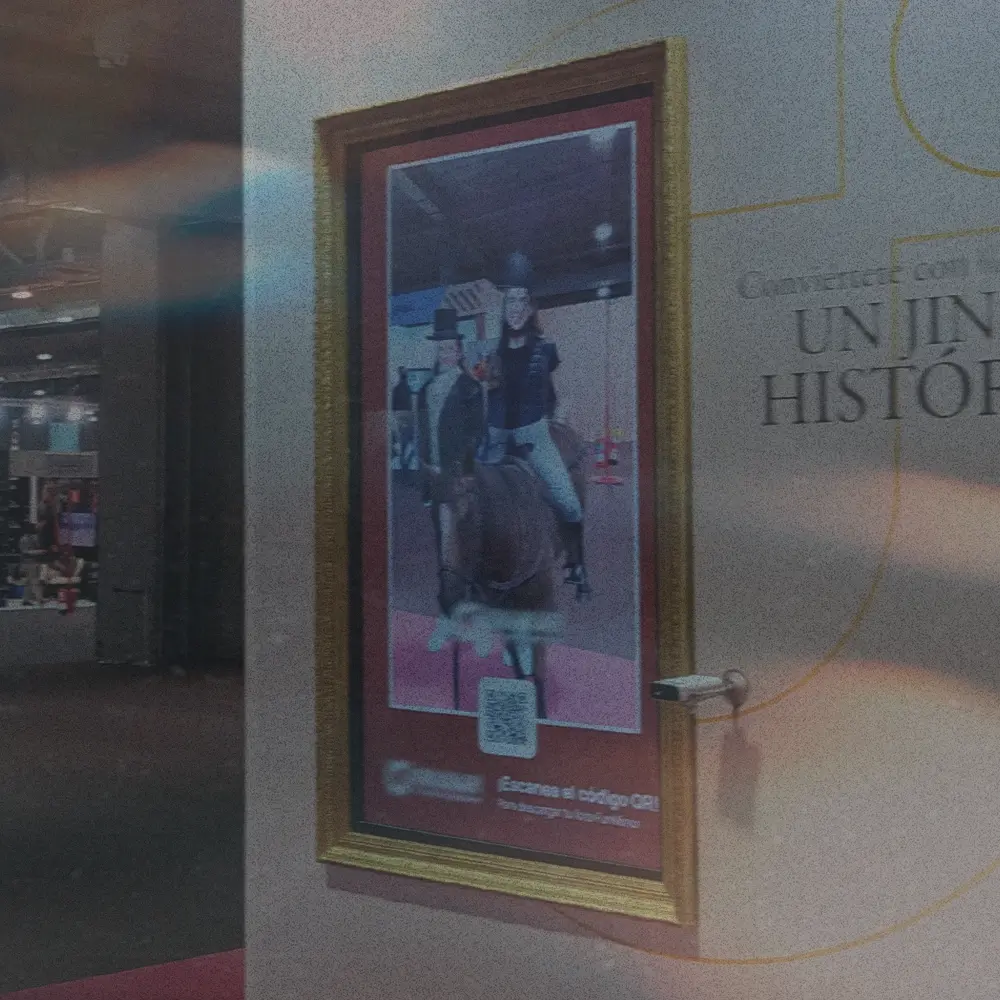
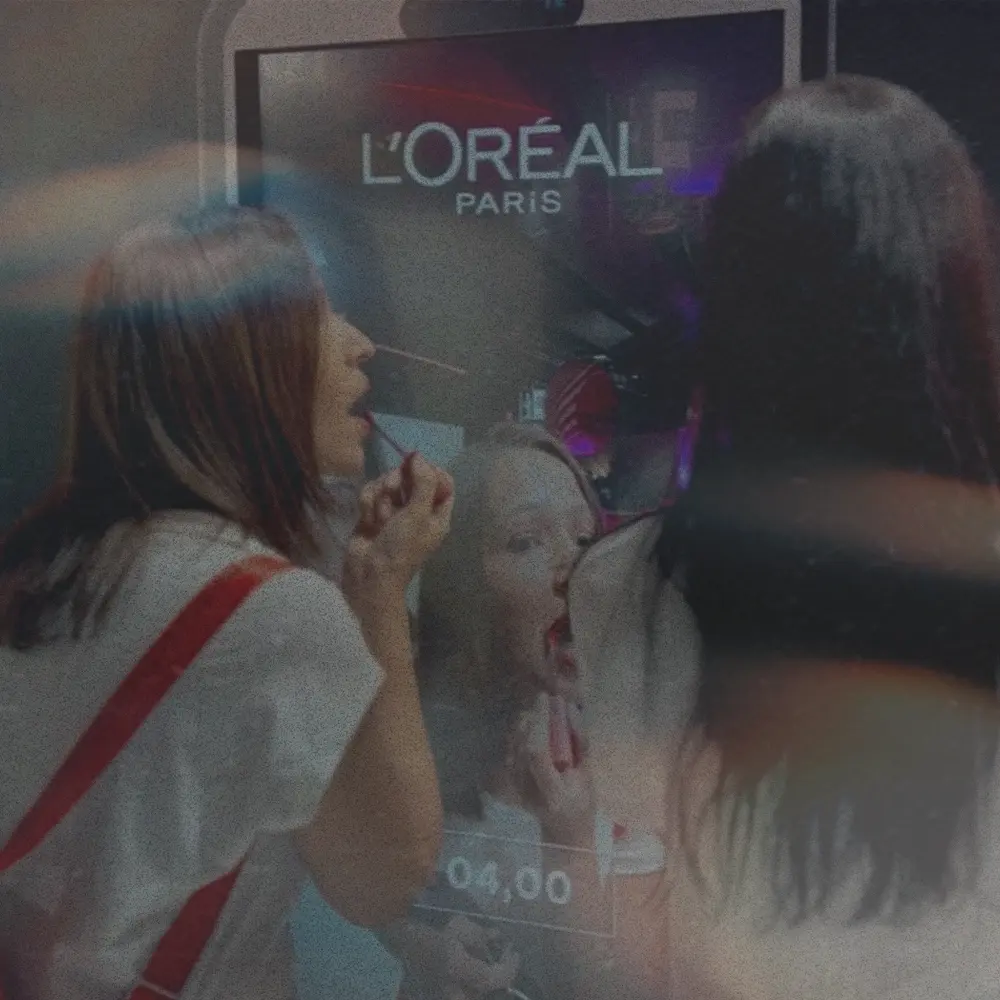

L'Oréal París Trends Hyperexperience | Project at Madrid Fashion Week 2023

Virtual Reality for the Hospitality Industry | Hyperexperience in Aura Restaurant

Virtual Reality shopfitting | Creation of virtual spaces


SUPPORT CHAT
STATUS: TERMS ACCEPTANCE
v26.10.22
PRIVACY POLICY
Before we begin, please note that you are interacting with the artificial-intelligence virtual assistant of DEUSENS HYPERXPERIENCE, S.L.
Any personal data you provide during the conversation will be processed by DEUSENS HYPERXPERIENCE, S.L. to handle your queries about our products and services and, where appropriate, to put you in touch with our sales team. Conversations are recorded and kept for the period necessary so they can be reviewed in order to improve service quality and ensure correct operation.
You can find all the information about how your data is processed and how to exercise your rights in our Privacy Policy.
Any personal data you provide during the conversation will be processed by DEUSENS HYPERXPERIENCE, S.L. to handle your queries about our products and services and, where appropriate, to put you in touch with our sales team. Conversations are recorded and kept for the period necessary so they can be reviewed in order to improve service quality and ensure correct operation.
You can find all the information about how your data is processed and how to exercise your rights in our Privacy Policy.
By chatting you accept our Privacy Policy.
ALICE ASSISTANT
TYPING RESPONSE...
By chatting you accept our Privacy Policy.
Conversation sent. We will be in touch shortly. New conversation