

 RETURN
18.01.2021
TYPES OF VR DEVICES | What are the types of Virtual Reality glasses that exist?

HIPEREXPERIENCIA
LOADED


A first-setup video has surfaced inside Quest's own firmware, showing for the first time Meta's upcoming ultra-light headset, internally known as Phoenix. The original leaked footage is deliberately blurry — the images in this article are unofficial community interpretations based on that leak; Meta has not shown the final design of Phoenix yet.
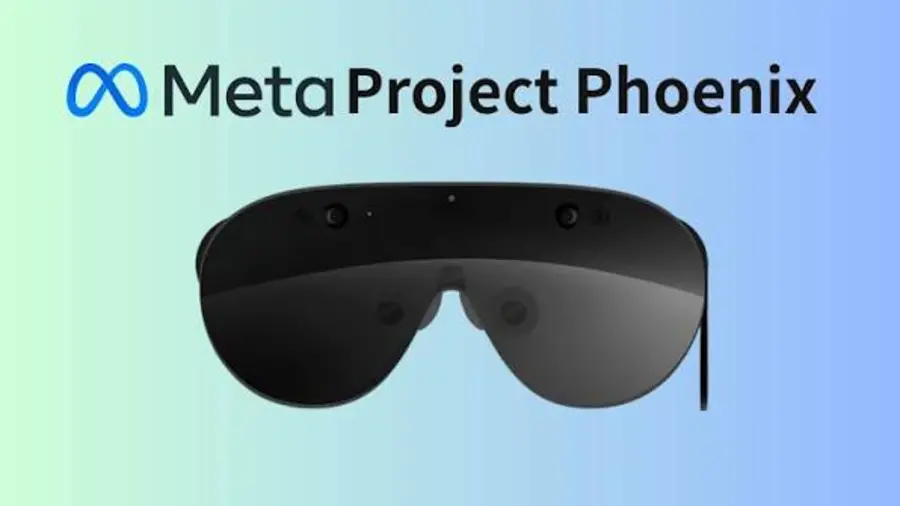
Fan-made speculative illustration of the hypothetical "Meta Project Phoenix." Unofficial render, not confirmed by Meta.
The images show an almost glasses-like design: a slim profile, independent lens adjustment for each eye, swappable nose clips, and built-in hand and eye tracking — with no physical controllers in sight. The setup video walks the user through lens fit and eye-tracking calibration, suggesting the entire interaction model relies on gaze and gestures.
What makes that slim profile possible isn't a new display — it's where the battery lives. Phoenix moves the processor and power to an external unit connected by cable, leaving only optics and sensors on the head — the same approach already used by ultra-light headsets like the Bigscreen Beyond (107g), compared to over 500g for a Quest 3 or 600-650g for a Vision Pro.
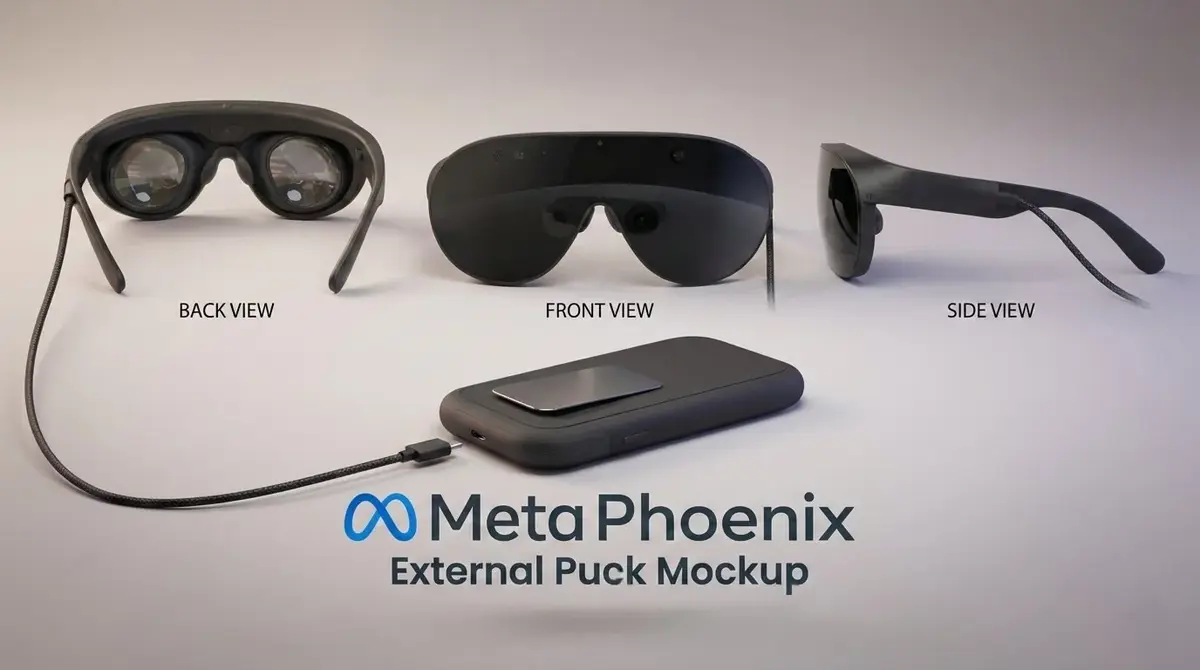
Unofficial fan-made mockup of the external compute unit ("puck"), based on the leak — not Meta material.
Less weight on your face means more comfortable wear time — exactly what any serious professional application needs, well beyond a 20-minute gaming session.
Reports point to a device built around virtual screens for productivity and entertainment, with gaze-and-pinch interaction instead of controllers — a language much closer to an office or training environment than to pure gaming.

Unofficial community mockup imagining how Phoenix might be used. Meta has not presented any final design.
It's the same direction we're already seeing in industrial simulation and virtual showrooms: the lighter and more natural the device, the easier it is for a team to wear it through a full workday without fatigue. See how we already apply Virtual Reality in industry for training and safety projects.
Meta's Connect event is set for September 23-24, and everything points to at least a preview of Phoenix there, even though commercial launch is pegged for the first half of 2027 and pricing remains unconfirmed — earlier reports suggested under $1,000, now under pressure from rising component costs.
Either way, the underlying message is clear: lightweight headsets with external compute are moving from an enthusiast niche toward becoming the standard for Virtual Reality applied to business too.
SIMILAR CONTENT


PRIVACY POLICY
By chatting you accept our Privacy Policy.
By chatting you accept our Privacy Policy.
Conversation sent. We will be in touch shortly. New conversation


