HIPEREXPERIENCIA
LOADED


 RETURN
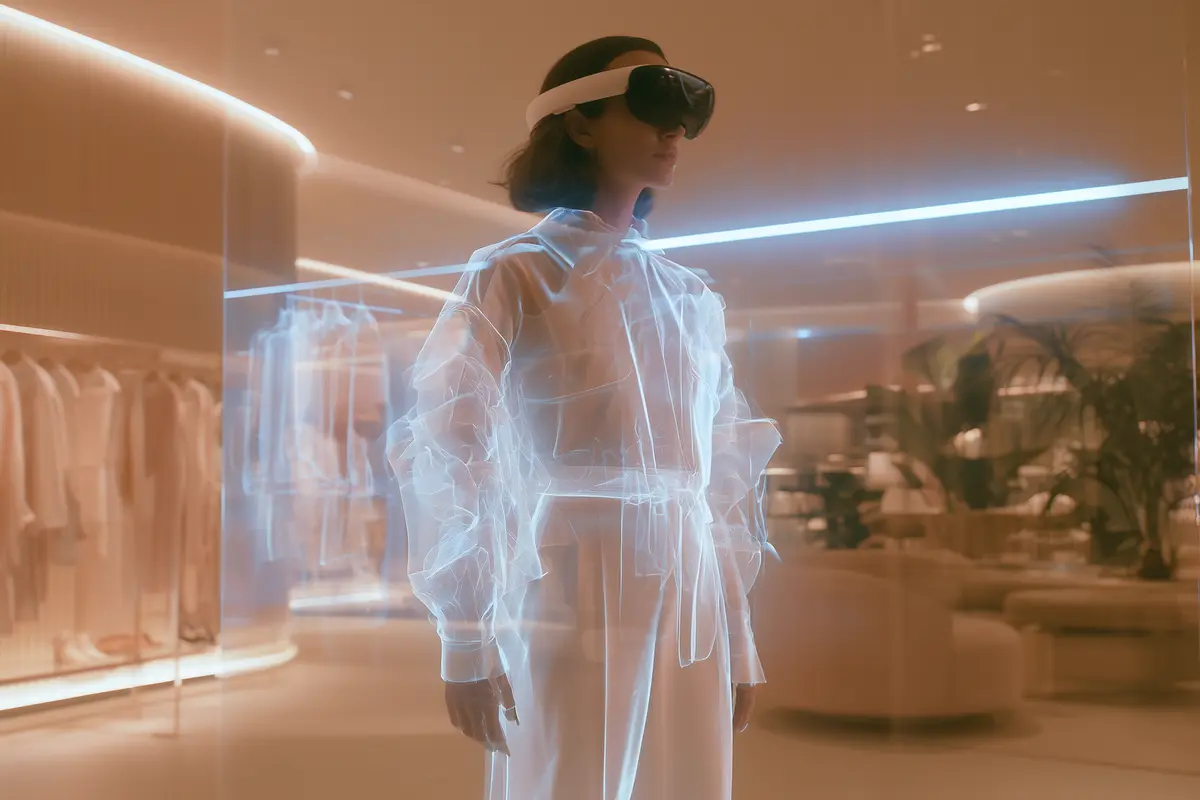
Spatial Computing is redefining the relationship between fashion brands and their customers. Fitting rooms that let customers see how a garment looks on their actual body without undressing, showrooms where entire collections exist in space without any physical stock, brand experiences that seamlessly blend the physical and digital.
At DeuSens we develop Spatial Computing experiences for fashion brands that generate brand differentiation, reduce returns, and create memorable purchase moments both in physical stores and digital channels.
WANT TO STAND OUT AT POINT OF SALE? We design Spatial Computing experiences for your brand that turn the store into a memorable experience.
Design a brand experienceBenefits of Spatial Computing in fashion
- Reduced returns: the customer sees the product on their body before buying
- More efficient showrooms: full collections without physical stock
- Brand differentiation: unique experiences that customers share on social media
- Real-time personalization: the customer sees color, fabric and size variants instantly
- Immersive collection presentations to buyers and press without physical production
- Valuable interaction data to optimize design and merchandising
Spatial Computing applications in fashion
- Smart spatial fitting rooms: outfit visualization on the customer without physical try-on
- Holographic showrooms: full collections in space without stock, accessible from any device
- Visual personalization: the customer configures color, fabric and finish in real time on their own avatar
- Shared-space collection presentations for international buyers and press
- Phygital brand experiences in flagship stores and pop-ups
Technologies and tools for Spatial Computing in fashion
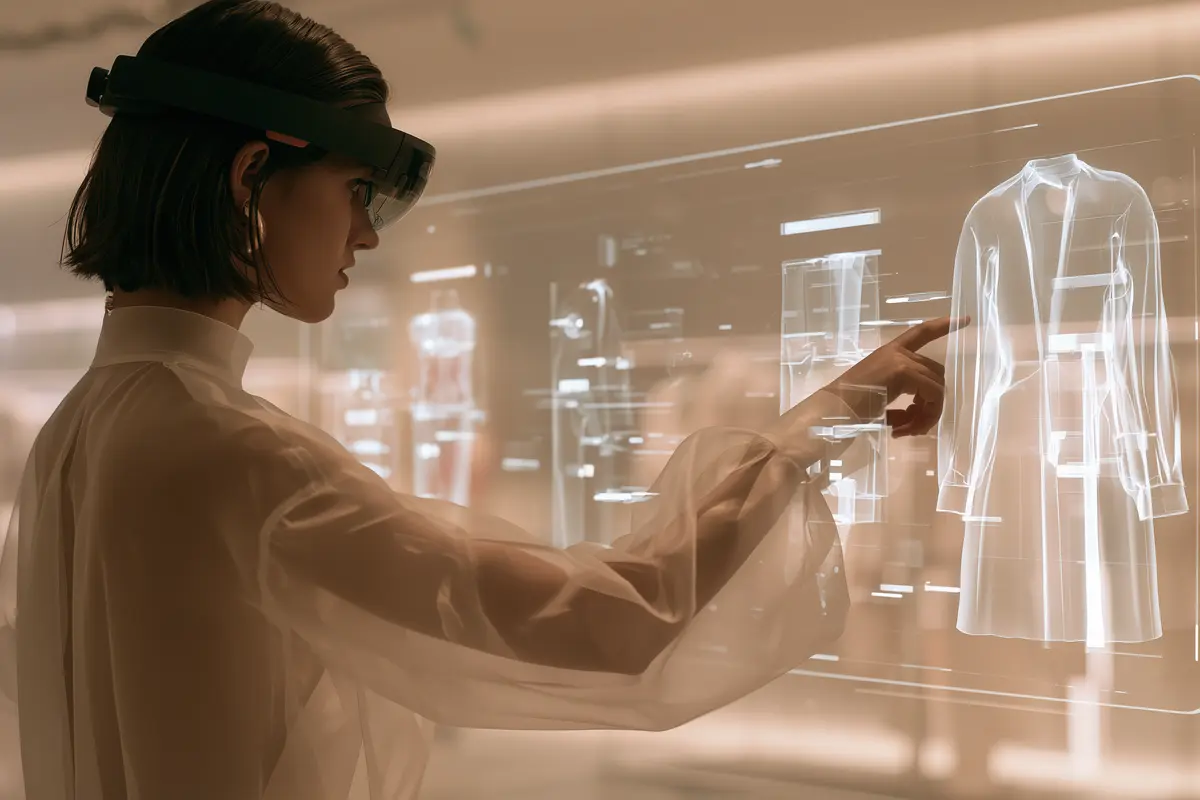
- Apple Vision Pro + ARKit: reference platform for high-quality fashion experiences with photorealistic fabric and material visualization capability.
- CLO 3D + Browzwear: 3D fashion design software that generates digital garment assets for the Spatial Computing environment with full fidelity to the physical product.
- Shopify AR + WebXR: extension of spatial experiences to the e-commerce channel for product visualization from any device.
DO YOU HAVE 3D ASSETS OF YOUR GARMENTS? If you already work with CLO 3D, Browzwear or your own 3D assets, development time reduces significantly. Let's explore options.
Talk about 3D assetsThe future of Spatial Computing in fashion
Spatial Computing in fashion will evolve toward total personalization: garments designed in real time based on client preferences, produced on demand and delivered without the need for returns. The store of the future will be an experience space, not an inventory space.
Brands that integrate Spatial Computing into their omnichannel strategy today will be setting the new standard for fashion retail when this technology reaches critical mass. DeuSens accompanies them in that process.
LEAD THE FASHION RETAIL OF THE FUTURE: Spatial Computing is already a reality in the world's most advanced flagship stores. Design your strategy with DeuSens.
Contact us now
Frequently asked questions:
Do we need 3D assets of all our garments to get started?
No. You can start with a reduced selection of key garments. 3D assets can be generated from existing CAD patterns (CLO 3D, Browzwear) or from photogrammetric scanning of physical garments.
Does Spatial Computing work for luxury fashion or only fast fashion?
It's especially powerful for luxury and premium fashion, where the brand experience is part of the product and customers value exclusivity and innovation. Major fashion houses are already exploring it.
How does it integrate with our current e-commerce?
Through Shopify AR, WebXR and 3D experience APIs that bring Spatial Computing experiences to the digital channel without requiring customers to have AR glasses. Mobile visualization is the first step.
What data can we get from Spatial Computing experiences?
Highly valuable interaction data: which garments are tried on most, which combinations generate the most conversion, where the customer abandons the experience. Data impossible to get from a physical fitting room.
How long does it take to develop a Spatial Computing fashion experience?
A first pilot experience can be ready in 6 to 10 weeks, including basic 3D asset generation, experience development and testing. Scale depends on the number of garments and channels.
Latest news: spatial computing in fashion
Last updated: July 23, 2026
- Spatial computing market: from $20.43B in 2025 to $85.56B by 2030
Spatial computing is moving from pilot projects to production infrastructure across multiple sectors. Asia-Pacific leads growth, while Europe consolidates adoption in industry, healthcare and architecture. - Apple Vision Pro and visionOS: the reference platform for enterprise spatial computing in 2026
Apple Vision Pro has consolidated as the reference platform for high-quality enterprise spatial computing applications, with growing adoption in manufacturing, healthcare, retail and education. - AR/VR market hits $97.41B in 2026 with 18.4% CAGR
The global AR and VR market — the technological base of spatial computing — grows solidly toward $268.58B by 2032, driven by Apple, Meta, Microsoft, Google and NVIDIA. - Digital twins and spatial computing: economic value of AR+IoT to reach $90-110B by 2030
The combination of digital twins and spatial computing is one of the highest-impact projections in the XR sector, with applications in manufacturing, logistics, healthcare, and smart city.
Conclusion:
Spatial Computing in fashion is not the future: the world's most advanced flagship stores already deploy it. At DeuSens we combine experience in immersive experience design with knowledge of fashion retail to develop solutions that differentiate brands and convert visits into sales.
ACT NOW:
Contact us for a free consultation