

 RETURN

FunMirror at Madrid Horse Week 2021 | Hyperexperience at the fair

HIPEREXPERIENCIA
LOADED


ENGLISH


ESPAÑOL

ITALIANO
CONTACT

TECHNOLOGY
IMMERSIVE TECH
USE CASE
TOOL
CLIENT
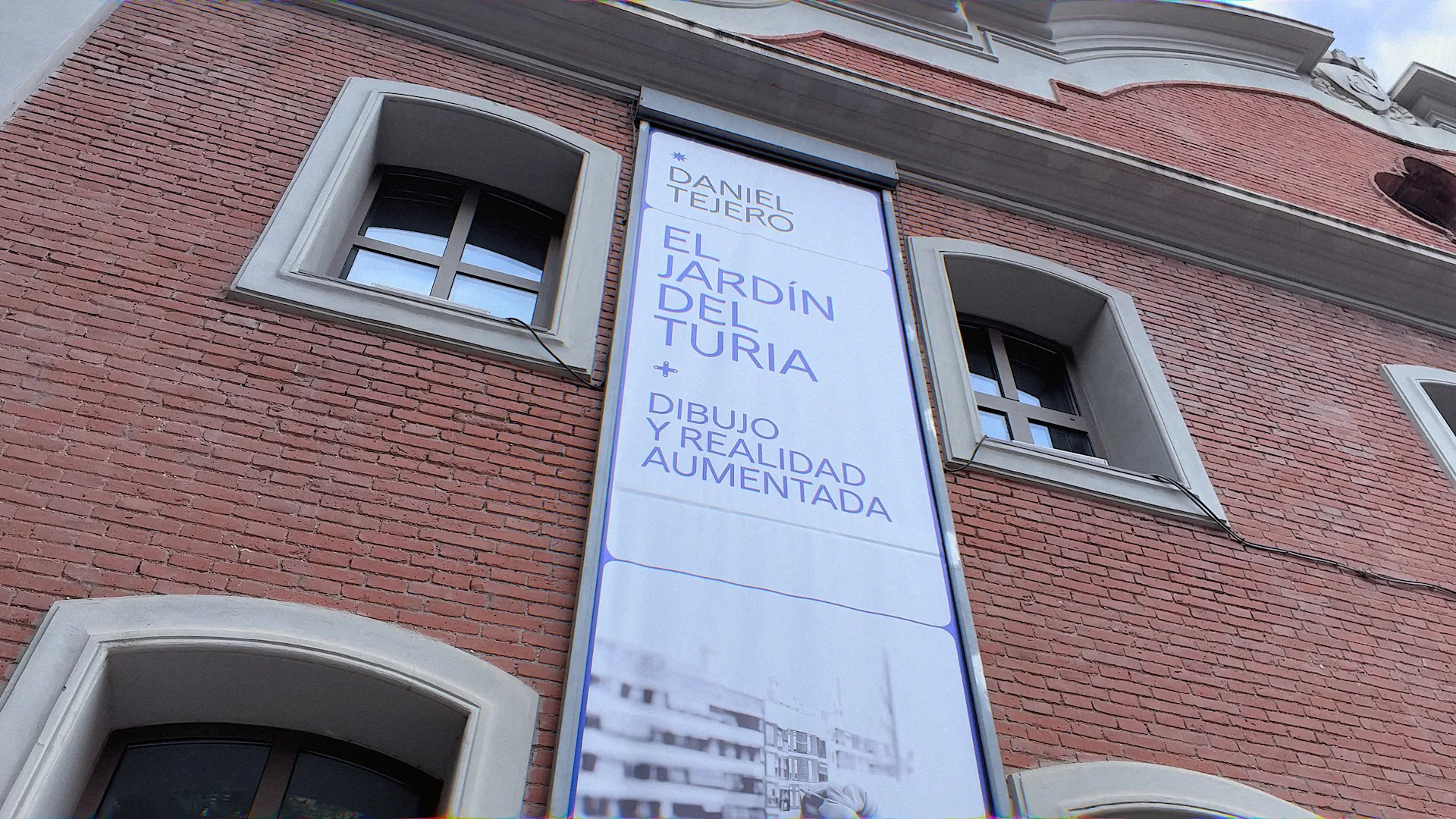
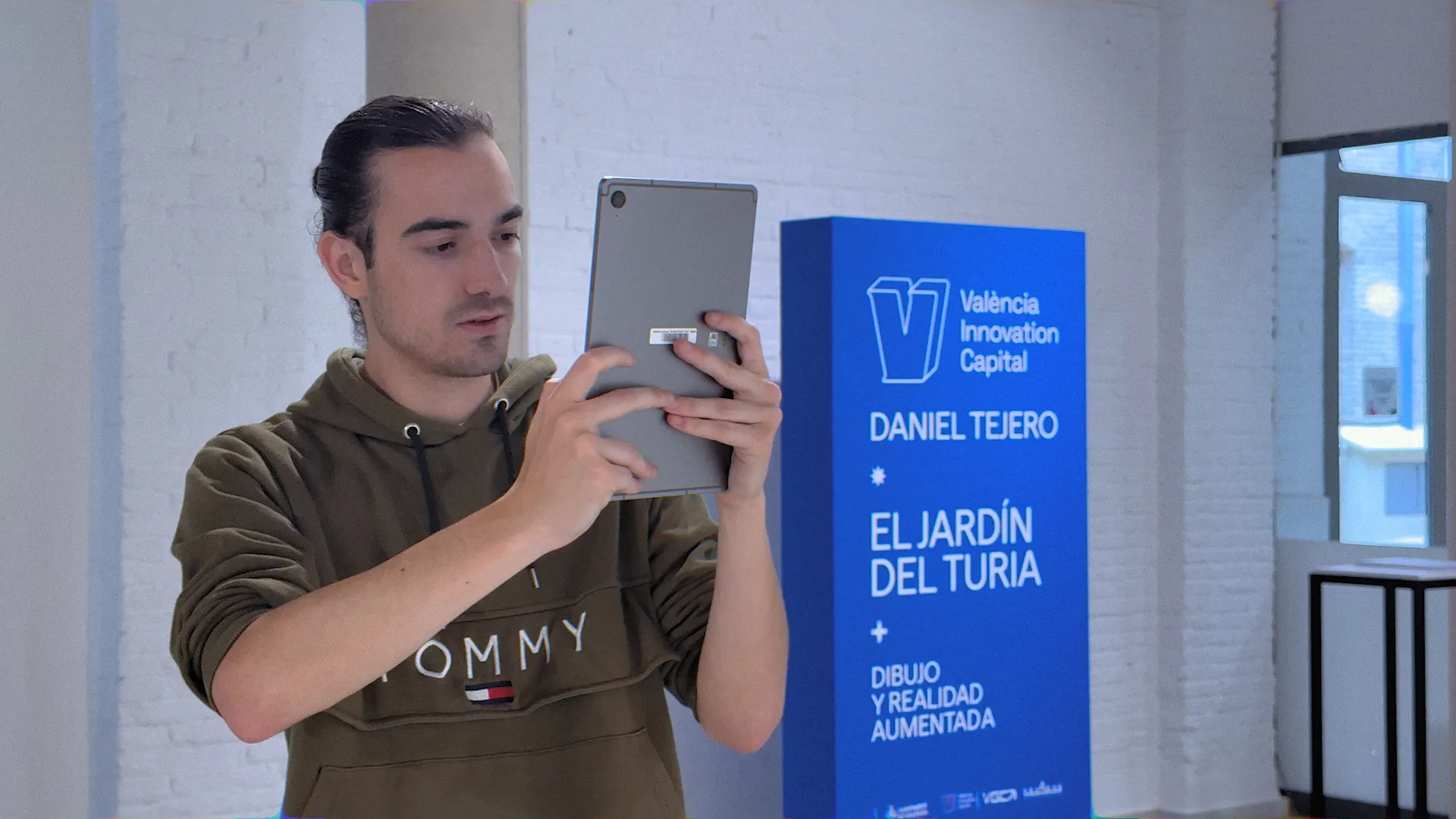
València Innovation Capital is the City Council of València's initiative that positions the city as a European hub for innovation, gaming and artificial intelligence. Through the València Game City programme and its venue at Las Naves, it connects art, technology and citizens. For this exhibition it commissioned DeuSens to develop the immersive experience that activates Daniel Tejero's work with AI and Augmented Reality.
GOAL ACHIEVED
Address the curatorial challenge of the exhibition: showing the sporting activities of Jardín del Turia that Daniel Tejero's work, by its non-figurative language, does not capture. An AI algorithm trained on his pencil strokes and an Augmented Reality layer let the viewer complete the story the artist himself invited to complete.

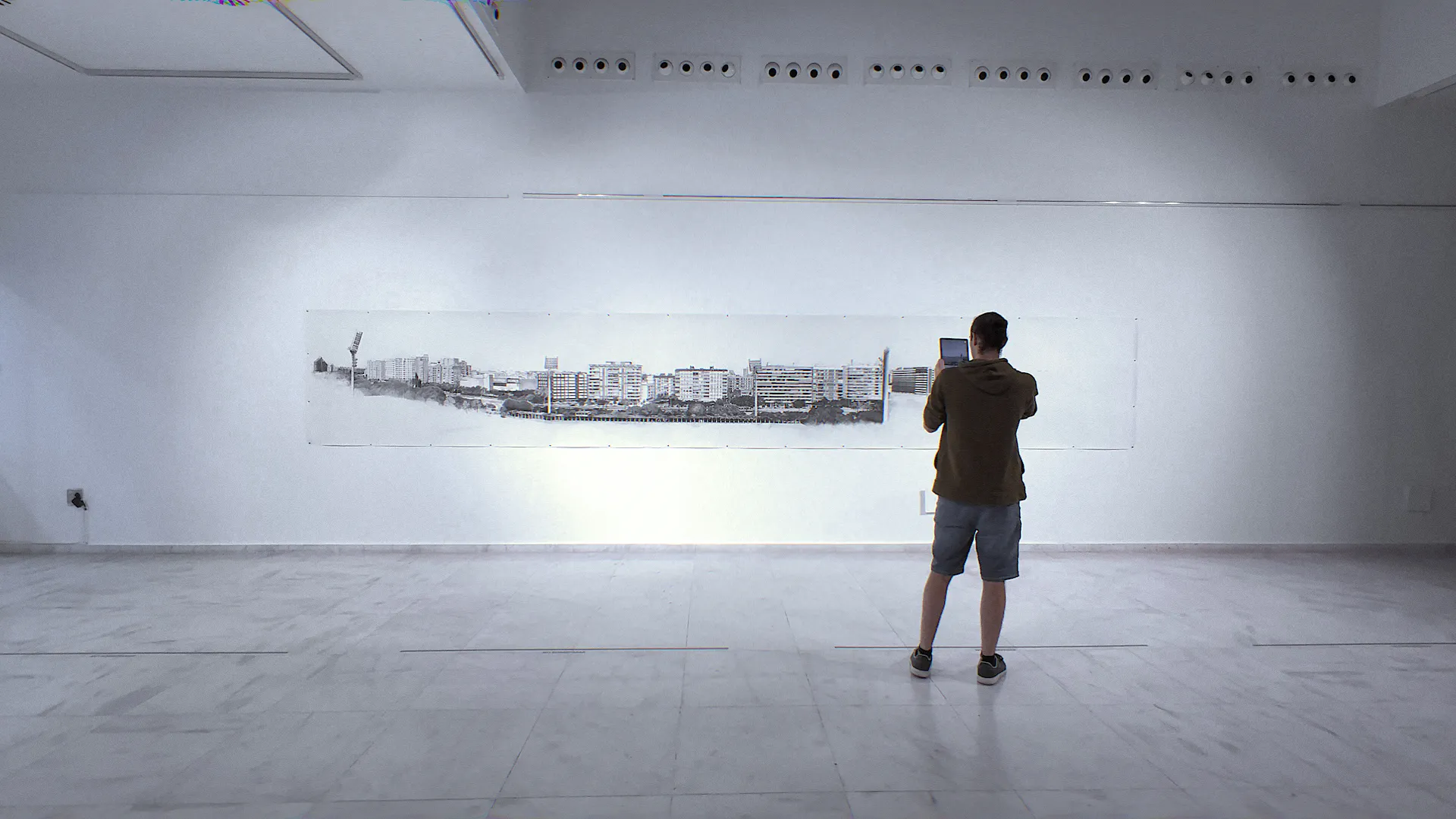
A work that portrays the urban front of Jardín del Turia
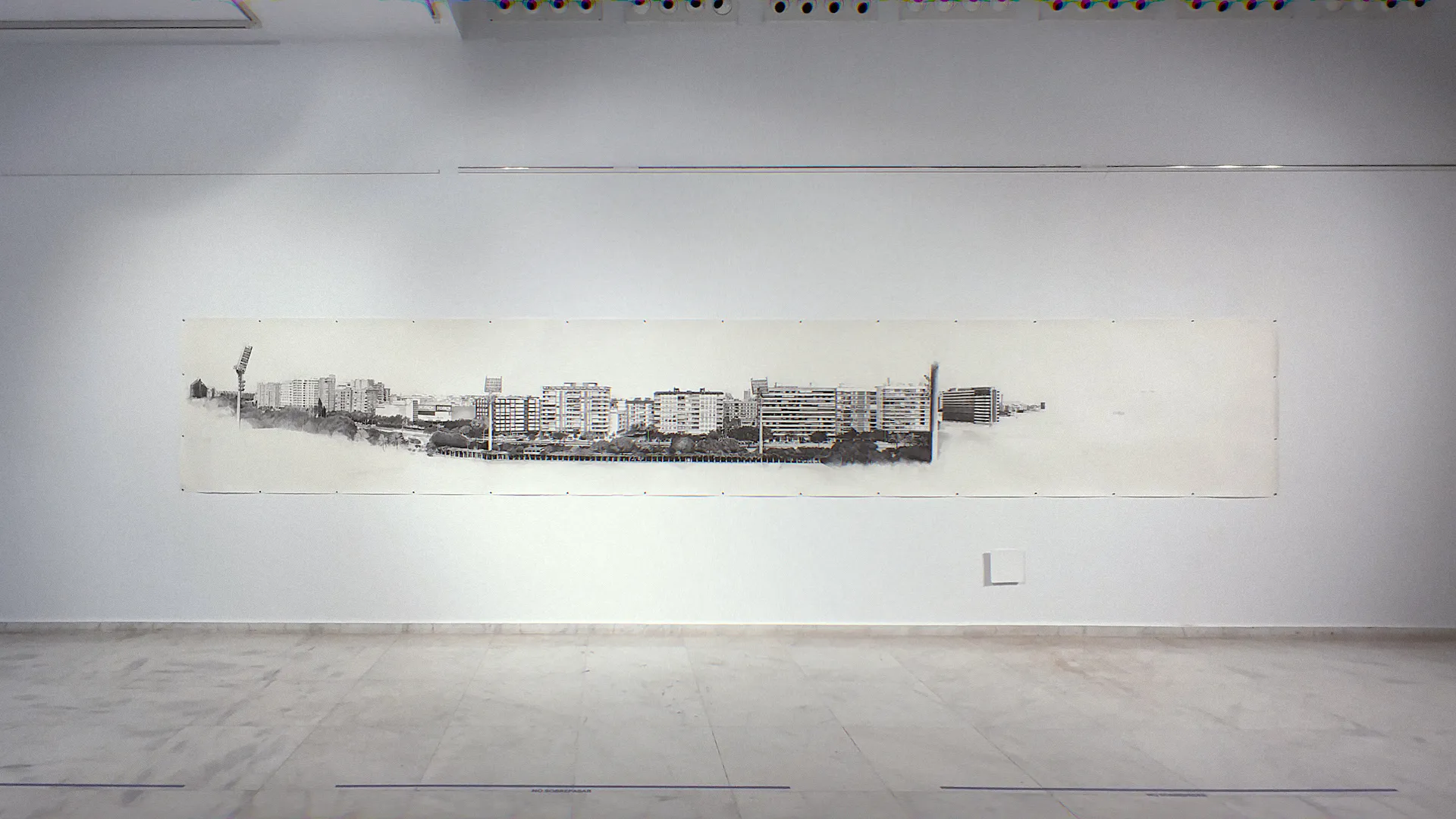
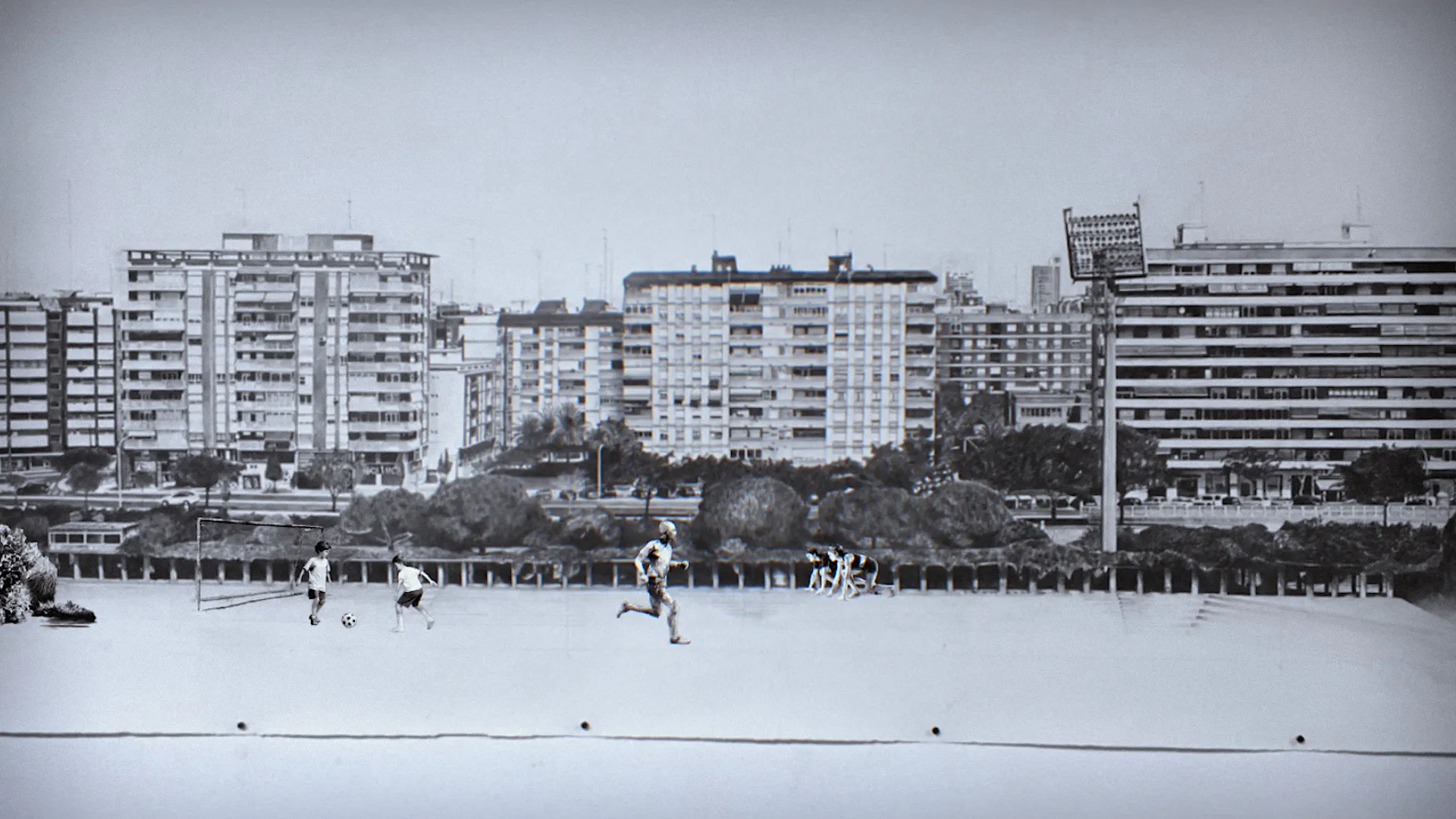
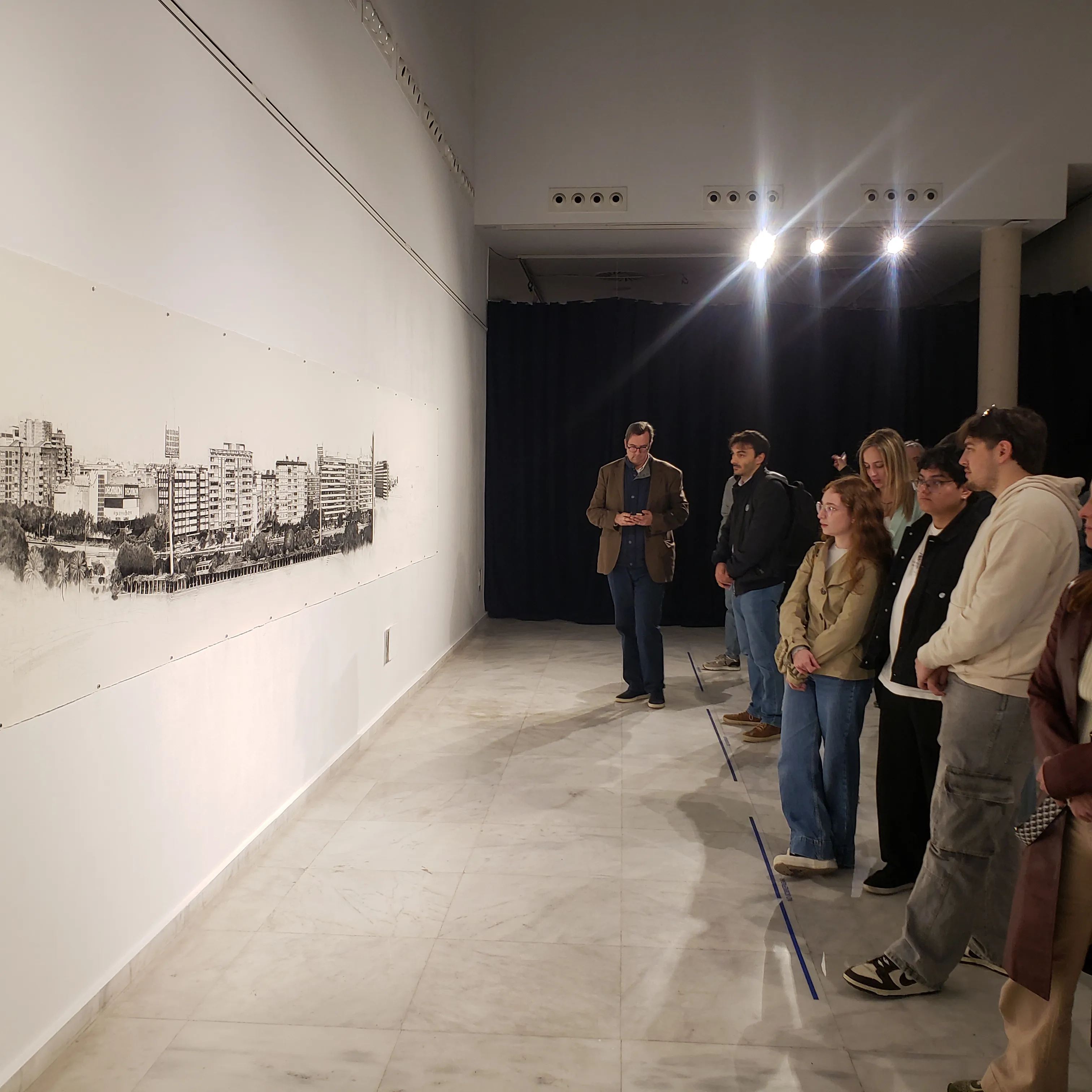
“Passeig de la Petxina” is a work by Daniel Tejero —Professor of Sculpture at the UMH Fine Arts School— that captures, in graphite and with almost surgical precision, the architectural front overlooking Jardín del Turia. Seven metres worked with near-documentary rigor: buildings, streetlights, slopes, textures. A gaze centred on the built, on what endures.
What the drawing leaves out —the people, the daily activities, the park's pulse— stays out by coherence with the artist's language: Tejero doesn't work in figuration. And at the same time, he leaves it out as a deliberate choice he himself voiced at the Las Naves opening: “I don't like drawing people, I prefer that the viewer completes the story.” An invitation, not an omission.
The curatorial challenge: showing what the drawing, by style, cannot show
The exhibition, curated by María Tinoco, starts from that reading: this work was chosen precisely because it portrays masterfully the urban front of the old riverbed. But the curatorial thesis demanded something more —to highlight what happens in the river: runners, kids playing, cyclists, everyday scenes, the data that make Jardín del Turia a unique landmark of urban sustainability worldwide.
That's the starting point of València Innovation Capital's brief to DeuSens. A concrete curatorial need: how to introduce the figurative —the park's activities— without breaking the language of the drawing. How to complete the story the artist had deliberately left open, but to do it in his own voice.
Training an AI on Daniel Tejero's pencil strokes, not on a generic style
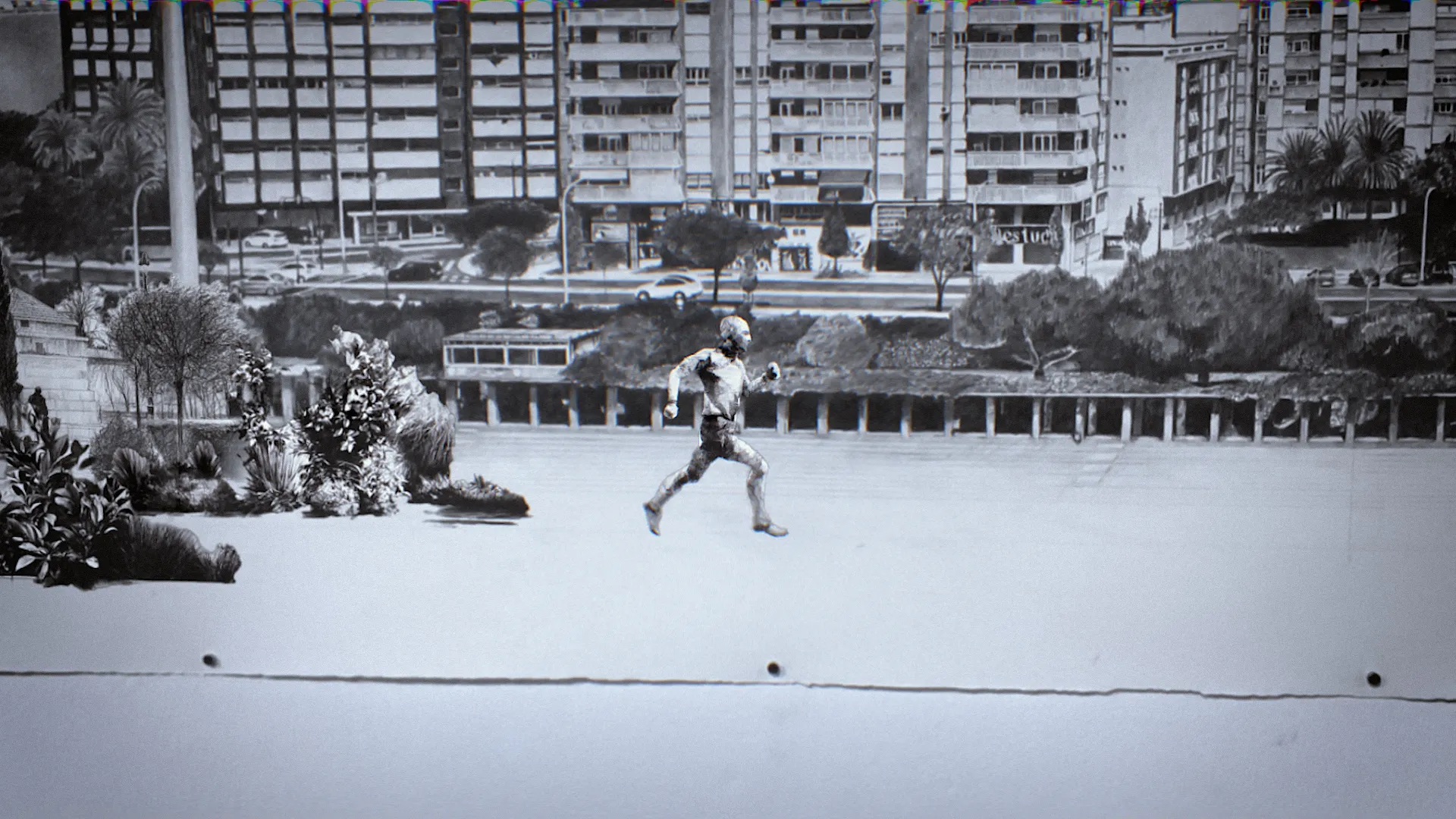
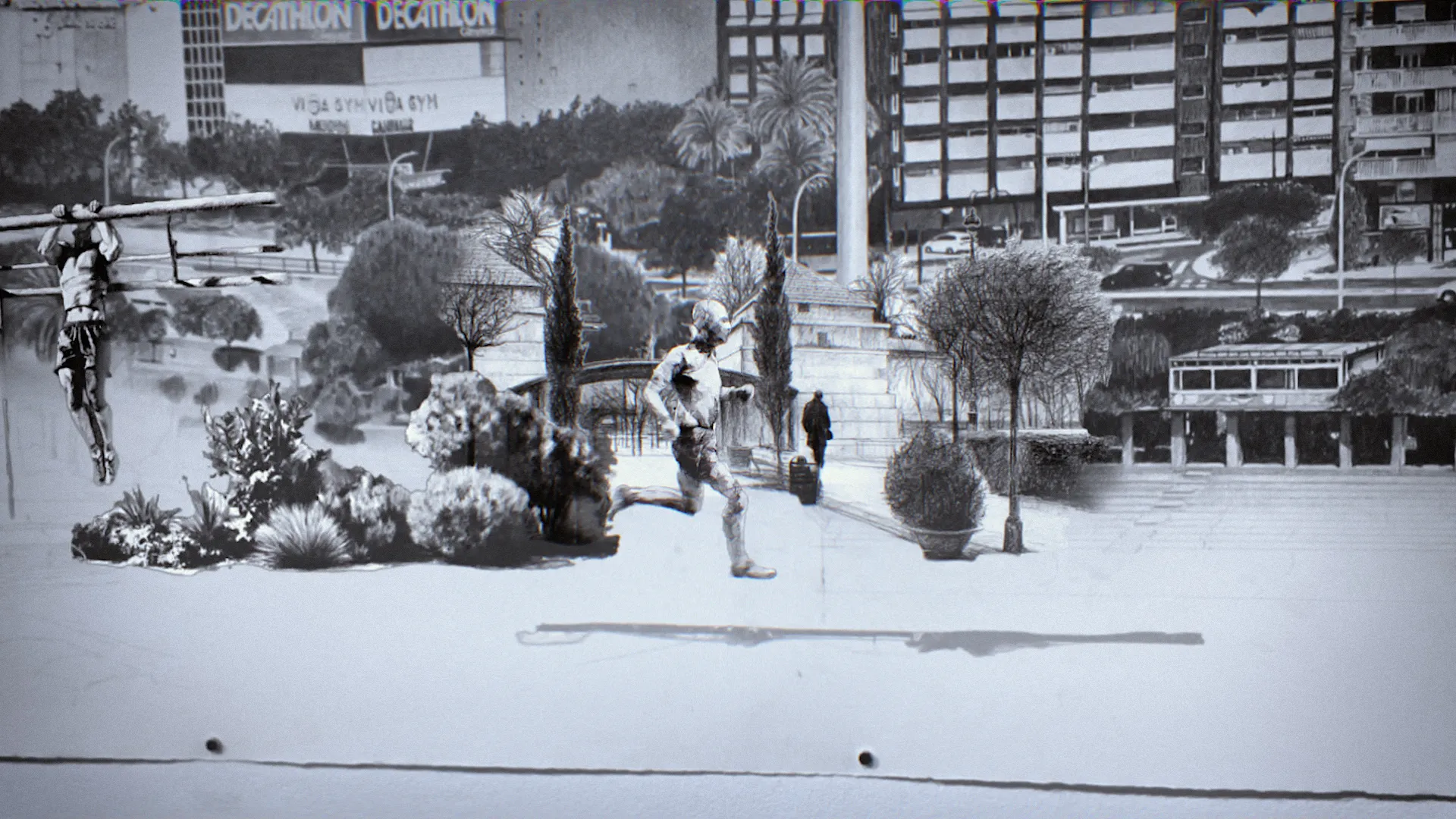
The core of the work is an Artificial Intelligence algorithm trained specifically on Tejero's drawings. Not a general-purpose model you ask to “draw a person running”, but a system that learns his particular gesture: the pressure of the graphite, the shadowing areas, the way he suggests a building without finishing it, the decision of what to include and what to leave out.
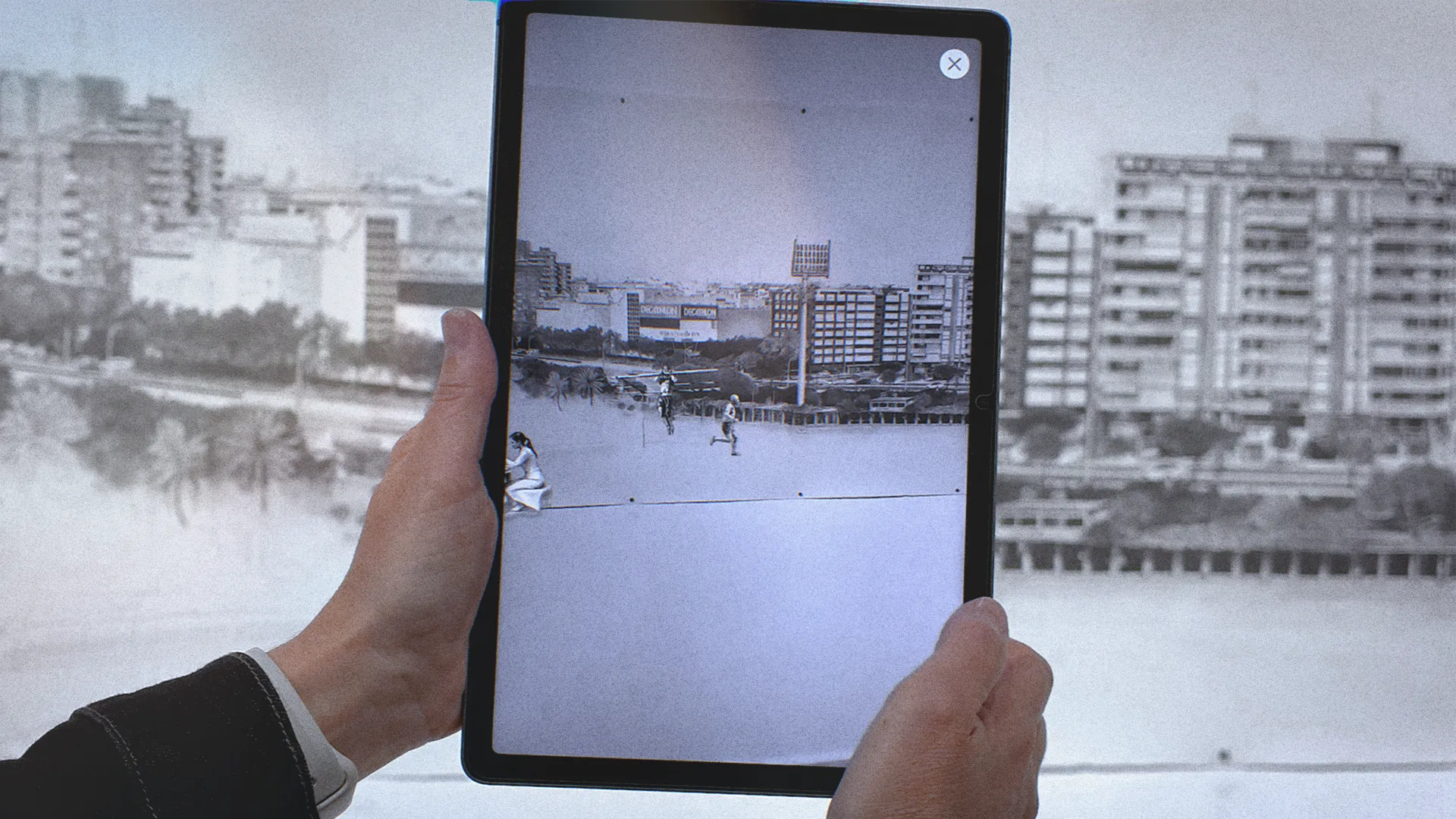
The result is that every figure in the experience —the runner, the kids playing football, the seated couple, the cyclist— is drawn as if the artist had drawn it himself. There aren't two visual languages coexisting: there's only one. The AI doesn't imitate a style, it inherits a gaze and applies it precisely to what the creator, by coherence with his work, didn't draw.
Augmented Reality: the layer that shows what the drawing doesn't show
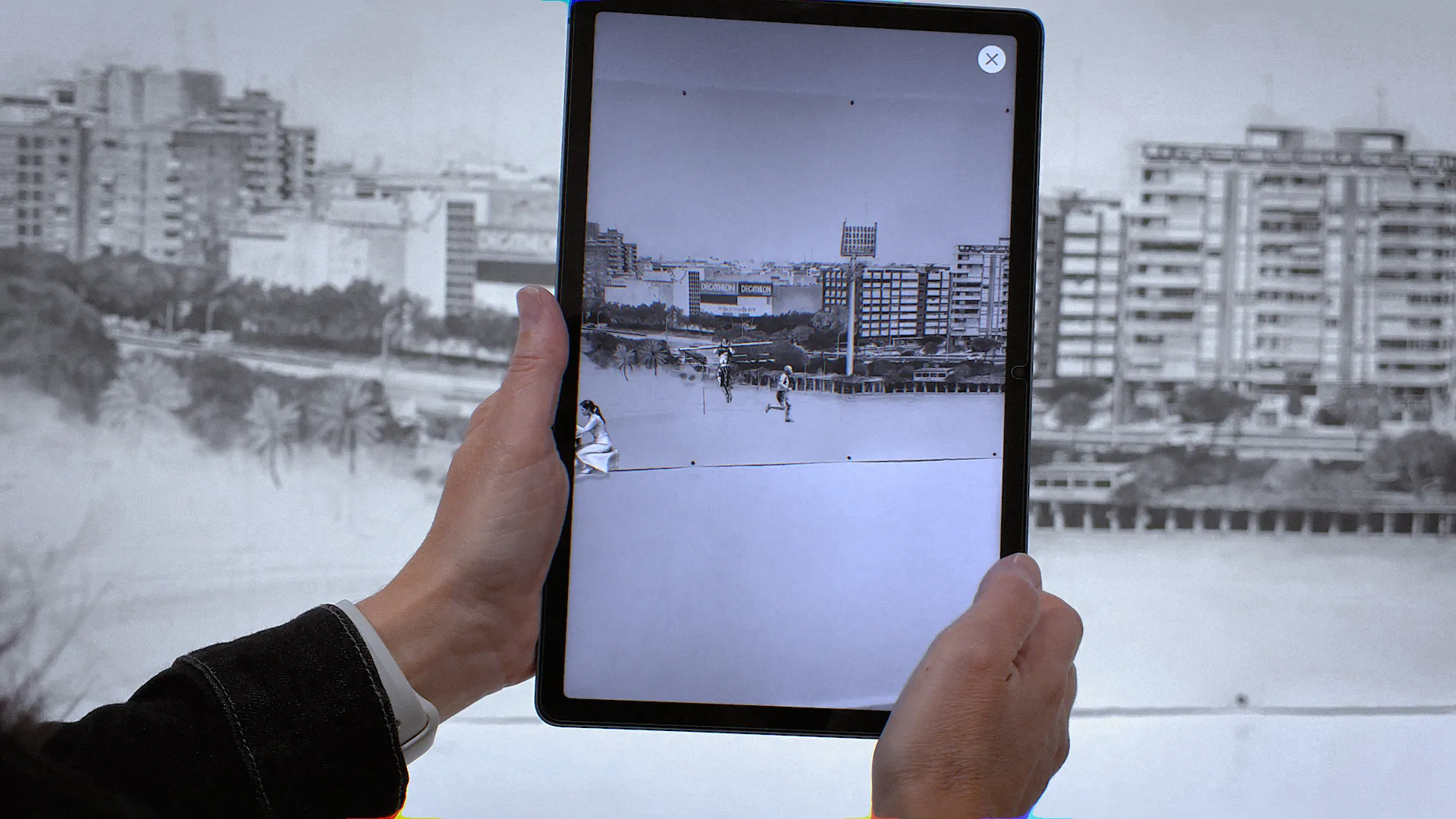
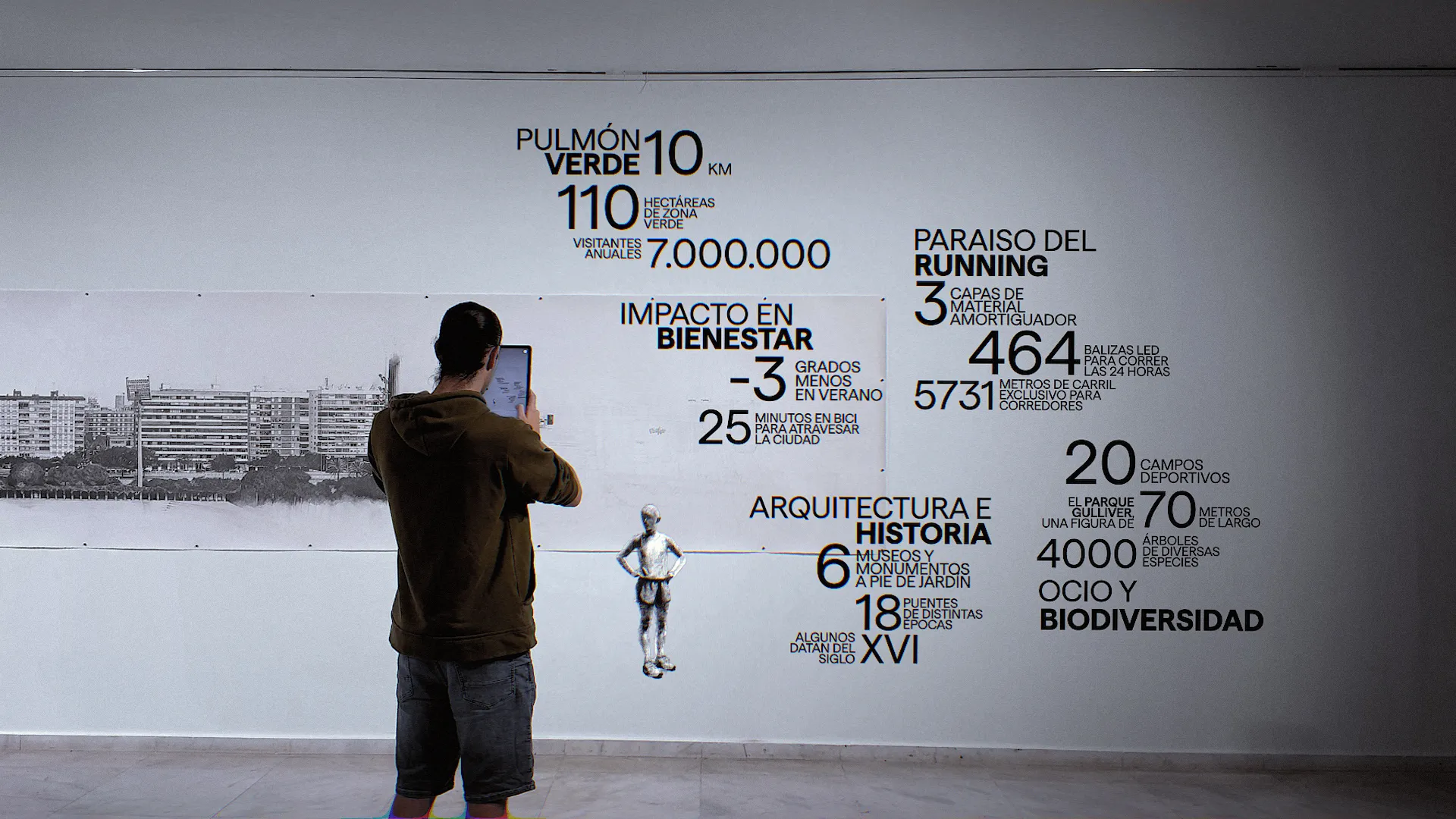
In the room, the tablets are the threshold. The visitor points at the work and discovers what the graphite doesn't contain: the human pulse of the park, the sporting and everyday scenes that happen at the riverbed, the data that explains why this place is unique —10 kilometres of green lung, 110 hectares of green space, seven million visitors a year, 18 bridges connecting different eras.
The tracking system reads the whole drawing as a marker. The work becomes an interactive map where each zone unlocks a different layer: animated figures coming to life, infographics explaining the park's ecosystem, moments of the day and the park's history overlaid on the strokes. The screen doesn't compete with the paper, it extends it.
Technology answering a real need — and completing the story as the artist invited
That's the difference between adding technology and solving a problem with technology. The Las Naves project doesn't incorporate AI and Augmented Reality as an innovative gesture, but to address a challenge the artist's language, by style, couldn't address on its own. And it does something more: it materialises the invitation Tejero had already extended to the viewer —“let the viewer complete the story”— replacing individual imagination with an interactive layer built from the artist's own pencil strokes.
Visitors leave the room having seen two works at once: the graphite one, exact and centred on the architectural; and the AR one, that brings to life what the drawing, by coherence, didn't represent. Both signed by the same hand. That's DeuSens's proposal for València Innovation Capital and Las Naves: AI and Augmented Reality at the service of art when there's a real need to address and a story that deserves to be completed.
Ready to take the leap to hyperexperience?
SIMILAR PROJECTS
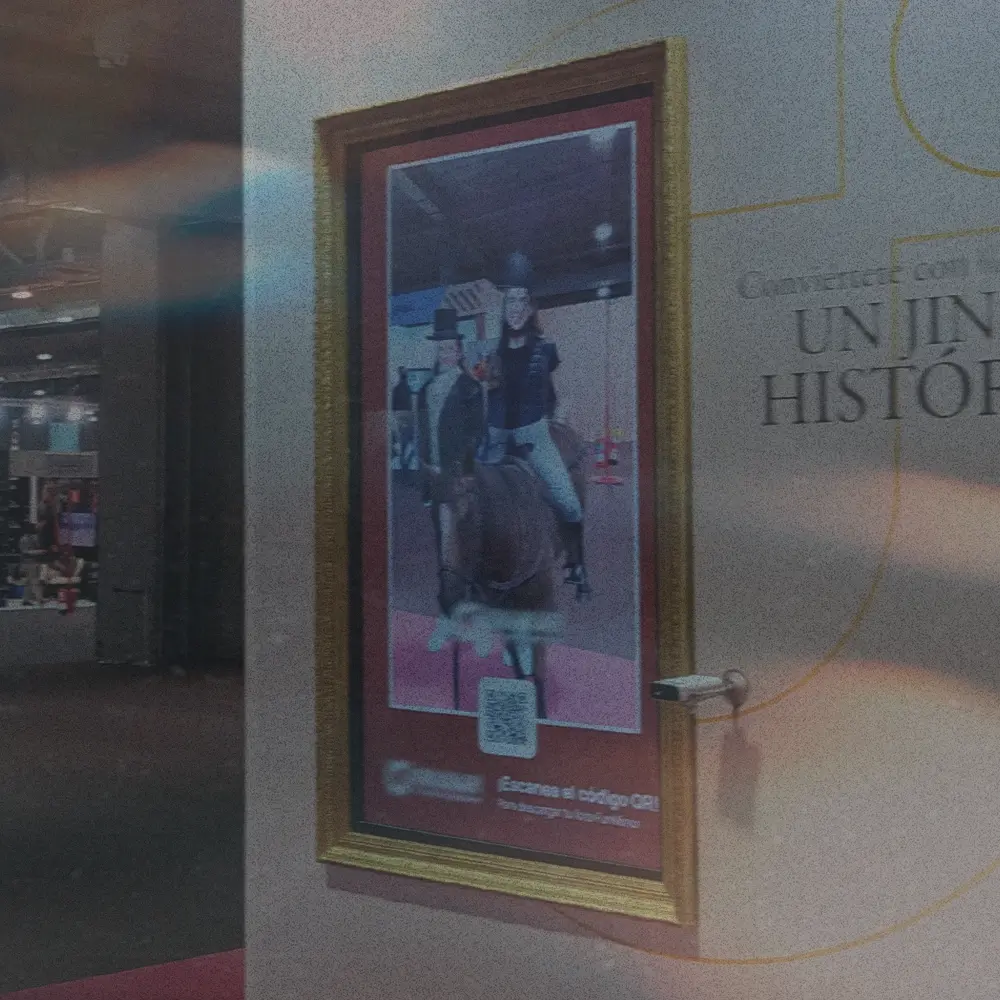



L'Oréal París Trends Hyperexperience | Project at Madrid Fashion Week 2023

Virtual Reality for the Hospitality Industry | Hyperexperience in Aura Restaurant

Virtual Reality shopfitting | Creation of virtual spaces


SUPPORT CHAT
STATUS: TERMS ACCEPTANCE
v26.10.25
PRIVACY POLICY
Before we begin, please note that you are interacting with the artificial-intelligence virtual assistant of DEUSENS HYPERXPERIENCE, S.L.
Any personal data you provide during the conversation will be processed by DEUSENS HYPERXPERIENCE, S.L. to handle your queries about our products and services and, where appropriate, to put you in touch with our sales team. Conversations are recorded and kept for the period necessary so they can be reviewed in order to improve service quality and ensure correct operation.
You can find all the information about how your data is processed and how to exercise your rights in our Privacy Policy.
Any personal data you provide during the conversation will be processed by DEUSENS HYPERXPERIENCE, S.L. to handle your queries about our products and services and, where appropriate, to put you in touch with our sales team. Conversations are recorded and kept for the period necessary so they can be reviewed in order to improve service quality and ensure correct operation.
You can find all the information about how your data is processed and how to exercise your rights in our Privacy Policy.
By chatting you accept our Privacy Policy.
ALICE ASSISTANT
TYPING RESPONSE...
By chatting you accept our Privacy Policy.
Conversation sent. We will be in touch shortly. New conversation