

 RETURN

18.01.2021
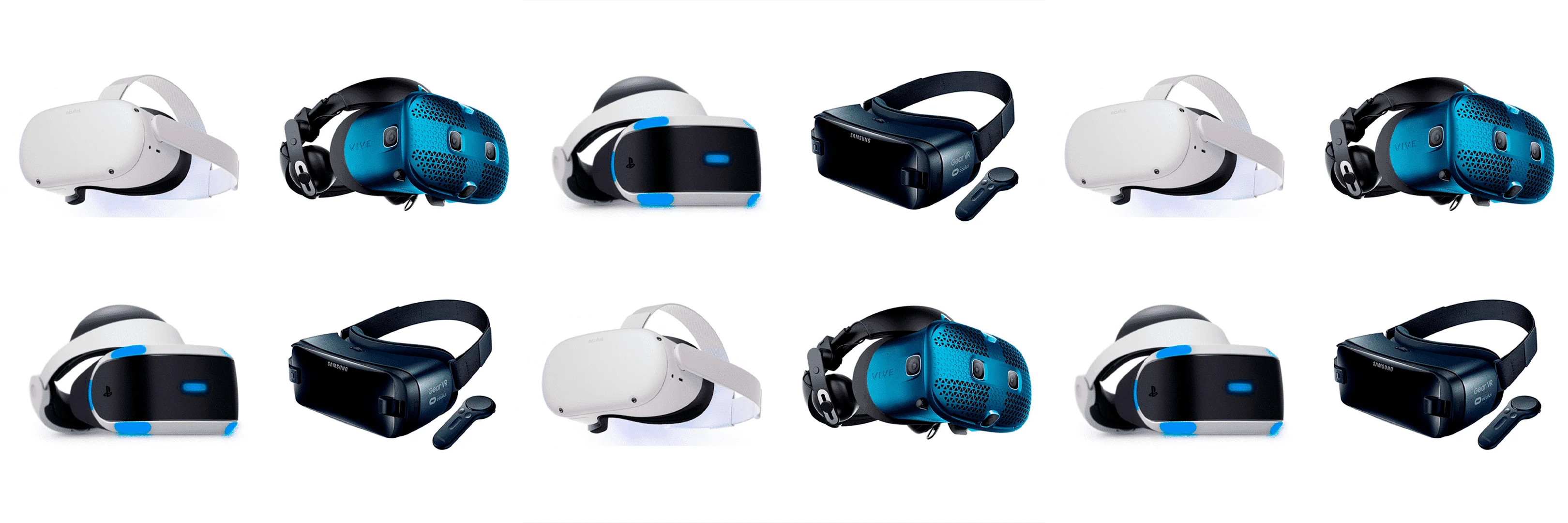
TYPES OF VR DEVICES | What are the types of Virtual Reality glasses that exist?

HIPEREXPERIENCIA
LOADED


Roblox just unveiled a wave of updates arriving on the platform between now and 2027. All of it came out of the Roblox Developers Conference 2026 (RDC26), held in San Jose, California, where we were on the ground — you can read our minute-by-minute coverage here. Let's get straight to what matters.
NPCs are moving on from dialogue trees: they're now defined by a simple text prompt describing who the character is and what they want. That prompt is editable, versionable, and reusable across different NPCs — changing it automatically updates every conversation and behavior that depends on it. The beta lands in Studio by the end of 2026, and the next step already announced is giving them human-level agency: able to play, think, and react the way a real player would.

Alongside it, Build — the new prompt-based creation app, now open to every creator and already tried by more than 100,000 users — showed live how a single prompt can spin up a full theme park in 12 minutes. From there, an extended session of 15 to 20 prompts over roughly two hours — jumping into Roblox Studio for the fine work — added a hedge maze, a go-kart track, and a spinning carousel.

AI-generated procedural models come with attached scripts that make their properties update dynamically when resized: a fence's posts scale correctly, and a stack of tires adds whole new columns instead of deforming. Creators pick from four different style options before committing, and a full medieval retexture of a scene has already been demoed using the new Cube models, arriving by year's end with finer geometry, PBR textures at 4K, and normal maps to add surface detail without weighing down the mesh.

The big medium-term bet combines a classic 3D game engine — still handling multiplayer, physics, and logic — with an overlaid video world model layer responsible for photorealistic detail: rain drops, fog, snow with footprints, northern lights... all switchable in real time without touching the scene's 3D geometry.

In the demo, the same scene switched from rain to autumn to winter with northern lights with a single click, without ever restarting the underlying 3D scene. Roblox is still working on latency, frame rate, and the granularity of control given to the creator over the result. It arrives in Early Access in 2027.

Since June 2026, Roblox's discovery system has prioritized long-term player value over short-term metrics, accepting some temporary damage to bookings in exchange for more retention and engagement. The case presented as evidence: revenue for Evan Baer (Turning Tables Games) dropped by up to 70% in the first week after the change, but three weeks later his portfolio was performing better than ever. One of his games went from 2,500 daily active users to 10,000 in a week, and to more than 125,000 in a month.

The creator community itself has noticed: creators like KreekCraft have publicly thanked Roblox for the change reviving new games that used to fly under the radar. Roblox is also testing a system to detect a game's virality early, crediting engagement that comes from invited friends rather than just algorithm-recommended players.
Terrain has been in Early Access since June 2026, with hierarchical LOD and terrain data stored outside the place file itself. The usable area jumps from 4×4 km to 16×16 km — more than double the surface area of San Francisco — with file size cut by 98%. On the way: non-destructive voxel editing (Terrain Style), terrain decals with virtual texturing, a procedural scattering system for vegetation, and signed distance fields so distant terrain doesn't lose sharpness.

Texture streaming, already rolled out with zero action required from creators, translates into 11% fewer memory crashes and 1.9% more playtime — over 6 million extra hours a day — with even bigger gains on Android and low-end devices. The engine also now officially integrates 2D and 2.5D (orthographic camera, spritesheet import, blur shadows, 2D particles), with a Studio beta coming soon and full shipping by year's end. A new offline-capable game class syncing on reconnect is joining the mix, along with Direct Launch, per-game shortcuts from the Android home screen.

Roblox now moves 1.4 billion chat messages a day. Global Chat, the already-launched cross-server chat for the same game, has topped 30 million daily messages just months after launch. This very week brings a friends tab right inside the chat window to invite people to play without leaving the match, and next year debuts continuous voice calls between trusted friends, designed to keep going even when switching games.

Also arriving: voice typing, with real-time speech transcription and appropriate safety guardrails, and Quick Words (formerly Super Safe Chat), which lets developers themselves propose game-specific vocabulary for Roblox to review before publishing.
The most structurally significant announcement of the session — an answer to a request creators have been raising for 12 to 15 years: every Roblox game will be playable directly in the browser, no download required, by the end of the year. This isn't a lightweight version: the full C engine has been recompiled to WebAssembly, with concurrency rewritten for browser APIs, so future native engine improvements carry over on their own. The native app is detected and launched automatically if installed; if not, any Roblox link becomes a playable entry point right in the browser.

Alongside it, the engine can be packaged as a standalone, single-game app, opt-in for creators, available on both PC and mobile via App Store. Across every surface — main app, browser, and standalone app — the same cloud, safety, analytics, accounts, social graph (CoPlay enabled by default), and economics are shared, including the improved revenue-share rate for users over 18. Roblox's stated strategic read: "one build, any device, any language, any app store."

Already live across the US, with its own tab in the app's main navigation: a short-video feed where every clip acts as a direct, frictionless portal into a game. The feed already mixes wildly varied content, from a camping moment in "Ghostrunner" to a zombie event from "Kick a Lucky Block" or a round of "Cat Match 3."

October brings purchasable 3D avatars right from the video — full outfit or individual pieces — and in the coming months, Playable Moments: real games embedded and playable without ever leaving the feed, built using Go. Creator tools are improving too, with voiceover editing, text-to-speech, expressive overlays, and a per-video analytics panel.

Verified US users over 18 — a third of daily active users, but who spend double the average and account for 80% of the sector's US spend — now generate a 42% higher DevEx revenue-share rate, with more than 2,000 games already seeing revenue increases above 10%.

Roblox Plus, with four benefit categories (savings, social, identity, and access), has been on the market for four months: subscribers play 2.1x as much and spend up to 7x more than average, and creators have already earned more than 300 million Robux through its incentives. Early access is coming soon, and Plus will be required to send Robux.
Robux Wallet replaces the long-standing 2013 Developer Exchange: automatic daily USD payouts, transfers to external accounts in local currency, transaction-level analytics, and discounted Robux purchases against your own balance — plus business support tools, an integrated tax and payroll system, and the ability to reinvest directly in the creator's own growth. First invitations arrive in December 2026 for independent US creators, with groups, businesses, and under-18 creators in more countries following through 2027.

All of it feeds into the Roblox Card, a physical and digital card tied to wallet funds, personalized with each user's name and handle, usable anywhere the network is accepted, launching in 2027. As a signal of platform reinvestment: 71 of the top 100 games already run sponsored ads, and short, skippable pre-roll ads during loading — with zero creator integration required — are coming in the next few months.

Creator earnings have hit $1.7 billion over the last twelve months. The top 10 creators have grown their earnings 3.6x since 2020, but it's the long tail growing fastest of all: the creator ranked 1,000th has grown 4.3x, and those ranked between 1,000 and 10,000 average more than $30,000 a year.

Roblox now accounts for roughly 20% of under-18 gaming spend in the US. The 18-34 audience is up 42% year over year (with hours played up 37%), and markets like India (+64% daily active users) and Japan (+67%) are surging. Per analyst Matthew Ball, Roblox accounted for more than half of the entire global gaming industry's growth in 2025.
SIMILAR CONTENT

PRIVACY POLICY
By chatting you accept our Privacy Policy.
By chatting you accept our Privacy Policy.
Conversation sent. We will be in touch shortly. New conversation


