

 RETURN

FunMirror at Madrid Horse Week 2021 | Hyperexperience at the fair

HIPEREXPERIENCIA
LOADED


ENGLISH


ESPAÑOL

ITALIANO
CONTACT

TECHNOLOGY
INTERACTIVE INSTALLATIONS
USE CASE
TOOL
CLIENT
Bermeo Town Council commissioned this interpretation centre to manage the flow of visitors to one of the most iconic spots on the Basque coast, offering a space that explained the site before the physical climb to the hermitage. Linguistic and functional accessibility were a priority from the very start of the project.
GOAL ACHIEVED
To bring the history, devotion and landscape of San Juan de Gaztelugatxe closer to every visitor, regardless of language or any sensory or mobility disability.

A centre built so no one was left out
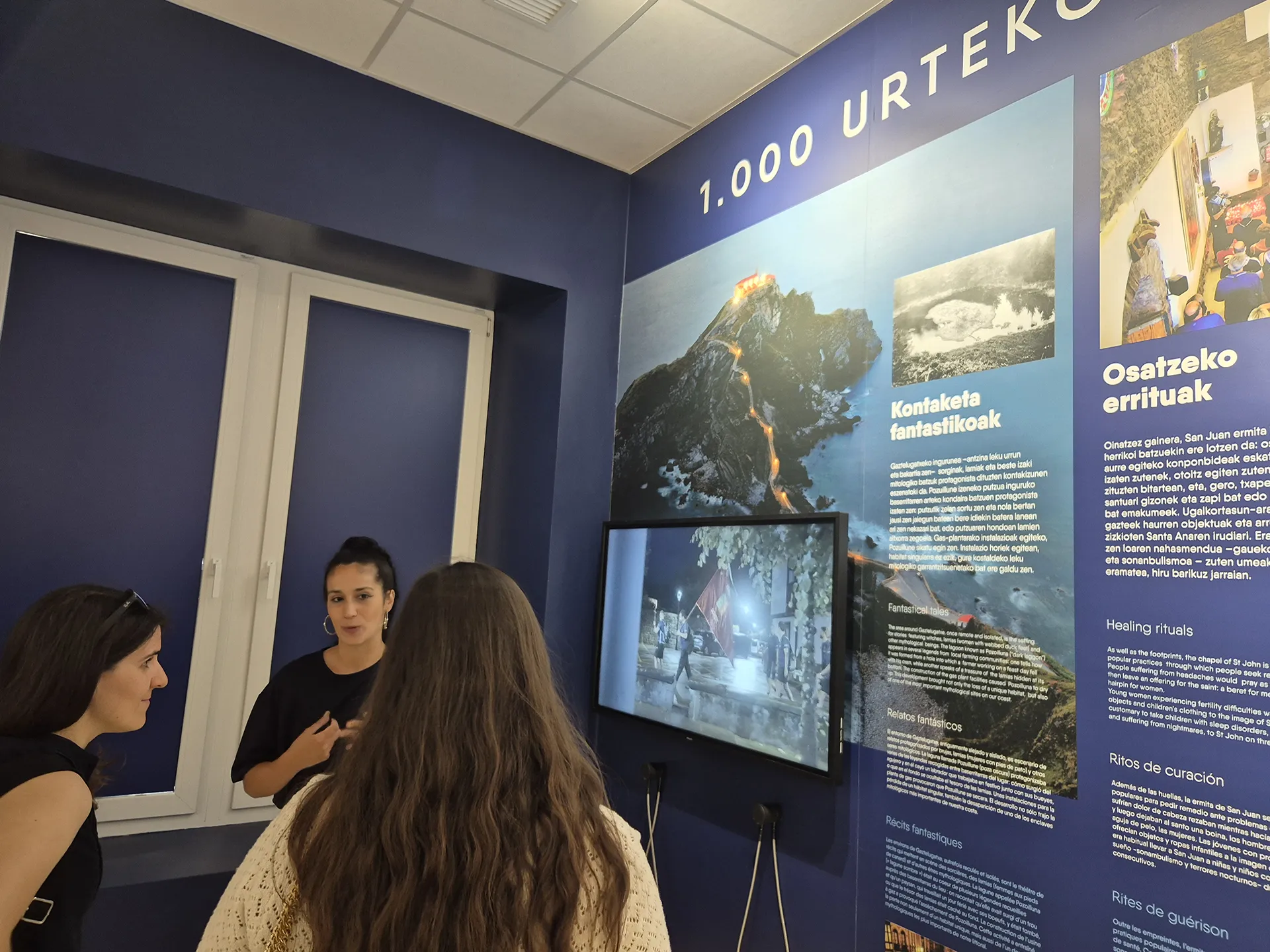
The San Juan de Gaztelugatxe Interpretation Centre was built on a clear premise: telling the story of this landmark to every visitor, whatever their language or abilities. All interactive and audiovisual content was developed in Basque, Spanish and English, so each visitor could choose how they wanted to experience it.
Bermeo Town Council placed its trust in DeuSens's Hyperexperience to develop this project, acting as the technology partner behind the tactile model, the on-screen interactives and the centre's audiovisual content. That same inclusive approach shaped the functional design of every application, adapted for people with visual, hearing or mobility impairments, combining a physical model with headphone narration, two touch screens and audiovisual pieces projected and shown on monitors into a journey designed for each format to complement the rest.
Climbing to the hermitage with your hands
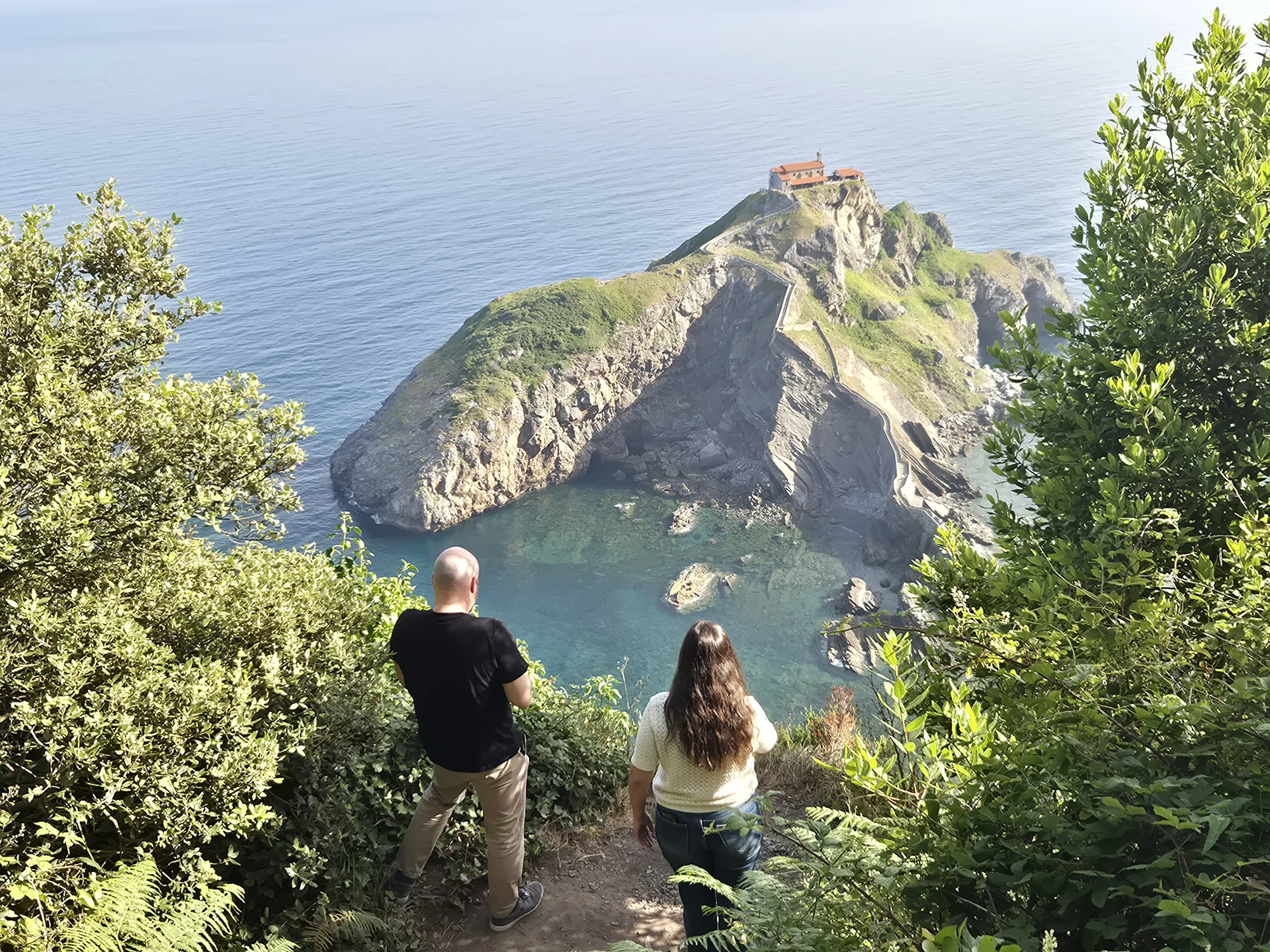
The first stop on the visit used no screen at all: a set of headphones played a narration of the climb to the hermitage set against the sound of the sea and seagulls, voiced by professionals in the centre's languages. While listening to the story, visitors could run their hands over a physical tactile model — a relief map of the Gaztelugatxe peninsula — designed especially for blind and visually impaired visitors, following the shape of the surroundings and the hermitage at the pace of the narration.
The result was an experience with no screen involved at all, where touch and sound replaced sight without losing any of the place's emotional weight.
From kings and pirates to today's tourism boom
On a separate touch screen, an interactive timeline titled "Kings, pirates, pilgrims and influencers" invited visitors to swipe and tap through the milestones that shaped the history of San Juan de Gaztelugatxe: from the earliest documented references to the tourism boom sparked by its appearance in a well-known TV series, taking in sieges, fires and royal visits along the way.
Each tap on the timeline opened a window with a short text and illustrations about that particular milestone, turning centuries of history into a quick, visual journey that visitors moved through at their own pace.
A virtual climb in 360 degrees
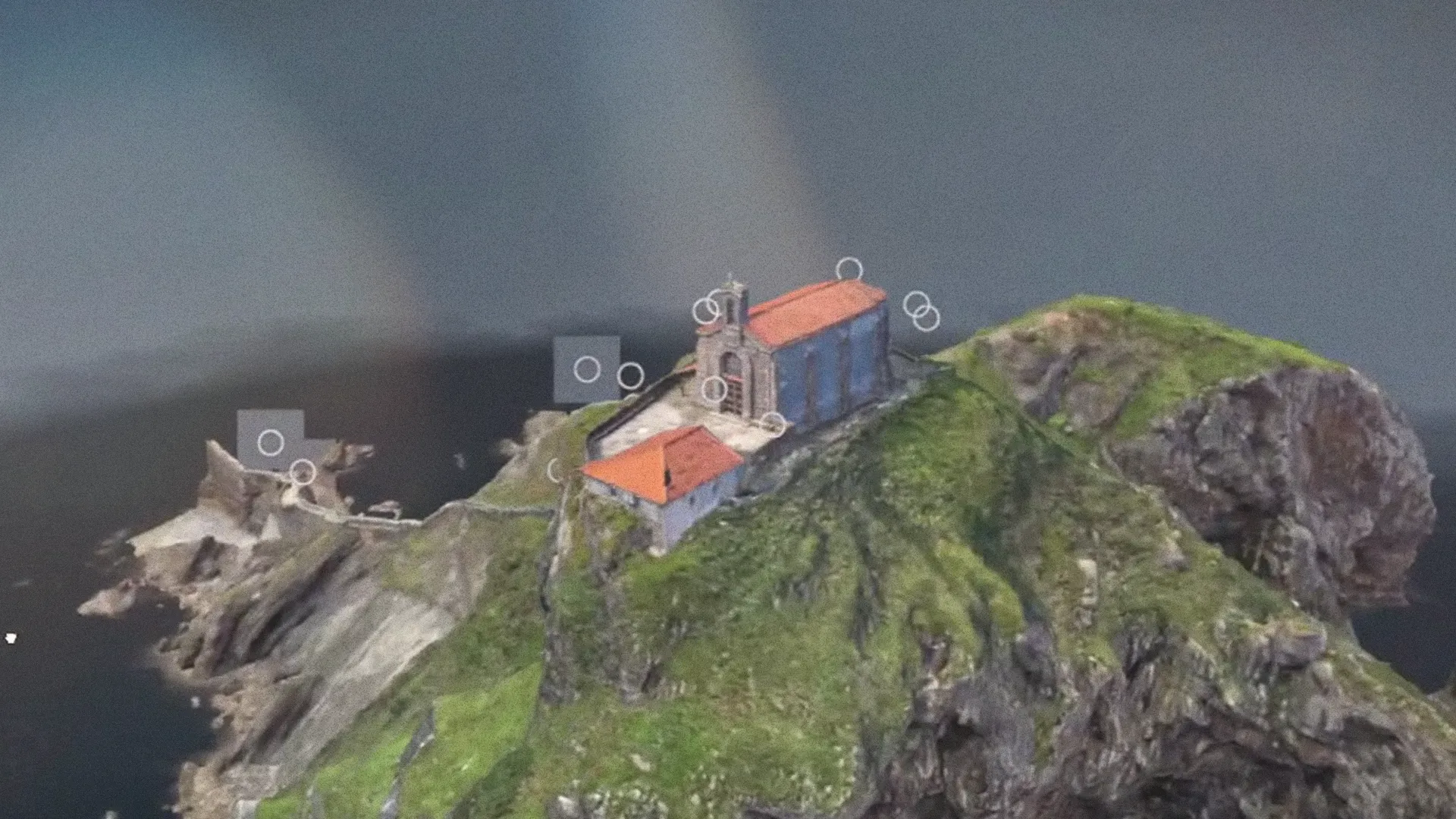
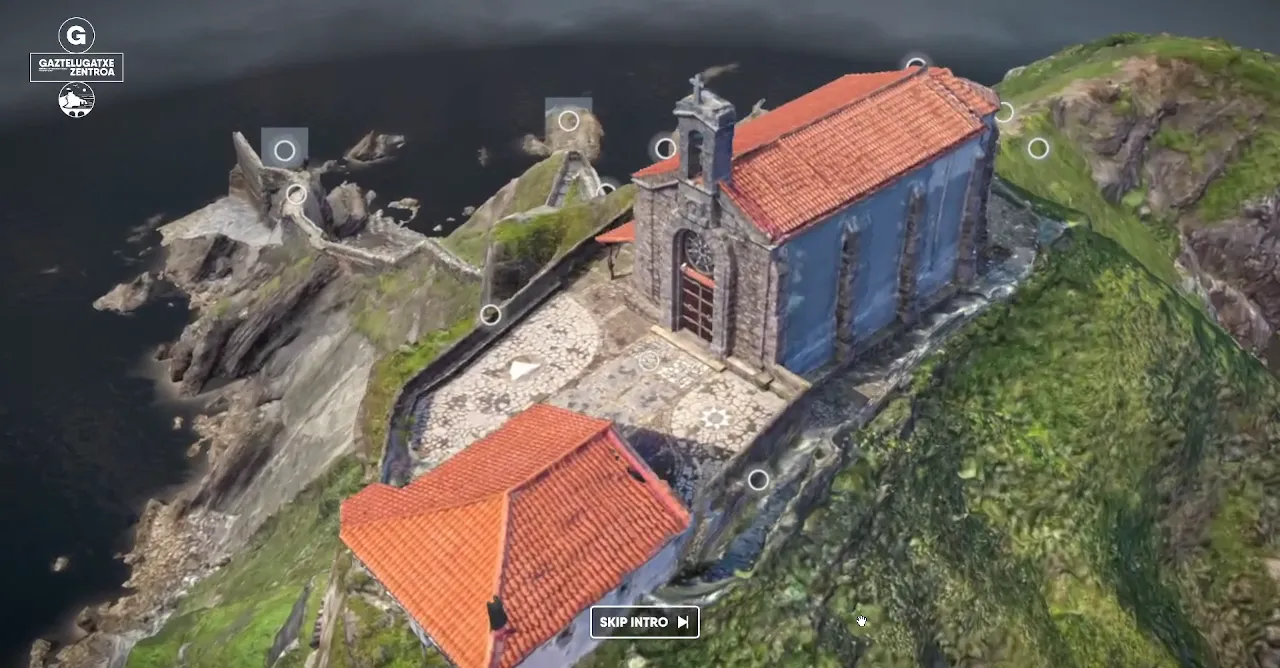
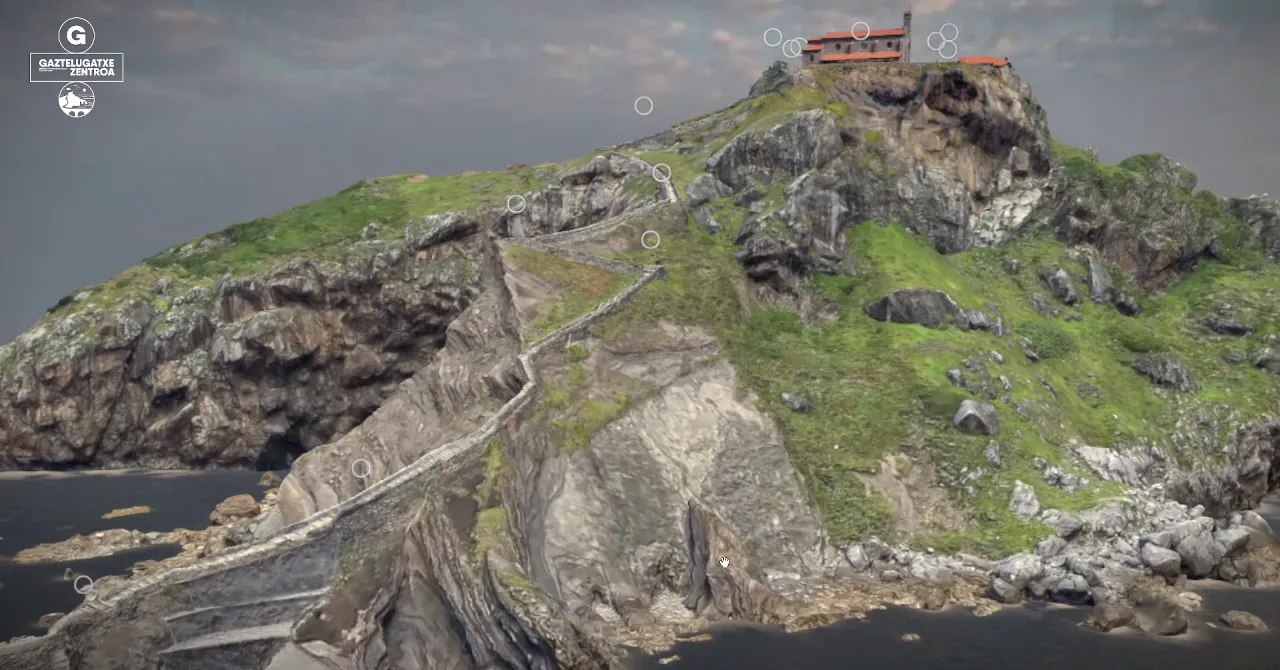
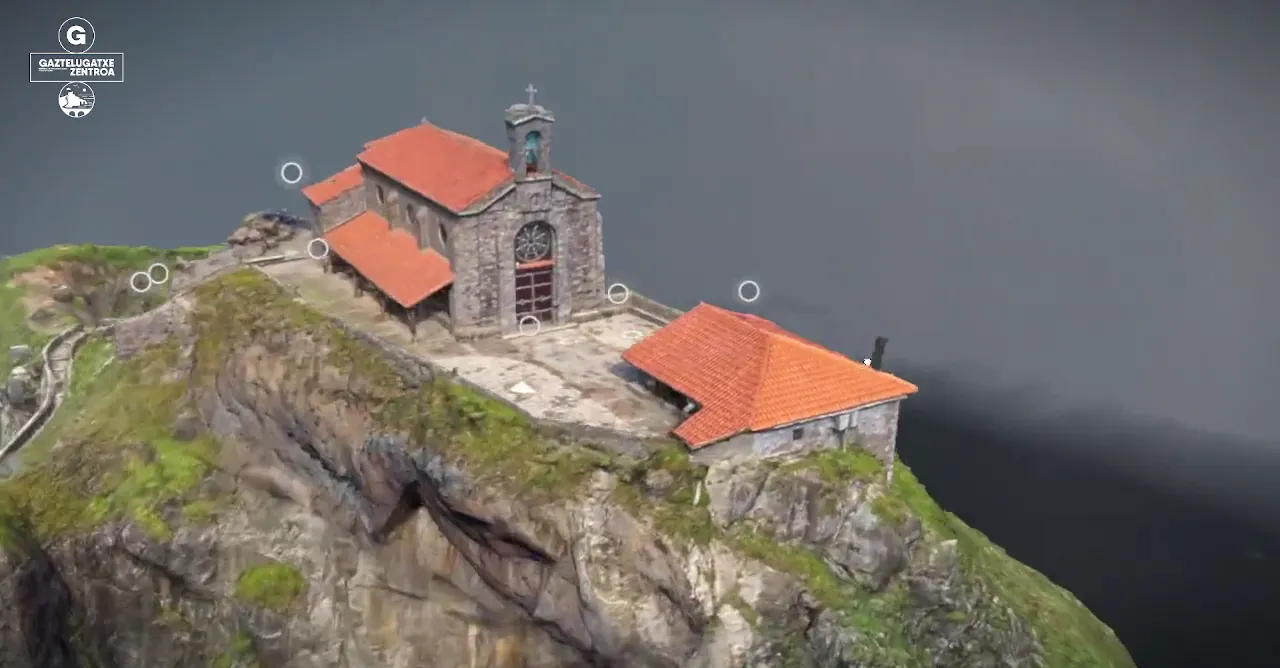
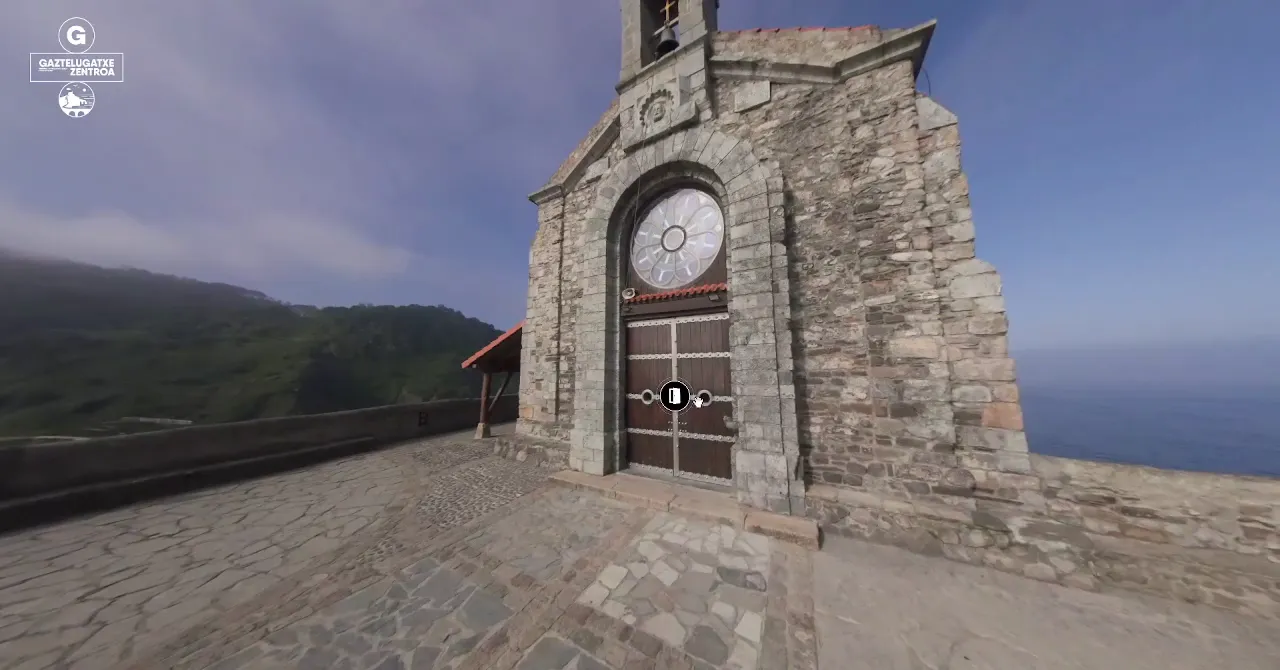
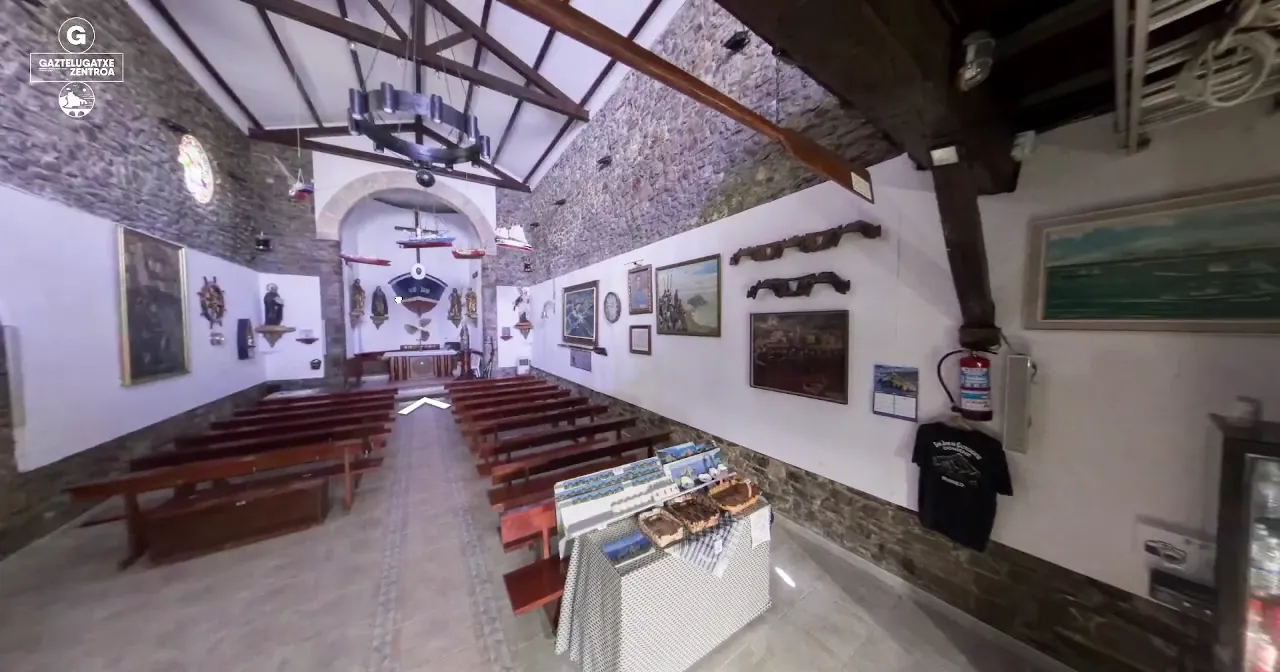
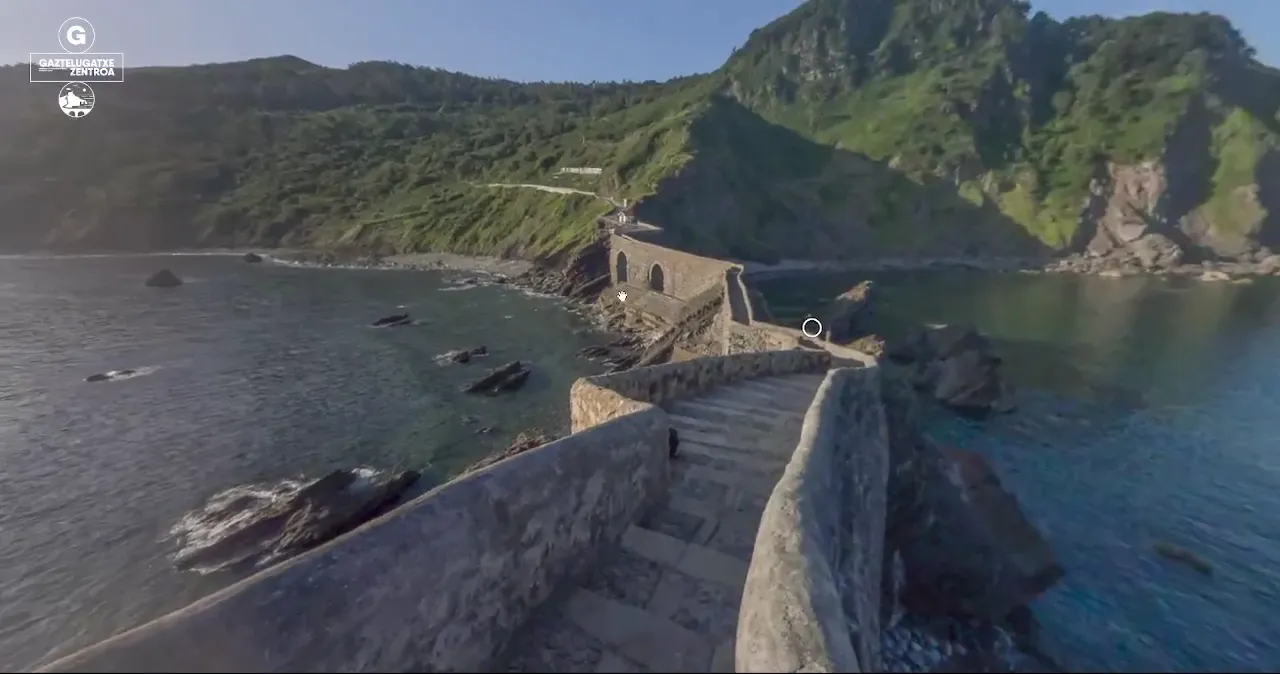
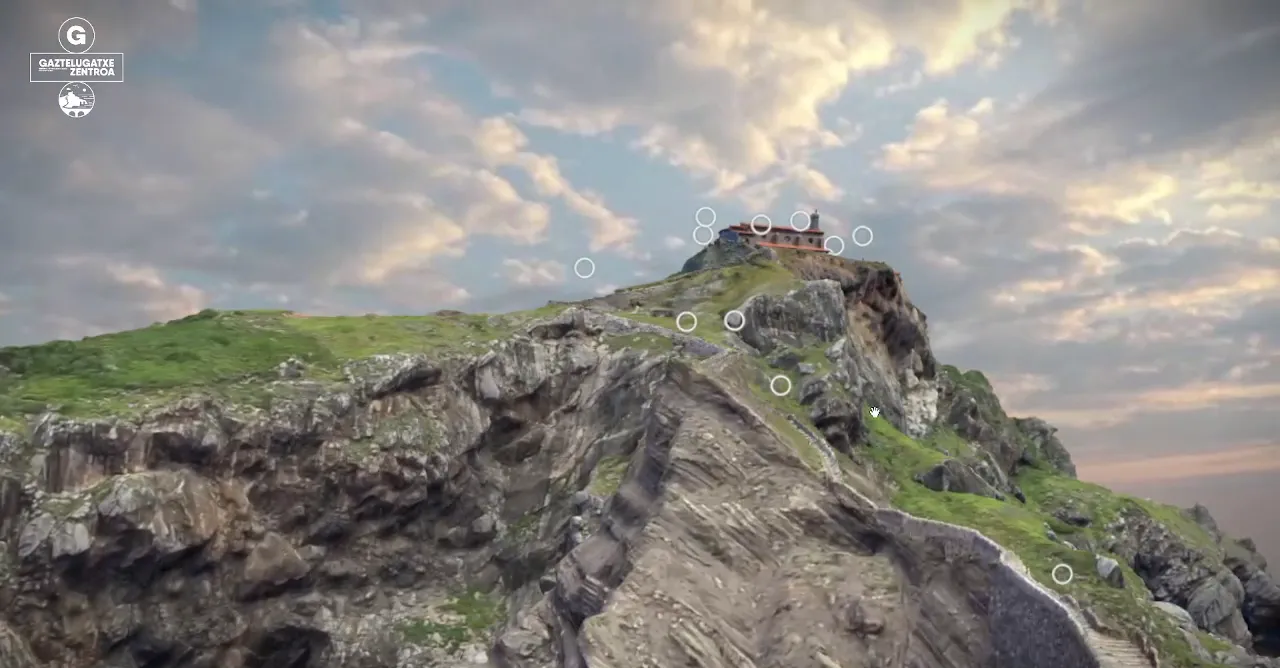
On a second touch screen, named "241" — the number of steps separating the base of the headland from the hermitage —, a map of the area let visitors choose between two options: a straightforward video of the route, or a navigable 360° virtual ascent, with stops at viewpoints, panoramic views of the surroundings and access to the hermitage's interior, all controlled by the visitor's own finger on the screen.
This option let visitors who couldn't complete the physical climb — or wanted a preview of it — explore the path and the landscape in just as much detail as the site itself offers, simply by tapping and dragging on the screen.
A heritage told from within
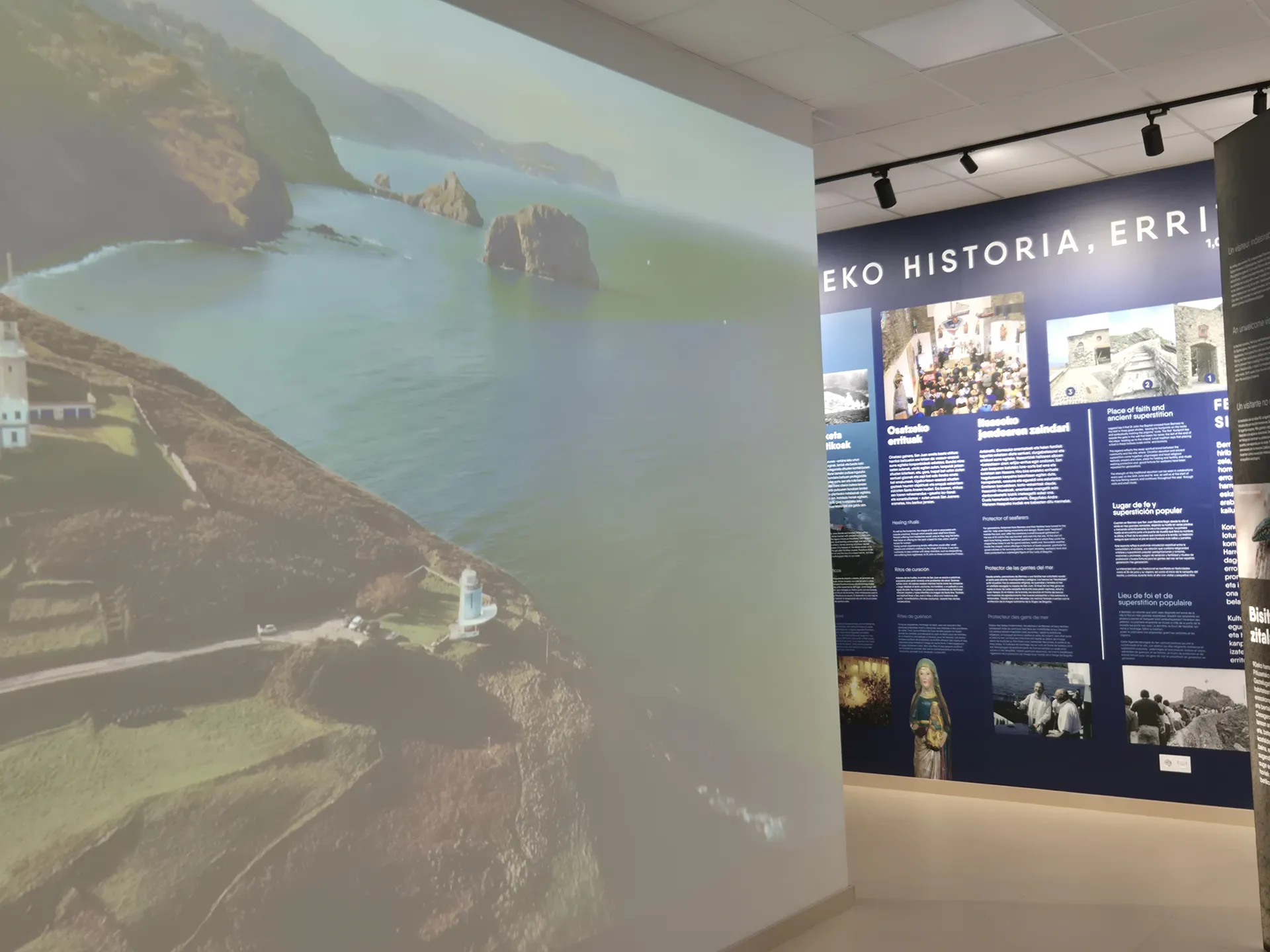
Unlike the interactives above, the centre's audiovisual pieces — produced together with Eclipset — required no action from visitors: they were projected on a large screen and played on monitors placed around the room, filmed in Basque and the local Bermeo dialect and subtitled for other visitors. Interviews, aerial footage of the coastline and stories about the saint's festivities gave voice to fishermen, neighbours and devotees of San Juan, completing a portrait of the site told by the people who live it every day.
The centre became the perfect prelude to the physical visit: a space that combined listening, touch and viewing to prepare, move and inform every visitor before they set foot on the path to the hermitage.
Ready to take the leap to hyperexperience?
SIMILAR PROJECTS

L'Oréal París Trends Hyperexperience | Project at Madrid Fashion Week 2023

Virtual Reality for the Hospitality Industry | Hyperexperience in Aura Restaurant

Virtual Reality shopfitting | Creation of virtual spaces


SUPPORT CHAT
STATUS: TERMS ACCEPTANCE
v26.10.12
PRIVACY POLICY
Before we begin, please note that you are interacting with the artificial-intelligence virtual assistant of DEUSENS HYPERXPERIENCE, S.L.
Any personal data you provide during the conversation will be processed by DEUSENS HYPERXPERIENCE, S.L. to handle your queries about our products and services and, where appropriate, to put you in touch with our sales team. Conversations are recorded and kept for the period necessary so they can be reviewed in order to improve service quality and ensure correct operation.
You can find all the information about how your data is processed and how to exercise your rights in our Privacy Policy.
Any personal data you provide during the conversation will be processed by DEUSENS HYPERXPERIENCE, S.L. to handle your queries about our products and services and, where appropriate, to put you in touch with our sales team. Conversations are recorded and kept for the period necessary so they can be reviewed in order to improve service quality and ensure correct operation.
You can find all the information about how your data is processed and how to exercise your rights in our Privacy Policy.
By chatting you accept our Privacy Policy.
ALICE ASSISTANT
TYPING RESPONSE...
By chatting you accept our Privacy Policy.
Conversation sent. We will be in touch shortly. New conversation