

 RETURN

FunMirror at Madrid Horse Week 2021 | Hyperexperience at the fair

HIPEREXPERIENCIA
LOADED


ENGLISH


ESPAÑOL

ITALIANO
CONTACT

TECHNOLOGY
INTERACTIVE INSTALLATIONS
USE CASE
TOOL
CLIENT
Barakaldo City Council led the heritage restoration of Palacio Munoa, the former residence of the Echevarrieta family, turning it into a cultural and tourist space open to the public. The estate carried strong symbolic weight tied to Barakaldo's industrial past, and the council wanted a way to bring that history to visitors from the very start of their visit.
GOAL ACHIEVED
To give Horacio Echevarrieta a voice at the palace entrance, introducing his story, the building's history and his industrial legacy, acting as a narrative prelude to the VR escape room located in the garages of the same estate.

A hologram that gave Horacio Echevarrieta his voice back
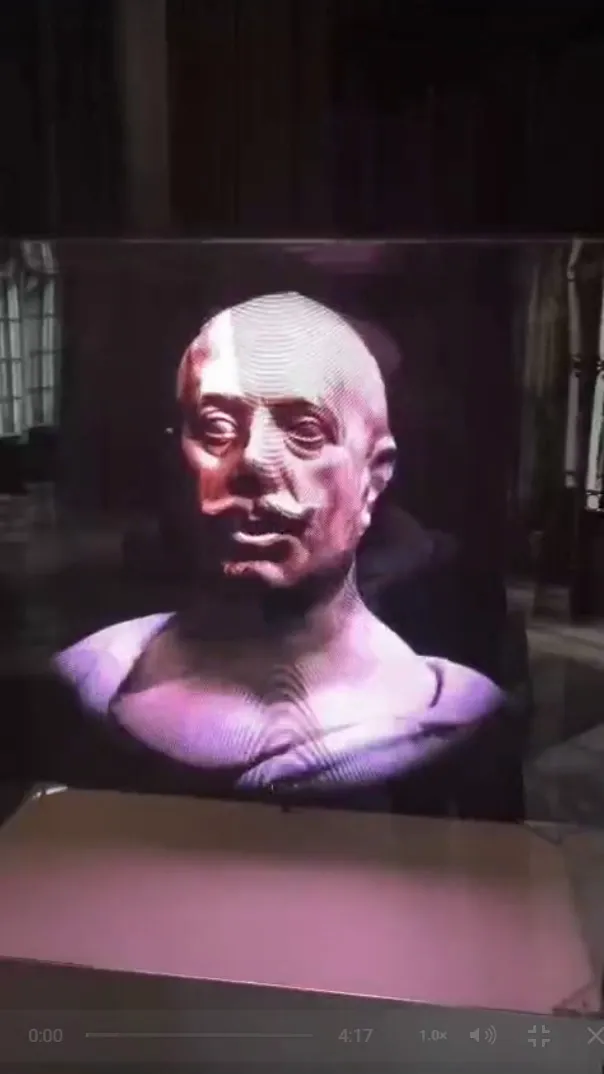
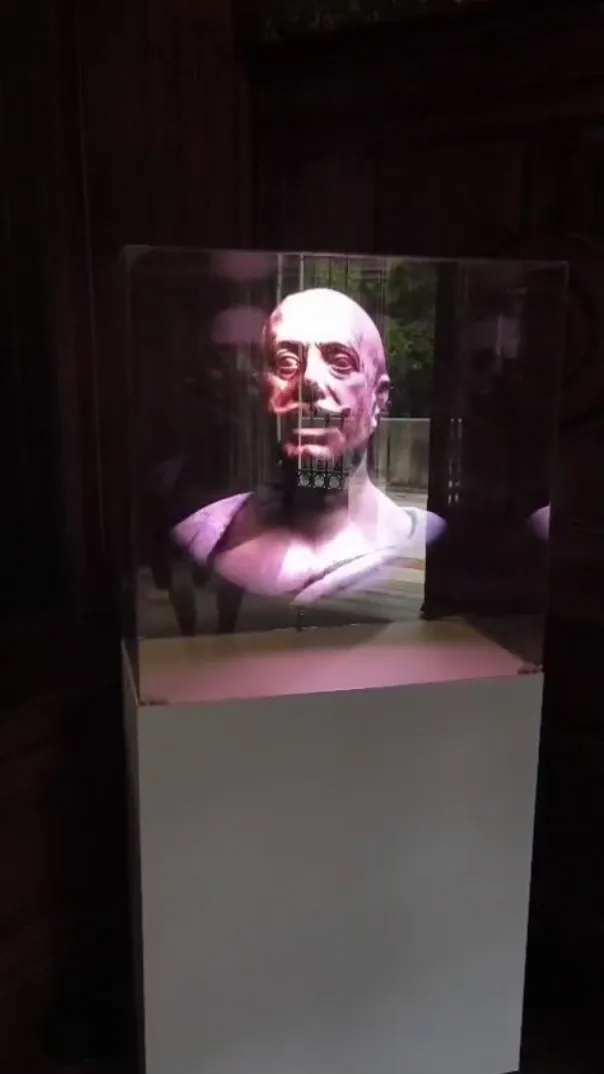
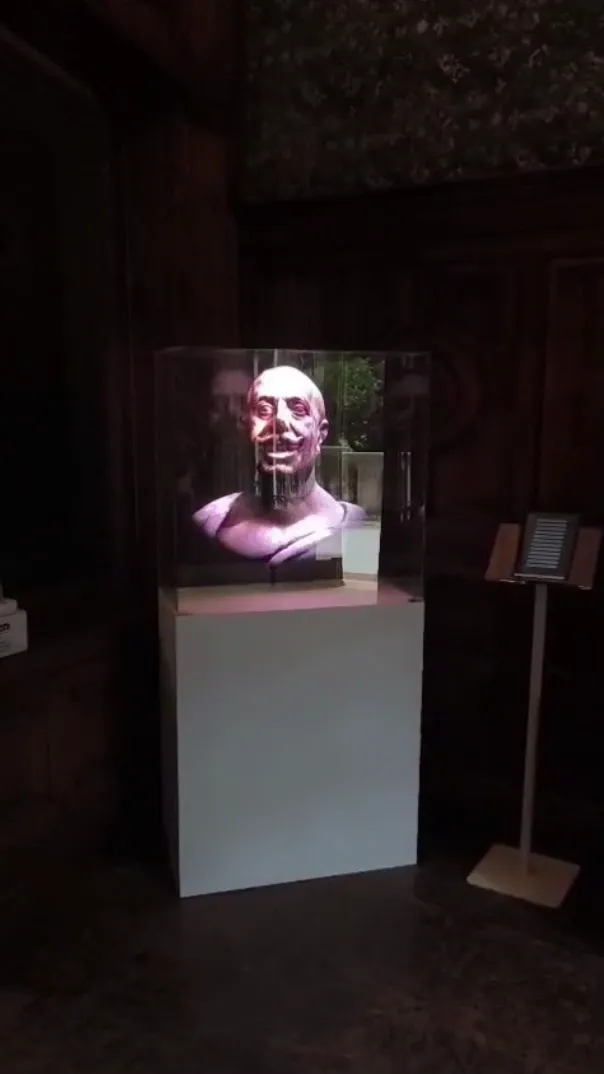
At the main entrance of Palacio Munoa, in Barakaldo, an interactive hologram greeted visitors with the figure of Horacio Echevarrieta, one of the estate's last owners. The piece was designed as a narrative companion piece: an introduction or a closing note for those experiencing the virtual reality escape room installed in the garages of the same estate, dedicated to the story of iron and steel extraction and production during Barakaldo's industrial era.
Barakaldo City Council trusted DeuSens's Hiperexperiencia for this project, choosing an interactive hologram able to combine holographic projection, photogrammetry and bilingual narration within a single heritage space. Holographic technology gave physical presence to a historical figure in a spot that previously held only an information panel.
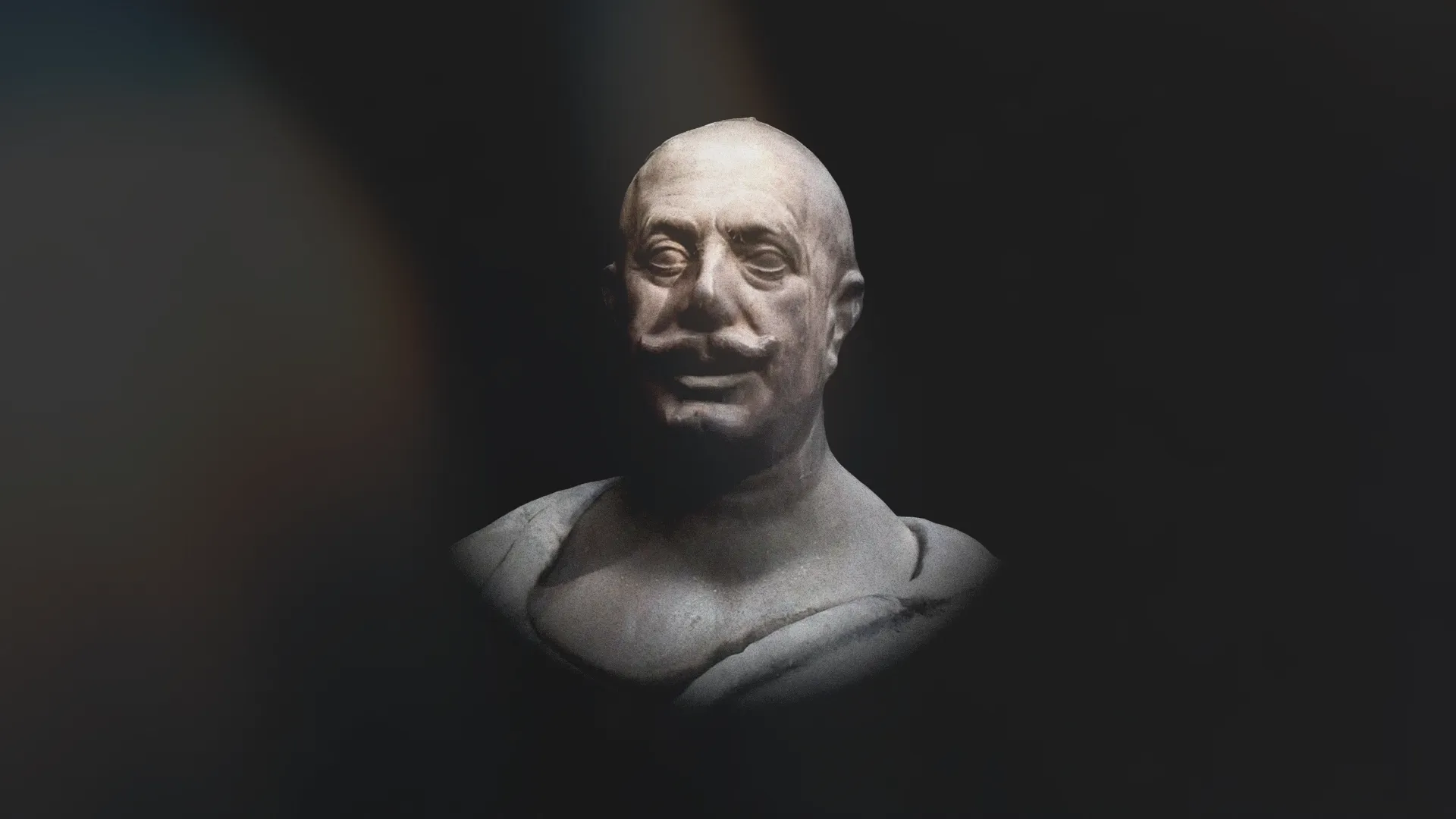
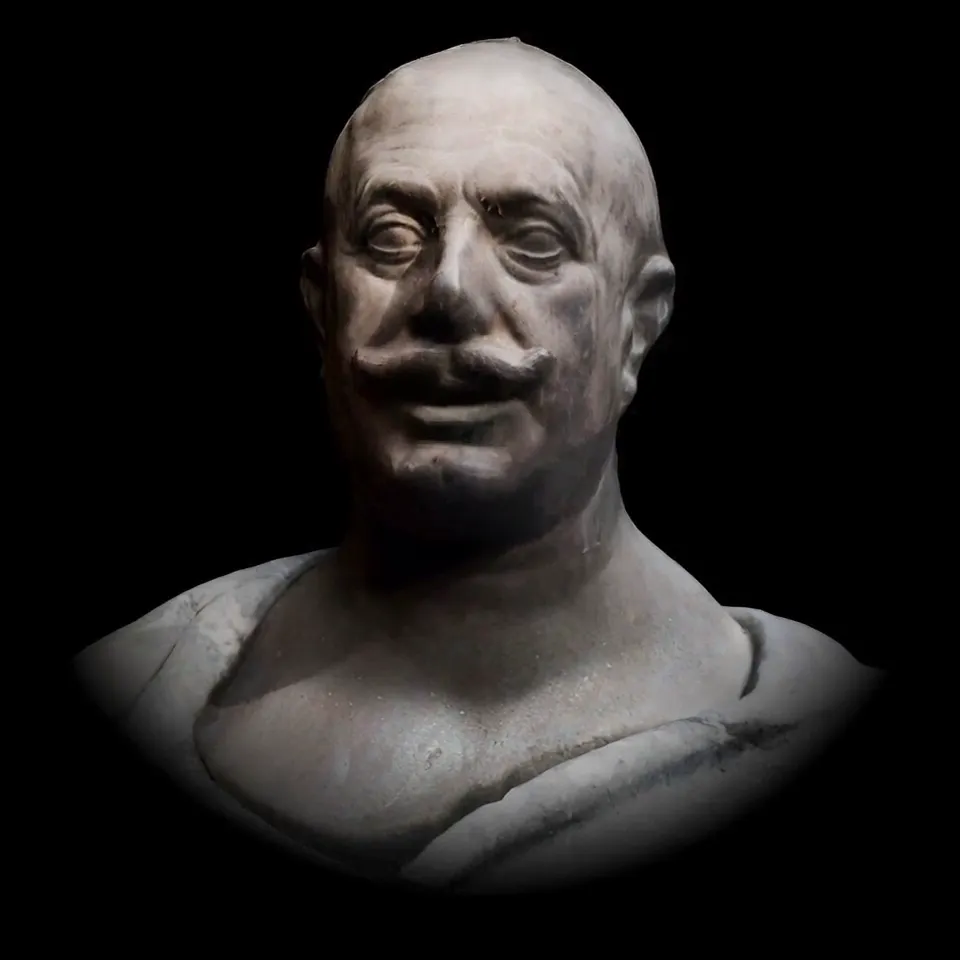
The project began with the photogrammetry of a real bust of Horacio Echevarrieta, located in the gardens of the Munoa estate. That model was used to generate the holographic figure that "came to life" for visitors, keeping a direct visual link between the physical monument in the garden and the holographic experience inside the palace, reinforcing the sense of standing before Echevarrieta himself rather than a generic recreation.
A conversation guided by the visitor, in two languages
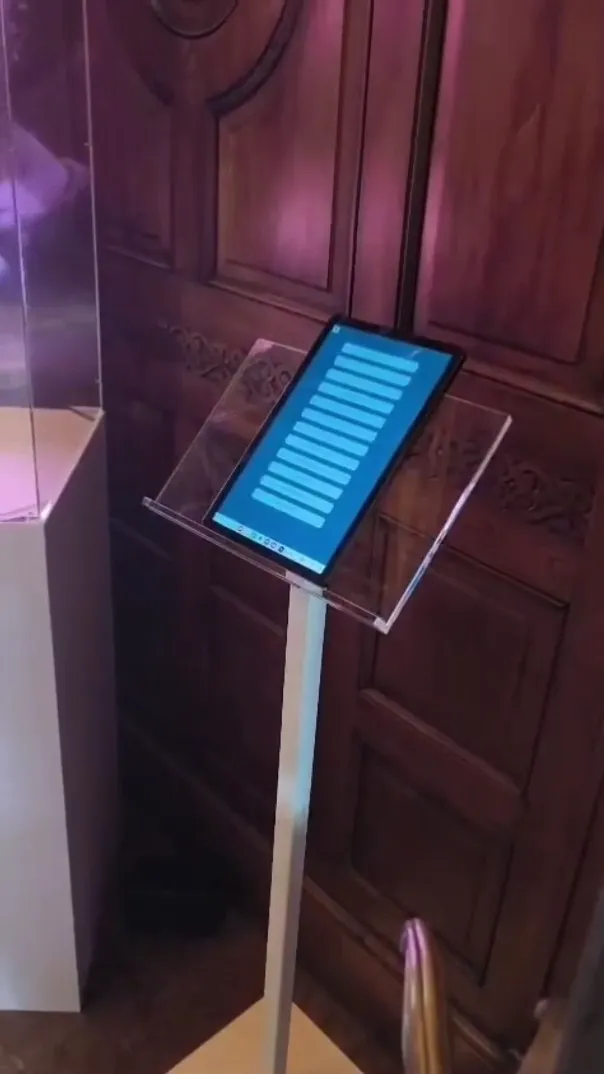
Interaction worked through a tablet with on-screen buttons that triggered the holographic projection and its narrated reply: each visitor chose what to ask, and the hologram answered with professional narration recorded in Spanish and Basque. This question-and-answer format allowed for different journeys depending on each visitor's interests, without relying on a single linear script.
Bilingualism wasn't a secondary addition but a core decision of the project: it reflected Barakaldo's linguistic identity and ensured the experience was accessible to all visitors, local and foreign alike.
Echevarrieta, witness to his own history
Through six questions, the hologram narrated in first person who Horacio Echevarrieta was, his arrival at the palace in 1955, and his relationship with his sister Amalia. It also explained the origin of the building itself, built by Juan Echevarría La Llana and expanded in 1916 by architect Ricardo Bastida, who added the towers, side wings and the imperial staircase that define the palace today.
The story continued with his business career: iron mines, his role in the real estate development of Bilbao's ensanche, Madrid's Gran Vía and Barcelona's metro, his presence in the press through El Liberal, and his push into sectors such as radio, aviation — with Iberia — and electricity, at the origin of what is today Iberdrola.
From the Cádiz shipyards to the E1 submarine
The hologram also covered a lesser-known side of Echevarrieta: the acquisition and relaunch of the Cádiz shipyards, from which ships such as the Juan Sebastián de Elcano and the E1 submarine were built. This work earned him the title of Favourite Son of Cádiz, a recognition the hologram shared with visitors.
The story connected different parts of the Spanish map — Barakaldo, Bilbao, Madrid, Cádiz, Barcelona — through a single business career, showing the real scale of his activity beyond the Basque Country.
Friendships of an era and a vision ahead of its time
Among the more personal questions, the hologram covered Echevarrieta's relationship with figures of the time such as King Alfonso XIII, his role in freeing prisoners after the Annual disaster, his relationship with Abd el-Krim, and his friendship with Indalecio Prieto, offering a window into the political and social connections of early 20th-century Spain.
The journey closed with his capacity for innovation and industrial diversification, a vision now symbolised by the SATLANTIS satellite that bears his name, and which the experience itself compared to the parallel of Citizen Kane: the life of a man that spanned far more than any single label could contain.
Ready to take the leap to hyperexperience?
SIMILAR PROJECTS


L'Oréal París Trends Hyperexperience | Project at Madrid Fashion Week 2023

Virtual Reality for the Hospitality Industry | Hyperexperience in Aura Restaurant

Virtual Reality shopfitting | Creation of virtual spaces


SUPPORT CHAT
STATUS: TERMS ACCEPTANCE
v26.10.12
PRIVACY POLICY
Before we begin, please note that you are interacting with the artificial-intelligence virtual assistant of DEUSENS HYPERXPERIENCE, S.L.
Any personal data you provide during the conversation will be processed by DEUSENS HYPERXPERIENCE, S.L. to handle your queries about our products and services and, where appropriate, to put you in touch with our sales team. Conversations are recorded and kept for the period necessary so they can be reviewed in order to improve service quality and ensure correct operation.
You can find all the information about how your data is processed and how to exercise your rights in our Privacy Policy.
Any personal data you provide during the conversation will be processed by DEUSENS HYPERXPERIENCE, S.L. to handle your queries about our products and services and, where appropriate, to put you in touch with our sales team. Conversations are recorded and kept for the period necessary so they can be reviewed in order to improve service quality and ensure correct operation.
You can find all the information about how your data is processed and how to exercise your rights in our Privacy Policy.
By chatting you accept our Privacy Policy.
ALICE ASSISTANT
TYPING RESPONSE...
By chatting you accept our Privacy Policy.
Conversation sent. We will be in touch shortly. New conversation