

 RETURN
18.01.2021
TYPES OF VR DEVICES | What are the types of Virtual Reality glasses that exist?

HIPEREXPERIENCIA
LOADED


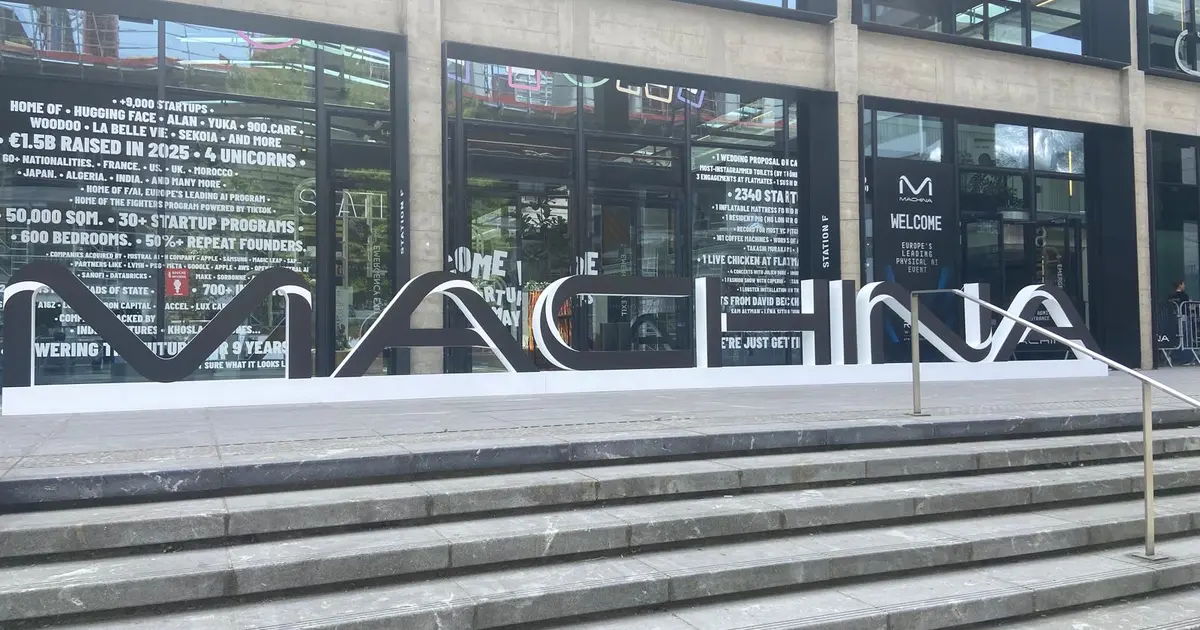
On 7 July, Emili Blanque, our robotics specialist, travelled to Paris to attend the inaugural edition of MACHINA Summit, Europe's first major event dedicated exclusively to Physical AI. One day, one floor at Station F, 2,200 attendees and more than 85 speakers: the global elite of humanoid robotics gathered in the same space. This is our account of the day.

MACHINA was created as a prelude to the RAISE Summit — one of the world's largest enterprise AI events — with a clear premise: AI is leaving the screen. We're no longer talking only about language models or generative tools; we're talking about robots that perceive, decide and act in the physical world. That deserves its own stage.
The programme was built around four thematic blocks that precisely define the state of the sector: Humanoid (human-level movement, dexterity, learning through experience), Industrial (real-world automation alongside people, ROI), Training (simulation and synthetic data as the fuel for robot learning) and Integration (the robot's "brain": models that combine vision, language and real-time action). The structure is no accident: it maps exactly the four bottlenecks the industry must solve in order to scale.
According to Robot Magazine, MACHINA reflects Europe's ambition to lead the next phase of Physical AI, combining a strong industrial base with growing demand for automation. The US and China lead on hardware; Europe can win on integration, safety and real-world deployment.
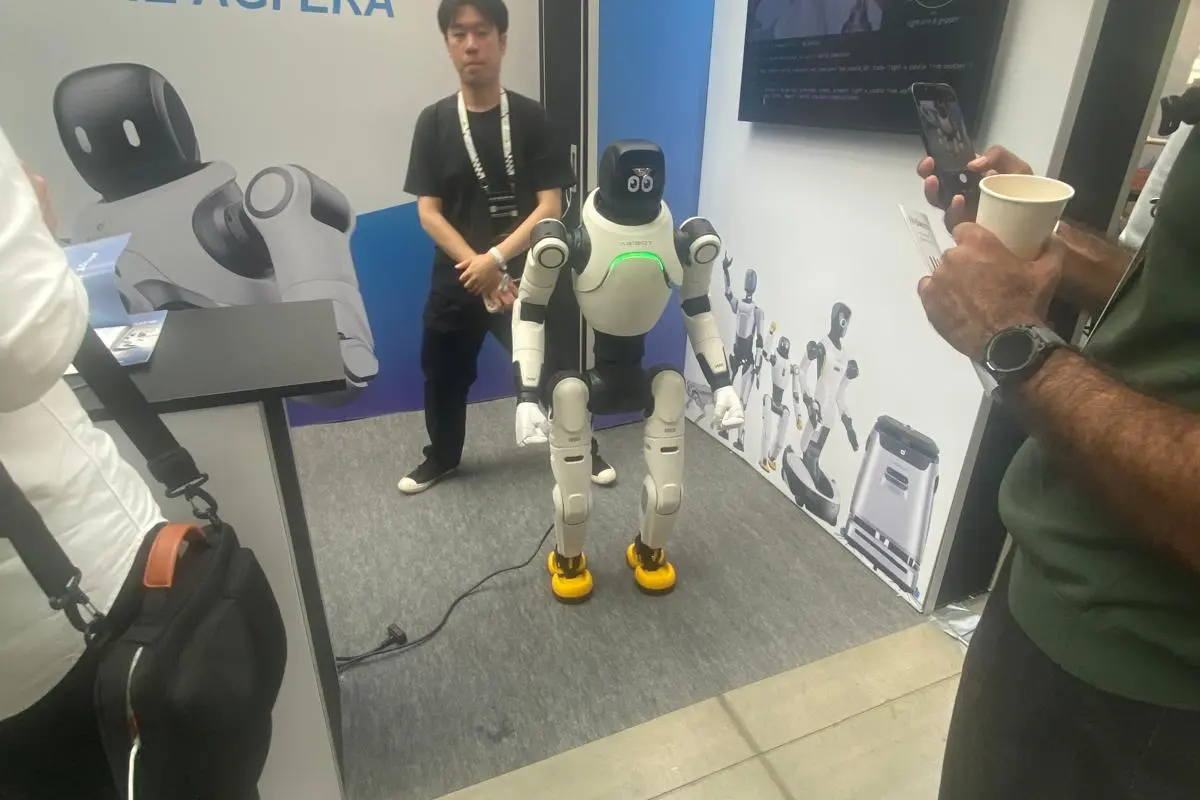
Beyond the conference sessions, what made MACHINA unlike any other tech event was this: humanoid robots walking among attendees. Tesla Optimus Gen 3, Figure 02 from Figure AI and Boston Dynamics' electric Atlas occupied the exhibition floor. The Boston Dynamics robot dog and a Unitree unit moved through the aisles. Everyone reached for their phone. No one was left indifferent.
The difference from previous events was tangible: these were not laboratory demonstrations designed to impress in a controlled setting. These were machines operating in an open environment, with the unexpected, with people all around. The sector has crossed a threshold. We are moving from prototypes to systems beginning to face the real world. To learn more about these and other models in detail, visit our Humanoid Robotics page.
The speaker lineup was one of the strongest ever assembled in Europe for a robotics event. Some of the messages that defined the day:
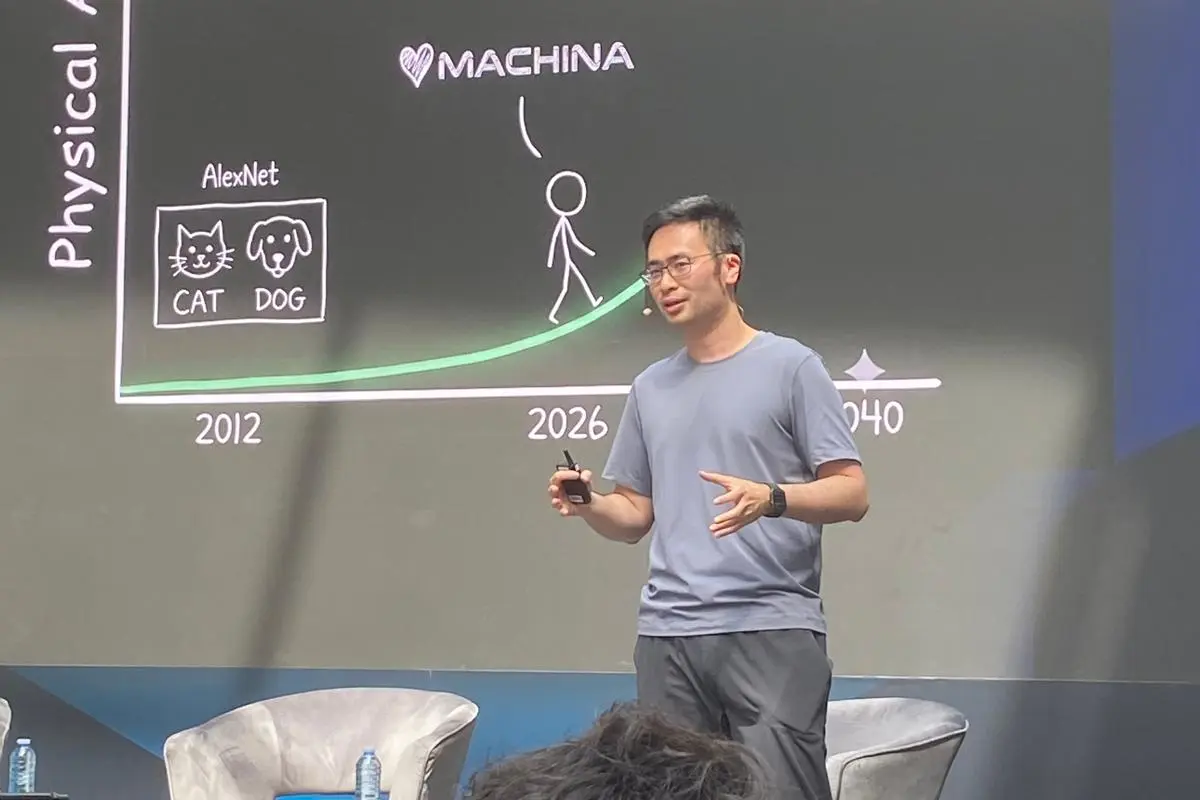
Jim Fan (NVIDIA) was one of the most talked-about moments. NVIDIA's director of Physical AI expressed 90% confidence that robotics will reach its endgame phase by 2040, though he warned the revolution will not happen all at once — it will come gradually, and then suddenly. What he left unsaid, but everyone understood: companies that start now will be inside that wave; those that wait will not.
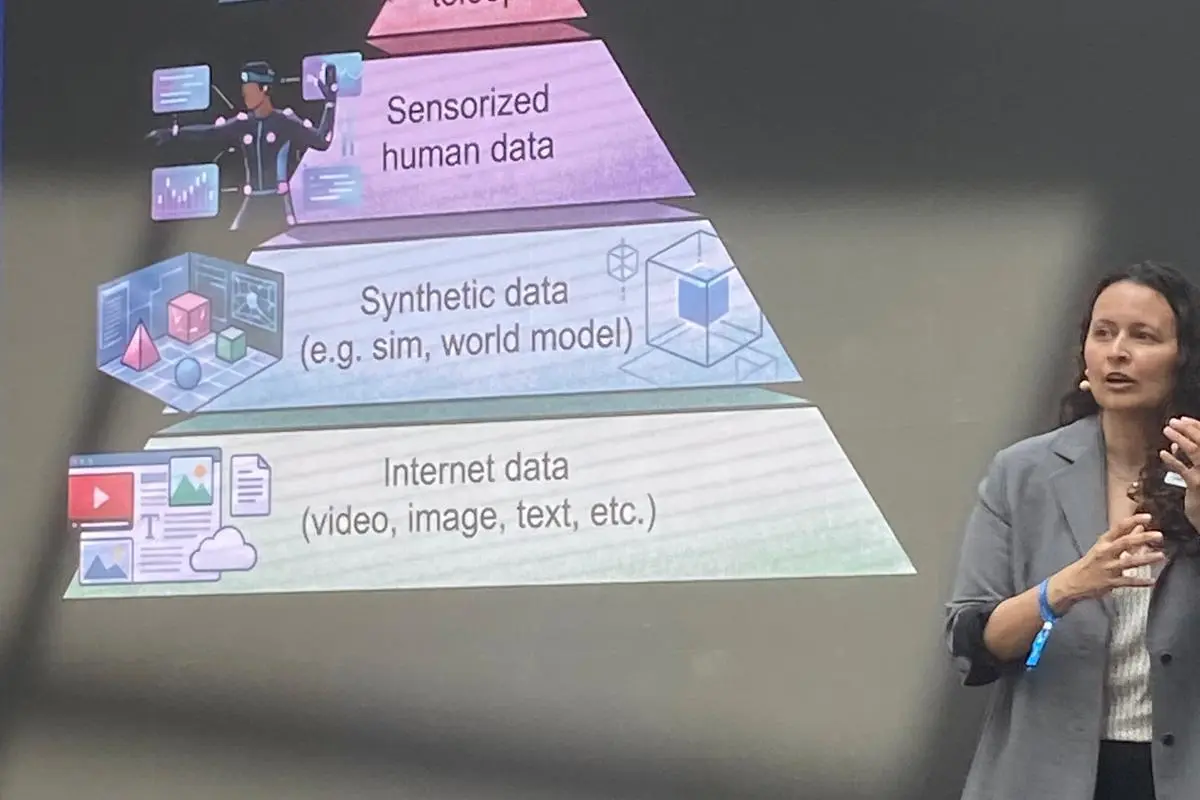
Carolina Parada (Head of Robotics, Google DeepMind) presented the latest developments in Gemini Robotics, the Vision-Language-Action model developed with Apptronik to help robots better perceive their environment and improve their actions accordingly. The difference from Gemini as a text assistant is fundamental: here the model doesn't generate words, it generates physical actions in the real world.
Marc Raibert (RAI Institute / Boston Dynamics founder) captured the moment with clarity: we are at the beginning of the most exciting period in the history of robotics. The machines have finally met the moment.
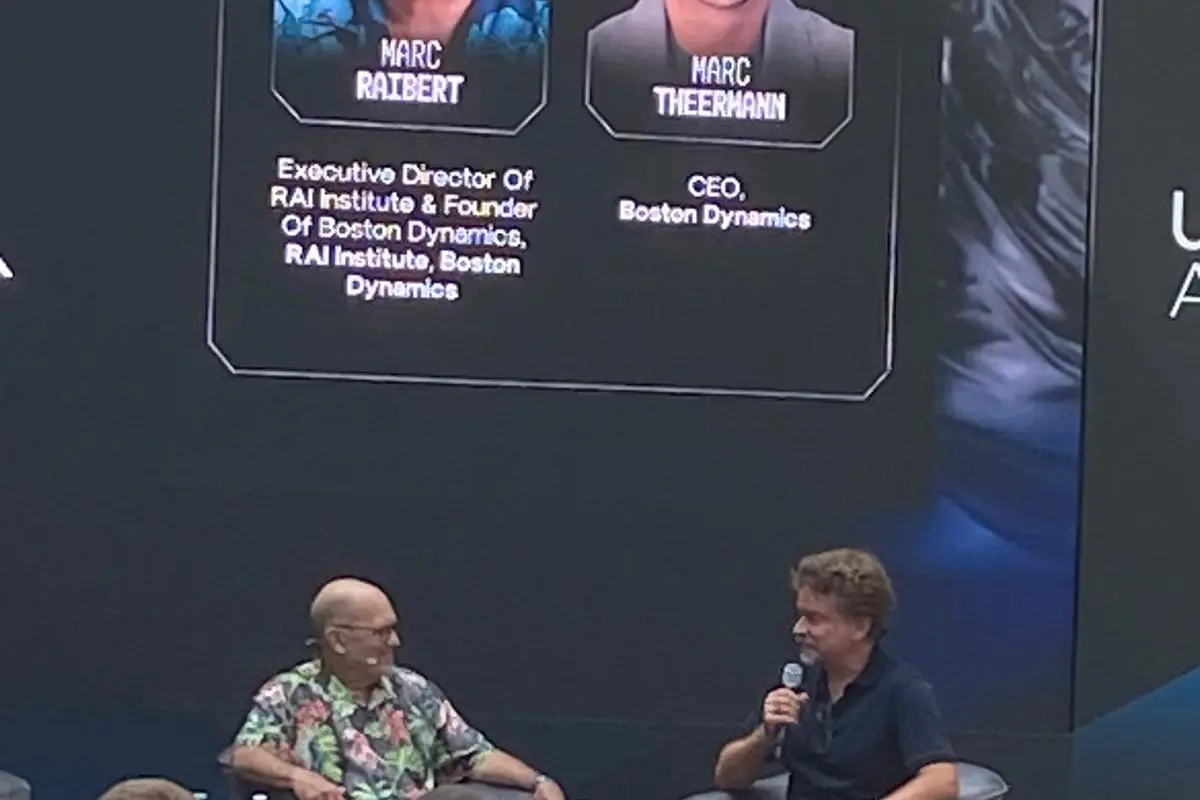
Jensen Huang (NVIDIA), Jeff Cardenas (Apptronik), Jonathan Hurst (Agility Robotics), Bernt Børnich (1X) and Thomas Wolf (Hugging Face) rounded out a speaker lineup rarely seen on European soil.
If one moment captured everything MACHINA stands for, it was the presentation by UMA (Universal Mechanical Assistant). The Paris-based startup — founded just nine months ago by Rémi Cadène, former lead of the Optimus programme at Tesla and creator of LeRobot at Hugging Face, alongside Pierre Sermanet, former Google DeepMind — chose the first edition of MACHINA to come out of stealth in the best possible way: with results.
UMA unveiled the first prototype of its humanoid robot, designed and assembled entirely in Paris, and introduced what they call Real-Time Learning: a learning architecture that enables robots to acquire new tasks through demonstration, just as a person learns by watching and repeating, rather than through manual programming. According to Business Wire, this approach turns the robot into a system that improves continuously through use, without requiring re-engineering for each new task.
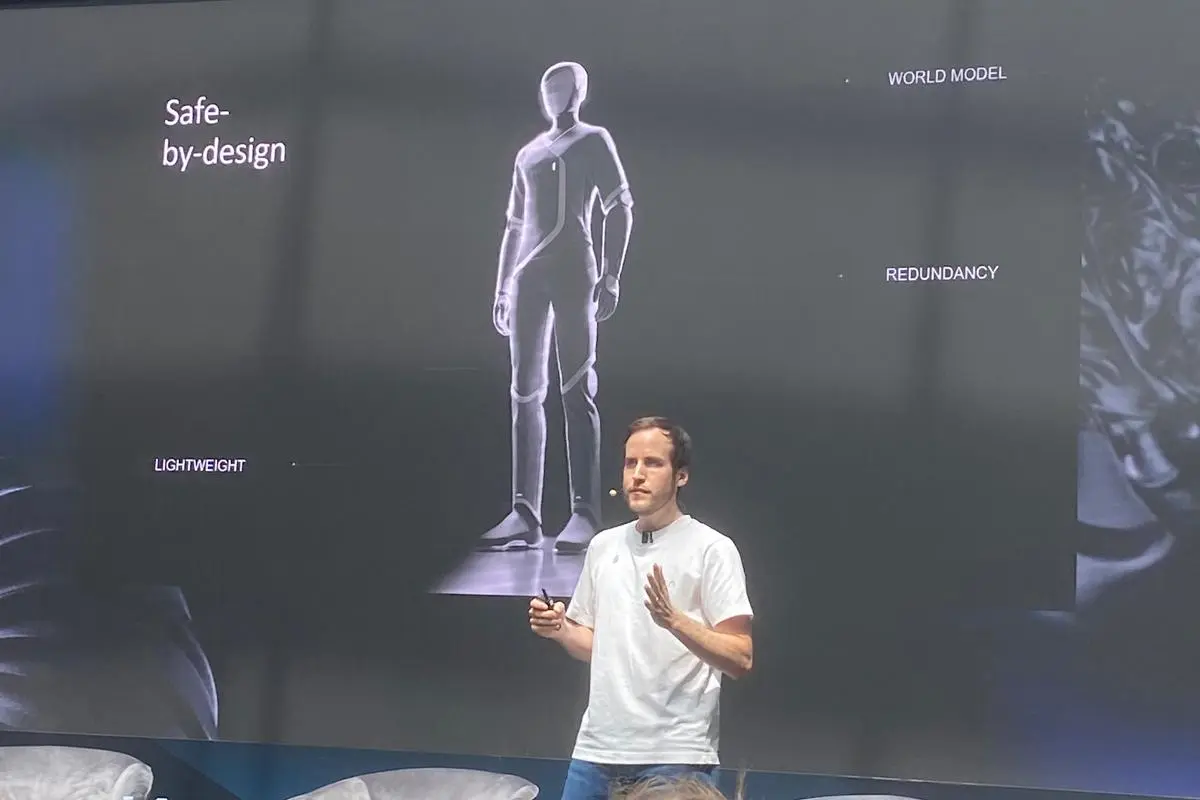
The design is deliberate and distinctive. UMA has opted for what they call a "dressed machine": human-scale proportions, an interchangeable technical textile cover, but no facial features. The head can light up to be identifiable as a robot even from a distance. Safety is built around three pillars: low kinetic weight, redundant computing systems inspired by aeronautics, and a world model that predicts the outcome of each action before it is executed.
The commercial strategy is equally pragmatic: first warehouses and logistics (controlled environments, flat floors), then manufacturing. And before the bipedal robot comes a wheeled version with real dexterity, targeted for the end of 2026. Cadène was blunt about the competition: affordable humanoids like Unitree's serve the research market well, but don't yet have the dexterity or autonomy to operate for hours in real industrial environments. Optimus hasn't reached that level either, he admitted.
Behind all the energy at MACHINA there are numbers that explain it. Korn Ferry estimates a shortage of 85 million skilled workers by 2030, representing up to $8.5 trillion in lost economic output. Aging populations, industrial reshoring, and the energy transition are all increasing pressure on labor markets across advanced economies. Goldman Sachs projects the humanoid robotics market will reach $38 billion by 2035.
Humanoid robotics is not the answer to all these challenges, but it is the only technology that can be deployed in environments already designed for people without redesigning them. Humanoid robots use the same tools, the same doors, the same stairs as us. They don't require new factories. They fit into the ones that already exist. That is their structural advantage over any other form of automation.
Emili came back from Paris with a clear conviction: the question is no longer whether humanoid robots will arrive, but for which use cases first and at what level of autonomy. The sector has crossed the demonstration threshold and is entering real industrial deployment, even if significant work remains on dexterity, reliability and cost.
The topic that came up most in the day's conversations was the critical role of training and simulation: training robots in the real world is slow, expensive, and risky. High-fidelity simulation is the accelerator that will allow the sector to scale. And that is exactly where DeuSens has something to say, with over a decade of experience in immersive environments, simulation, and applied training.
In fact, we've dedicated an entire article to explaining that training process with scientific studies and real cases: you can read it in how humanoid robots are trained.
If you want to go deeper on how we apply Humanoid Robotics to specific sectors such as industry, retail, medicine or education, we also recommend our full analysis of the robotics, AI and XR convergence.
The future of Physical AI is not being built in a laboratory. It is being built right now, in factories, warehouses and events like MACHINA. And DeuSens will be there.
SIMILAR CONTENT

PRIVACY POLICY
By chatting you accept our Privacy Policy.
By chatting you accept our Privacy Policy.
Conversation sent. We will be in touch shortly. New conversation


