

18.01.2021
TYPES OF VR DEVICES | What are the types of Virtual Reality glasses that exist?

HIPEREXPERIENCIA
LOADED


 RETURN
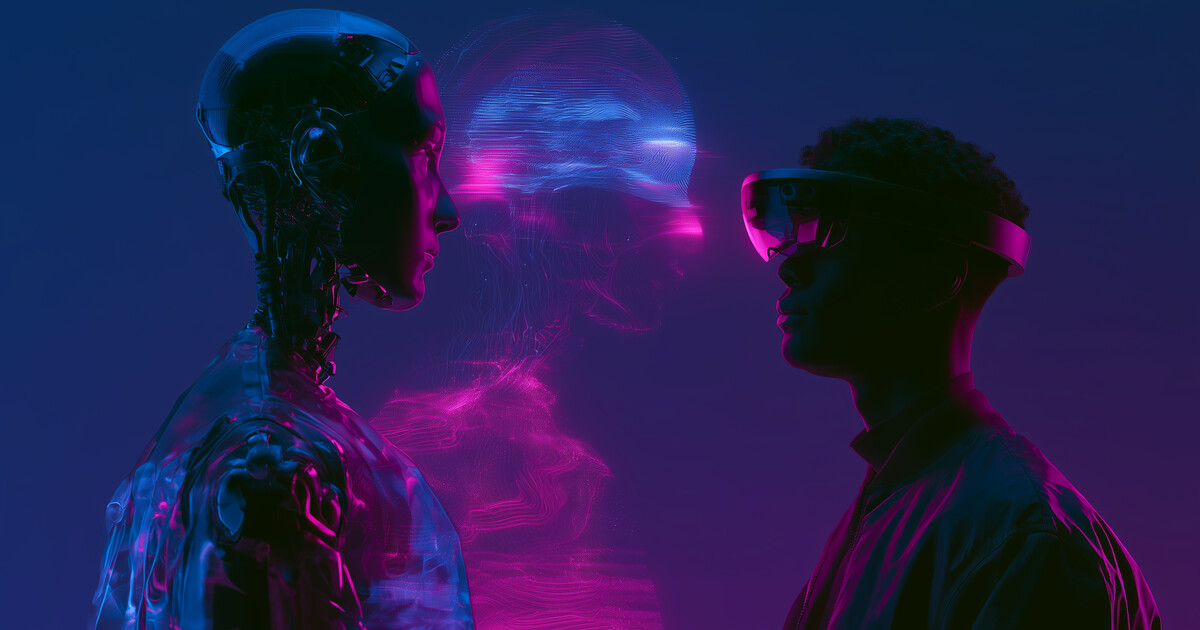
For years we've talked about robotics, artificial intelligence, and extended reality (XR) as independent trends, each on its own roadmap. But something has changed: these three technologies have stopped evolving in parallel and started to converge. A robot that understands natural language thanks to Artificial Intelligence, that is controlled and visualized through Augmented Reality interfaces or trained in Virtual Reality environments, is no longer science fiction: it's the direction technological innovation is heading this decade.
At DeuSens we've spent over a decade exploring these technologies separately. Today, with Robotics fully joining our service catalog, we want to talk openly about where this is heading: why the combination of robotics, AI, and XR is the real technological gamechanger, and how we're positioning ourselves to support businesses through this transition, today and in the years ahead.
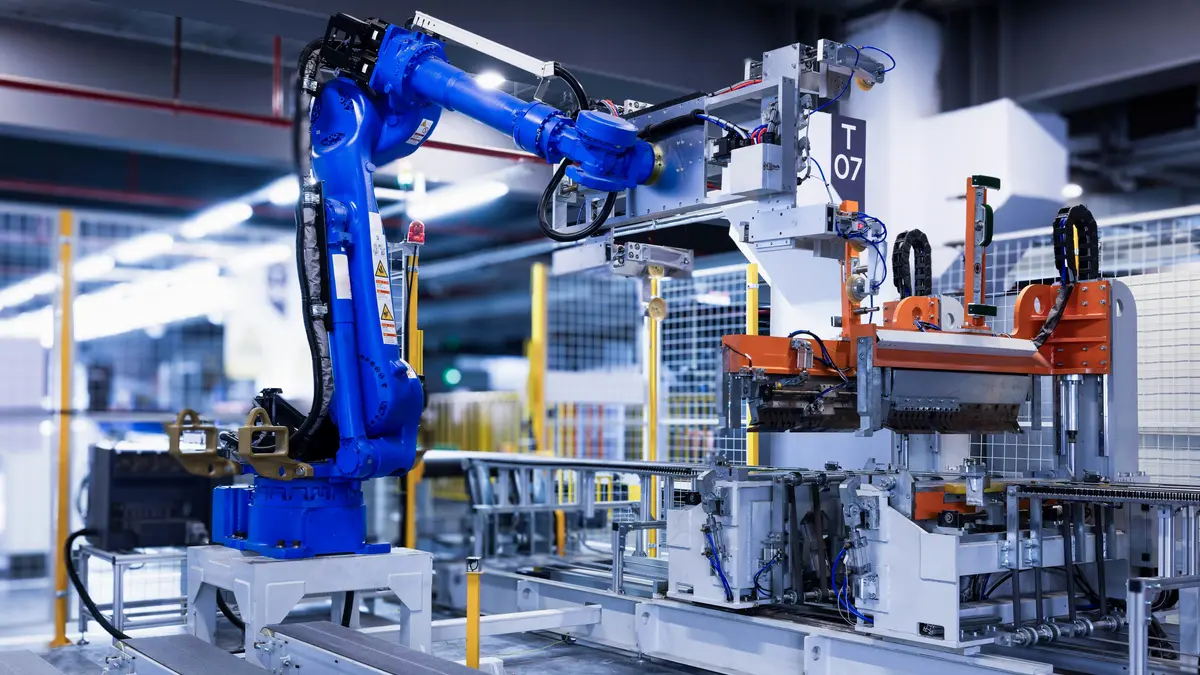
Each of these technologies brings something the other two don't have on their own:
Separately, each technology improves a process. Together, they don't just improve it: they redefine it. This isn't just intuition: according to the International Federation of Robotics (IFR), the industrial robot installation market hit an all-time high in 2026, with AI-driven autonomy and IT/OT convergence as its main growth driver.
WANT TO BE A PIONEER? Let's talk about how to apply this technological convergence in your business before your competitors do.
Contact usThe reason is simple: robotics without intelligence is blind, repetitive automation, unable to adapt. Artificial intelligence without a physical body stays confined to the digital plane, unable to act on the real world. And XR without intelligent content or physical presence is just a nice-looking visual layer, but a limited one.
When the three combine, something different happens: a robot can understand what's being asked (AI), act on it in physical space (robotics), and a human can see, control, and train that whole process naturally through immersive interfaces (XR). It's the difference between a machine and a digital coworker with real presence. According to Deloitte, physical AI-driven robots are moving from a niche use case to a mainstream option for businesses; Amazon, for example, has already deployed its millionth robot across its logistics network, coordinated by its own AI model.

The humanoid robot is not a science fiction concept or a laboratory project: it is the most complete expression of what happens when robotics, artificial intelligence, and extended reality converge in a single device. A human-shaped robot can move through environments designed for people, understand natural language instructions, adapt to unforeseen situations, and be controlled, monitored, and trained through immersive interfaces.
That training doesn't happen by magic: we explain the process in detail, with scientific studies and real cases, in our article on how humanoid robots are trained.
Companies like Tesla (Optimus), Figure AI, and Unitree have been investing in this direction for years, and the first industrial deployments are already a reality: Amazon, BMW, and Foxconn have announced or begun testing humanoid robots in real operational environments. According to the International Federation of Robotics (IFR), humanoid robotics is one of the five most relevant global trends for 2026, driven precisely by advances in AI and in immersive control interfaces.
At DeuSens we have oriented our robotics positioning specifically toward humanoid robots, because we believe that is where the combination with AI and XR generates the greatest impact. A humanoid robot with integrated conversational AI and controlled through spatial computing is not a machine: it is a presence. And presences are what DeuSens does best.
The humanoid robot ecosystem has matured at an unprecedented pace. These are the most relevant models available today — the same ones DeuSens works with as a software and AI integrator:
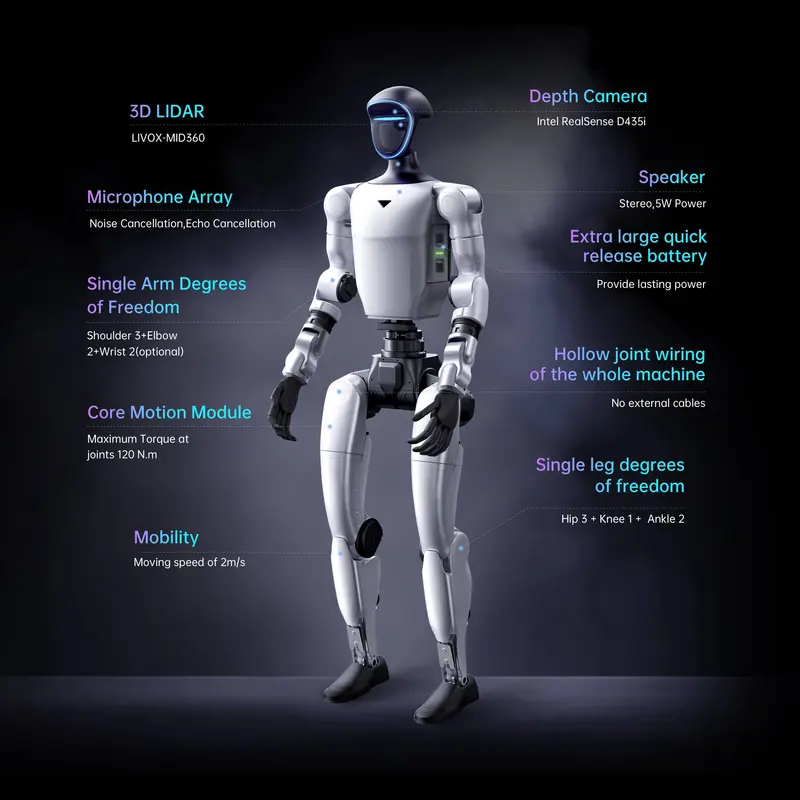
Unitree G1
Unitree Robotics
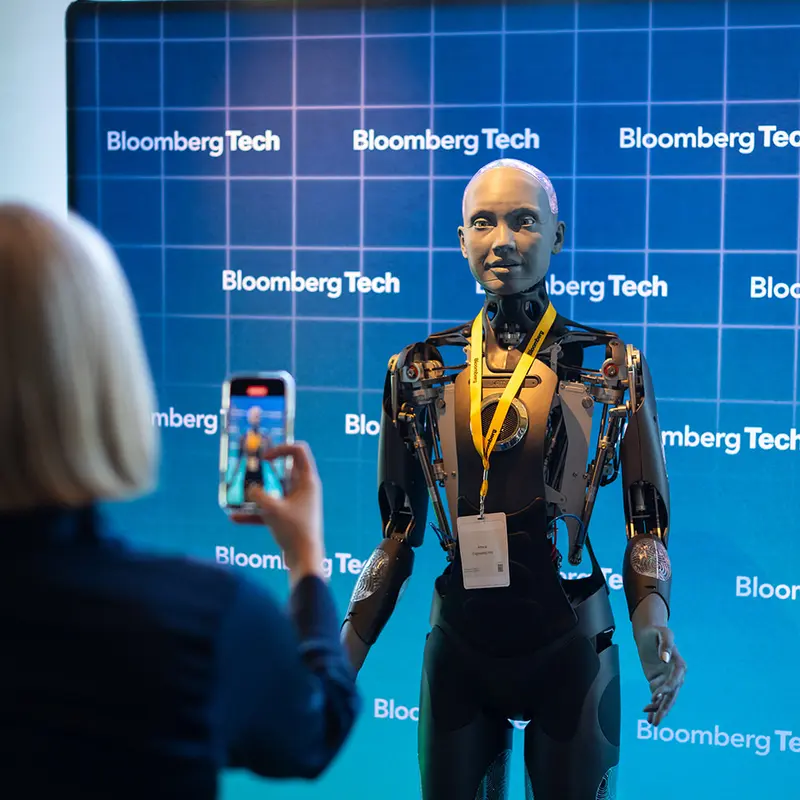
Ameca
Engineered Arts
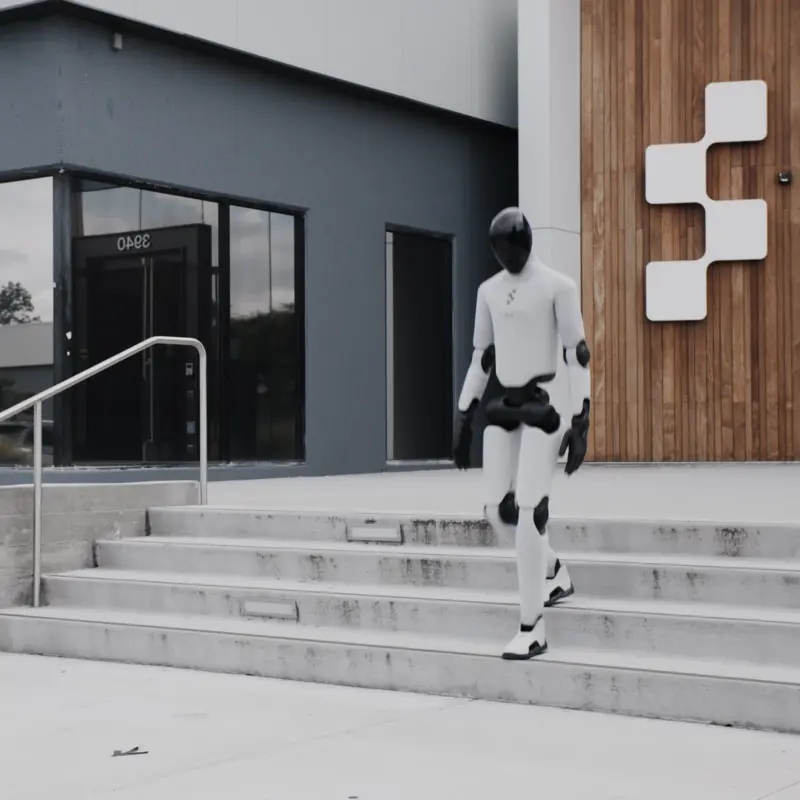
Figure 03
Figure AI
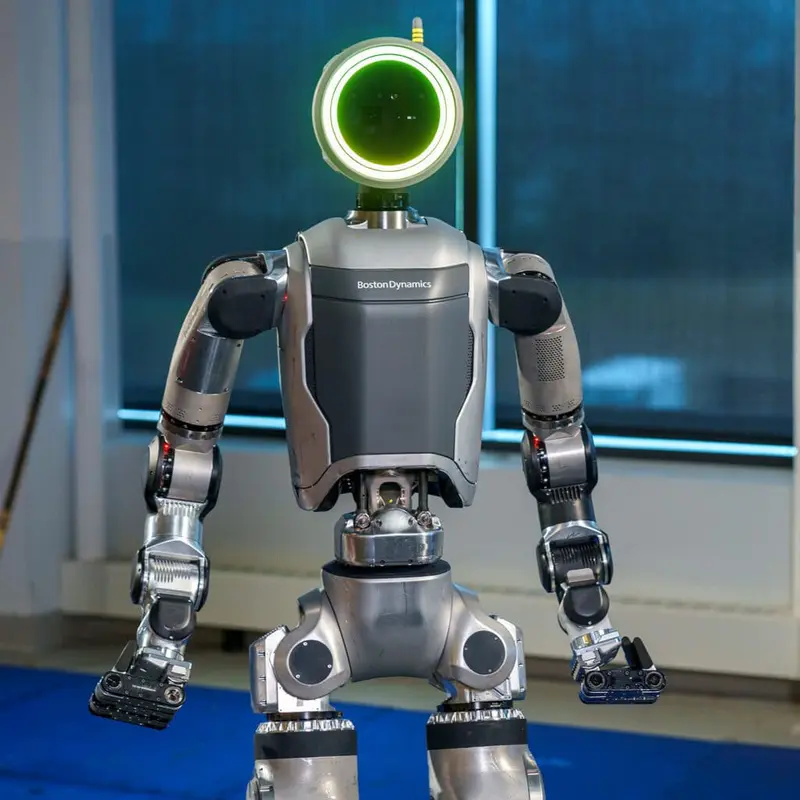
Atlas
Boston Dynamics
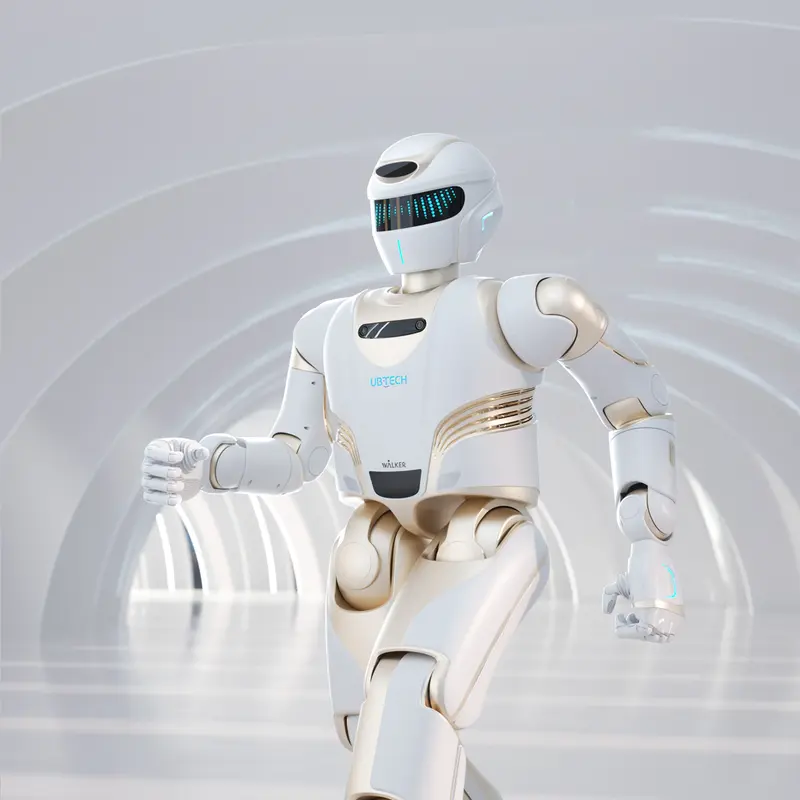
Walker X
UBTECH Robotics
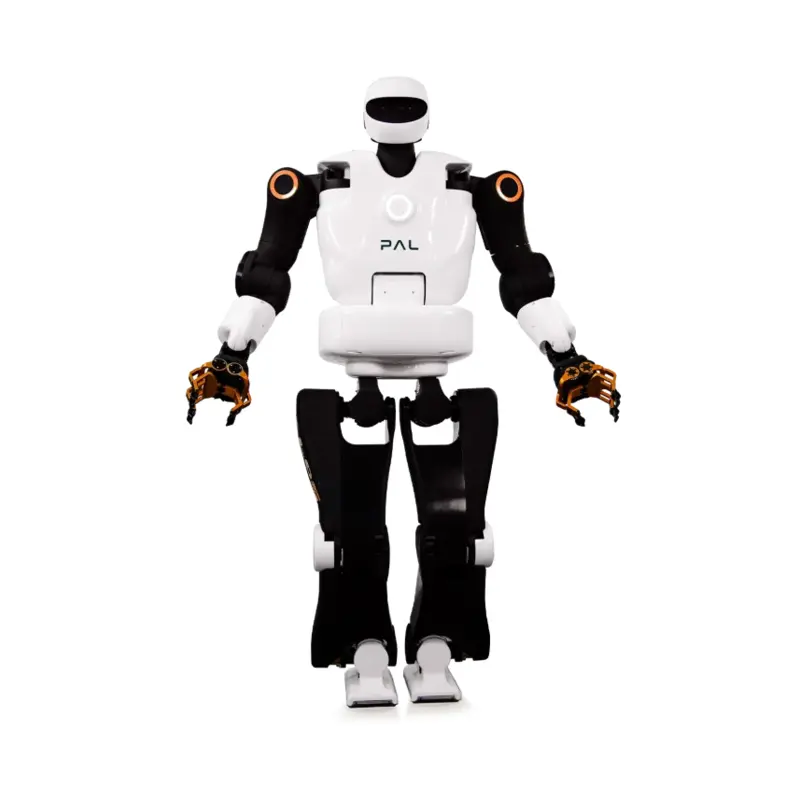
TALOS
PAL Robotics
This convergence isn't a distant promise. It's already transforming specific sectors, and at DeuSens we're actively working in several of them:
In the industrial sector, the combination translates into cobots that understand natural language instructions, are supervised through mixed reality, and optimize processes with predictive AI. We dive deeper into each piece in our Robotics in Industry, Artificial Intelligence in Industry, and Mixed Reality in Industry pages. According to Grand View Research, the global AI-in-robotics market will grow from around $20 billion in 2025 to over $180 billion by 2033.
In retail, AI-powered conversational robots and spatial computing spaces are redefining the physical shopping experience. We explore this in detail in Robotics in Retail, Artificial Intelligence in Retail, and Spatial Computing in Retail.
In medicine, demonstrator robots trained with AI and visualized through mixed reality are changing how healthcare staff are trained and how medical innovation is communicated. More in Robotics in Medicine, Artificial Intelligence in Medicine, and Mixed Reality in Medicine.
In education, this convergence sparks STEM vocations in a way no textbook can: programmable robots, educational metaverse environments, and mixed reality experiences. We cover this in Robotics in Education, Mixed Reality in Education, and Metaverse in Education.
SUCCESS STORY: Discover how we can apply this technological convergence to your specific sector.
Ask us now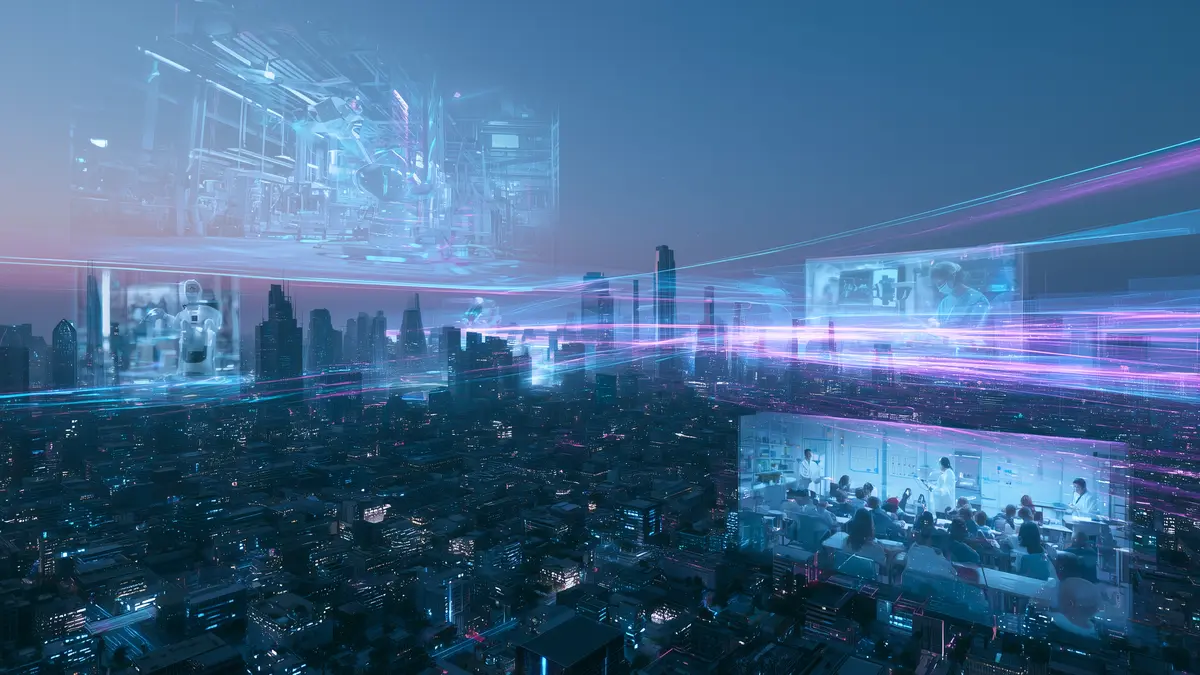
This isn't theory for us. This trend drives much of our recent activity: we already discussed the strategic role of AI applied to XR in business at our AI-XR Shift roundtable at IE Tower Madrid, explored how AI agents and virtual avatars are redefining customer care, analyzed where Extended Reality is heading in 2025, and experienced firsthand the crossover between AI and immersive experiences at AI Week 2026.
Major tech consultancies agree on one thing: the next decade won't be defined by a single disruptive technology, but by the smart combination of several. Robotics will stop being exclusive to factories and start living alongside us in stores, hospitals, classrooms, and public spaces. AI will stop being a text assistant and become the "brain" that makes sense of that physical presence. And XR will be the natural bridge that lets us interact with all of it frictionlessly. In fact, according to Mordor Intelligence, the Extended Reality market will grow at close to 41% annually through 2031, driven in large part by AI embedded in spatial computing systems.
Companies that start exploring this convergence now —even with pilot projects— will be years ahead once it becomes the market standard. That's exactly DeuSens' bet: not arriving late to a trend, but helping to define it.
Robotics, Artificial Intelligence, and Extended Reality are no longer three parallel paths: they're three pieces of the same paradigm shift. Whoever understands this first, and starts building on it, won't just adapt to the future: they'll be designing it.
READY FOR THE CHANGE? Let's talk about how the convergence of robotics, AI, and XR can transform your business.
Contact us for a free consultationSIMILAR CONTENT

PRIVACY POLICY
By chatting you accept our Privacy Policy.
By chatting you accept our Privacy Policy.
Conversation sent. We will be in touch shortly. New conversation


