

 RETURN
18.01.2021
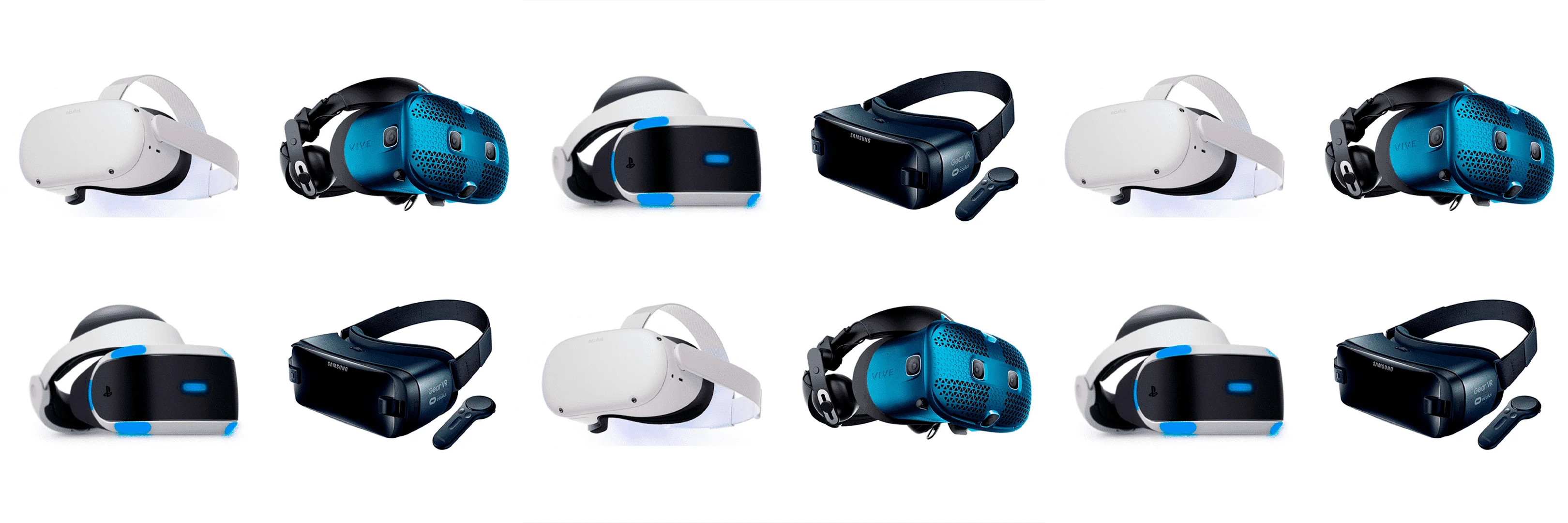
TYPES OF VR DEVICES | What are the types of Virtual Reality glasses that exist?

HIPEREXPERIENCIA
LOADED


An interactive installation doesn't start with software. It starts with the physical space: how a floor reacts to someone's footsteps, how a projection wraps around an entire wall, or how a table responds to several hands touching it at once. Behind every memorable immersive experience lies a discipline that's rarely named: audiovisual engineering.
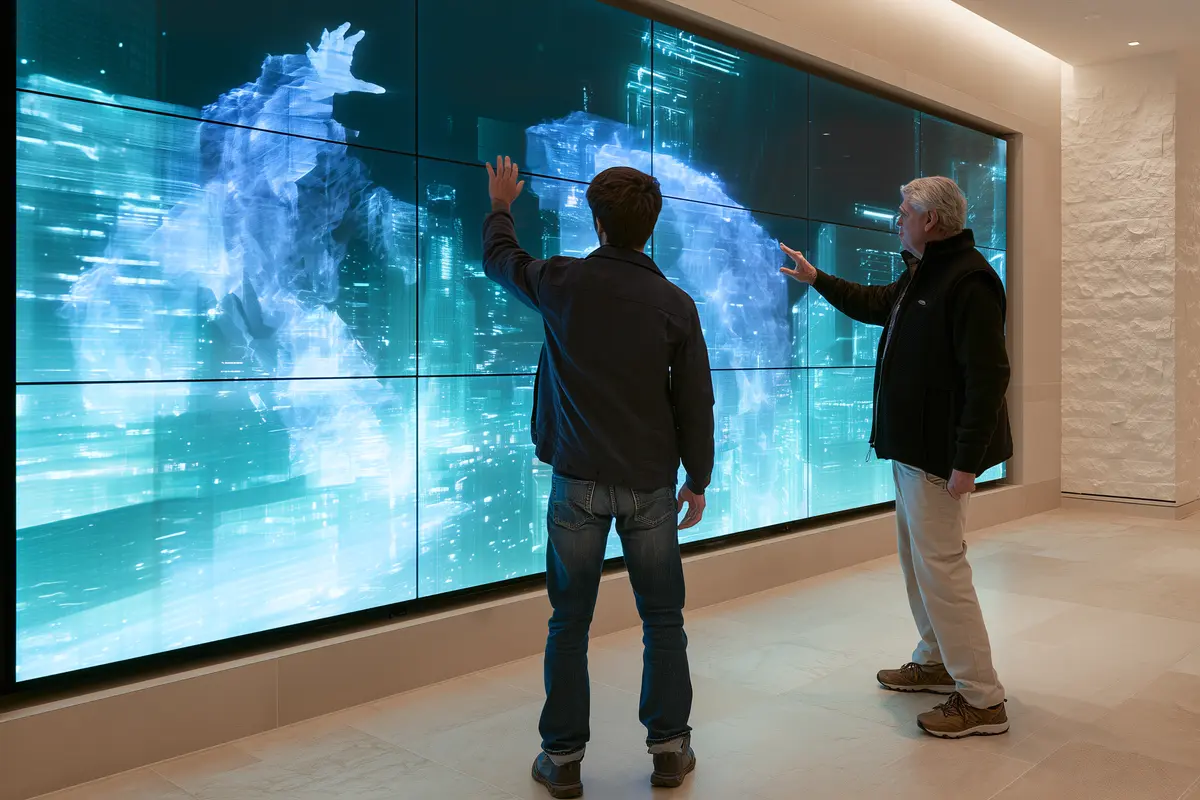
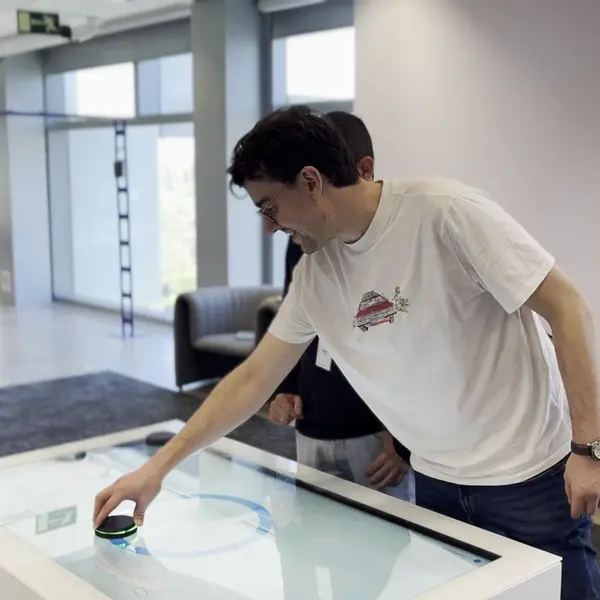
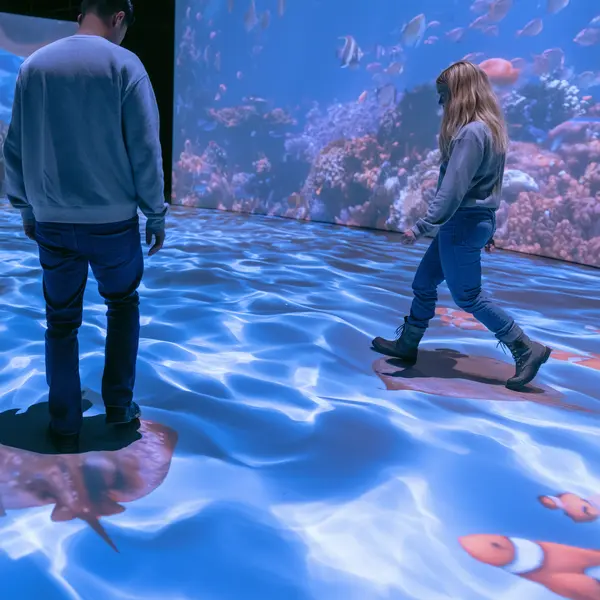
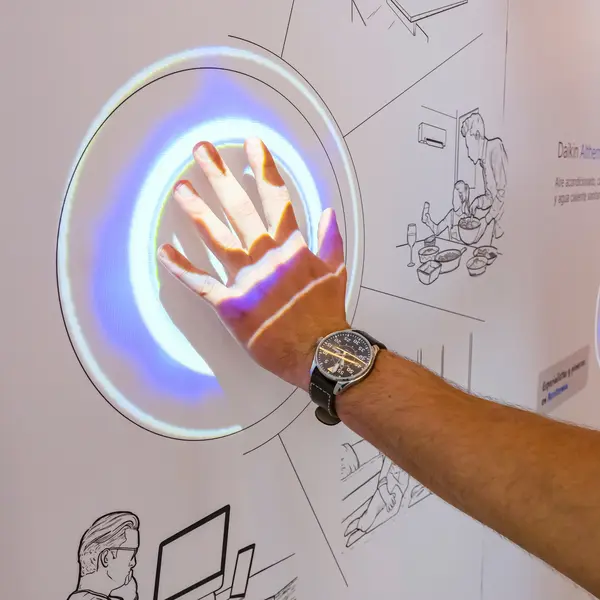
When people talk about immersive technology, the conversation usually centres on headsets or screens. But there's a whole universe of "unusual" hardware that makes experiences possible without visitors wearing anything at all: interactive tables where content responds to hand movement, touch-sensitive floors that turn every step into a visual interaction, projection systems that turn entire walls into living surfaces, holograms that give volume and presence to content that would otherwise be just a flat screen, body-tracking sensors and cameras that detect a visitor's position and movement in real time without any device to wear, and even pedal karts that turn the visitor's own physical effort into the engine of a gamified experience.
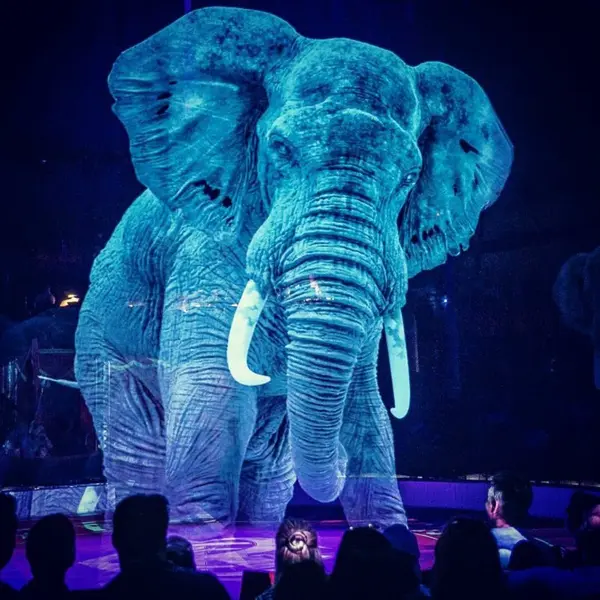
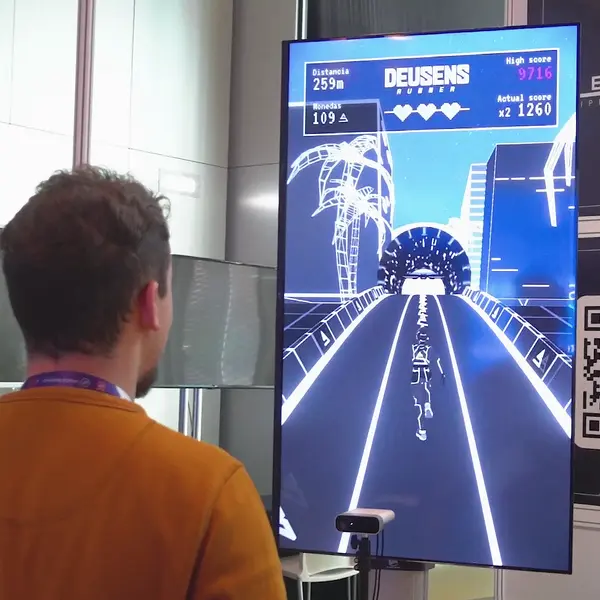
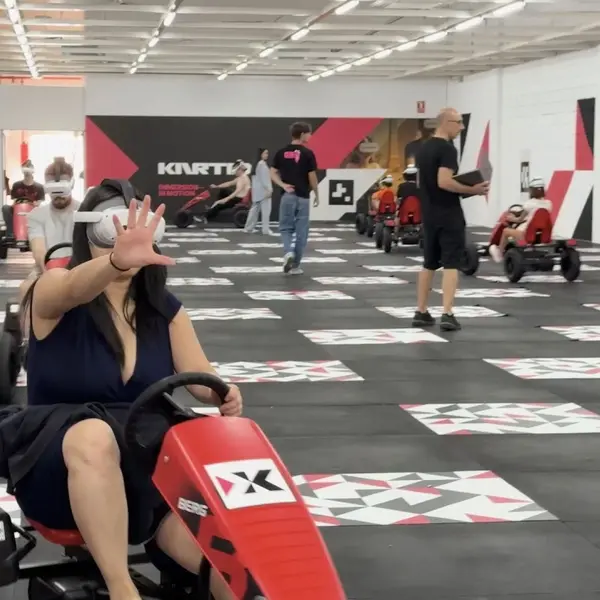
What sets these installations apart isn't the technology itself, but how it's integrated into the space. A well-calibrated projection stops looking like a "screen" and becomes part of the environment; a well-designed interactive table invites touch without needing instructions. That's the quiet work of audiovisual engineering.
Designing an interactive installation means answering questions that go far beyond digital content: how does the projection look under the space's ambient light? How does the touch-sensitive floor hold up under continuous foot traffic during an event? How is sound synchronised with what's happening on screen so the experience feels like a single gesture rather than separate pieces?
This layer of engineering is what turns a creative idea into a robust physical experience, capable of running for hours in front of hundreds of people without failures or friction. It's also the difference between an installation that surprises for a moment and one that's remembered.
Every context calls for a different approach. Designing for a fashion event with constant foot traffic isn't the same as designing for a museum room meant to make visitors stop and listen.
At events and activations, an interactive installation works as a social magnet: it creates the moment people want to share. That's what happened at the Kiehl's interactive showroom, where a touch table with object recognition coexisted with a camera-activated augmented reality wall, turning every visit into an experiential journey.
At the Parade of Glances for L'Oréal Paris at Fashion Week, several cameras placed along the runway itself captured every attendee walking the catwalk, instantly generating a shareable video.
And at the Espacio Movistar on Gran Vía, a series of interactive totems combined motion sensors and augmented reality to turn a retail space into a playful journey through sport and entertainment.
On a trade fair floor, the challenge is different: catching attention in an aisle full of stimuli and holding the visitor's interest long enough to get a message across. The interactive table for The Brain at Telefónica solved this with a capacitive touch surface that recognised physical objects via beacons, turning a technical pitch into a tangible journey.
At the L'Oréal Paris stand at Madrid Fashion Week, vertical touchscreens with built-in cameras invited attendees to recreate trends live.
And at the Haribo Pop-Up Store, our FunMirror combined a touchscreen and a motion-sensing camera to turn a simple photocall into a prize-based collection game.
In retail, an interactive installation has a more commercial goal: supporting the purchase decision or reinforcing brand identity at the point of sale. At the new Sprinter store in Alcorcón, motion and pressure sensors turned a running track and a penalty-shooting zone into experiences that helped customers try the product before buying it.
In Zespri's "Make a healthy choice" campaign, a motion-sensing camera detected the user's body movement to control an endless-runner-style video game inside shopping centres.
And at the HMY showroom, an interactive video wall with a Kinect camera and AI image generation showed how the point of sale itself can become a living, customisable space.
In tourism and museums, an interactive installation replaces the information panel with a sensory experience visitors remember. In the immersive room in Calahorra on Roman Calagurris, a wraparound wall-to-wall projection narrated by Quintilian combined real footage with 3D content to recreate the Roman city.
At the Tabaris museum in El Vendrell, an immersive videomapping display and a central totem put visitors in control of which story to experience, in tribute to Pau Casals.
And at the Munoa Palace in Barakaldo, an interactive hologram generated through photogrammetry gave voice, in two languages, to a historical figure from the city.
Not every interactive installation is interchangeable between contexts. Before choosing a format, it's worth starting from three questions: how long will visitors spend in front of the installation? How many people interact with it at once? And what specific message should stay in the visitor's memory once they leave?
A touch-sensitive floor works best where there's continuous foot traffic and the goal is immediate surprise; an interactive table fits spaces where visitors stop and explore; a large-format projection is the right choice when the goal is visual impact from a distance. Getting this combination right is, ultimately, the real design work behind a Hyperexperience.
At DeuSens we design and integrate the audiovisual engineering behind every immersive experience, tailored to your space and your goal. Tell us about your project and we'll help bring it to life.
Let's talk about your projectSIMILAR CONTENT
PRIVACY POLICY
By chatting you accept our Privacy Policy.
By chatting you accept our Privacy Policy.
Conversation sent. We will be in touch shortly. New conversation


